Travelling around Portugal in summer is hard work: nobody wants to climb up to a castle at noon, and the popular spots and roads are packed. Now a better window is opening for trips around the country. In late September and October it is easier to stay on your feet all day, and the winter rains and early dusk have not arrived yet. We have put together routes by weather, by type of trip and by what you want to catch — the grape harvest, chestnuts, the ocean or cities without the summer crowds.
Each kind of autumn trip has its own seasonal limits. For cities and walking routes, the guide is the weather; for vineyards and fairs, the harvest calendar; for beaches, the época balnear, the official bathing season. The dates are set beach by beach, every year. In 2026 lifeguard cover ended on many beaches in the north and centre by mid-September; on most of the Costa Vicentina the season ends in late September, and at some Algarve resorts it runs until mid-October. After that date the beach stays open, but lifeguards, flags and facilities are no longer guaranteed. You can look up a specific beach in the official list published by the Portuguese authorities.
So the plan is simple: in late September you can still catch the vindima and warm days by the ocean, October is for walking the coast and exploring cities, and November is for chestnut fairs and new-harvest produce.
Grapes: the Douro while the vindima is on
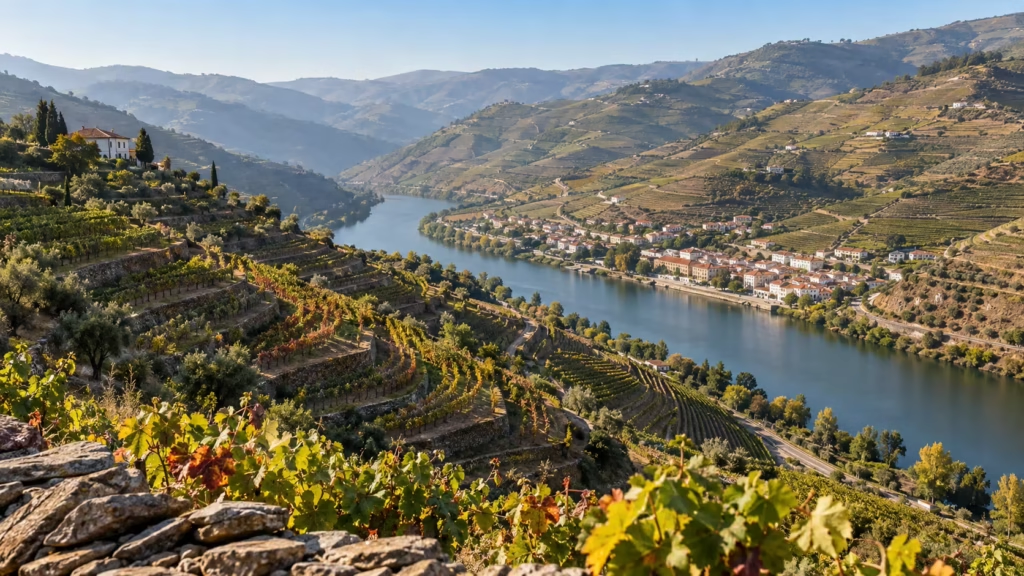
The grape harvest is called the vindima. In the Douro, picking usually starts in late August and finishes by mid-October, but the exact dates depend on altitude, grape variety and weather. If you want more than a tasting and would like to get out into the vineyard, look specifically for a programa de vindima. We covered different wineries and vindima programmes in detail in a separate guide.
Where to find a winery. Open the map of members of the Rota dos Vinhos do Porto e Douro on the IVDP website and pick an estate (quinta) near Pinhão or Peso da Régua if you are going by train. Then look for a Visit, Enoturismo or Experiences section on the estate’s website. Not every member offers grape picking, so it is best to confirm a booking directly through the contact form or by email.
What to ask the winery. Ask whether there is a grape-picking programme (programa de vindima) on the day you want, whether it includes picking, lunch and a tasting, and whether you can get there without a car from Pinhão or Peso da Régua. If you need a programme without alcohol, say so separately: picking and lunch are sometimes sold only as a package with a tasting.
Getting there without a car. From Porto the train runs through Peso da Régua and Pinhão to Pocinho; the MiraDouro works as a trip in its own right if you are going for the views. For a day trip, choose a quinta that offers a transfer from the station or is within walking distance: “near Pinhão” on the map can mean the opposite bank of the river or a steep hillside.
For an overnight trip, one winery for the whole day will probably be enough. Picking, lunch and a tour of the production may be booked separately, and a “wine tasting” label does not mean a grape-picking programme (programa de vindima).
Chestnuts: Marvão or Vinhais in November
Chestnut season starts later than the grape harvest. The main month is November, when Portugal holds its magustos — harvest festivals with roast chestnuts and young wine — along with fairs and food weeks built around them.
Where to go:
- Marvão and nearby Castelo de Vide make a good weekend trip from Lisbon. In November Marvão traditionally hosts the chestnut tree festival and chestnut fair (Festa do Castanheiro — Feira da Castanha); check the exact programme on the festival page.
- Vinhais and Bragança are an option if you are coming from the north and can set aside more time for the road. Rural Castanea brings together local producers of chestnuts and other Trás-os-Montes products; current dates appear on the Vinhais municipality website.
Both routes are much harder without a car, especially if you want to stop in villages and visit producers. It makes sense to rent a car, pick one base for two nights and avoid a long loop after dark: in November the days are already short, and fog and rain are possible in the mountains.
What to look for on the menu. Besides roast chestnuts (castanhas assadas), look for seasonal soups, meat dishes and desserts made with chestnuts. At a fair, walk the whole row of local producers before buying anything: the choice is wide. The word castanha (“chestnut”) can mean fresh chestnuts, chestnut flour, sweets or liqueurs.
What not to miss if you stay in the city
You don’t have to travel to another region for seasonal produce. In Lisbon, Porto or any district town, start at the municipal market (mercado municipal) or the weekly fair (feira semanal) and look for the Portuguese names on the price tags.
- Roast chestnuts (castanhas assadas). Street roasters appear as the weather gets colder; the peak is November and St Martin’s Day (São Martinho). If you have already tried roast chestnuts, look for chestnut soup (sopa de castanha), chestnut purée (puré de castanha) and chestnut desserts.
- Persimmons, pomegranates and quinces (dióspiro, romã e marmelo). Their season is short and easiest to catch at the market. Quince is usually cooked: try homemade quince paste (marmelada artesanal) with cheese; in the Lisbon area, look for white quince paste from Odivelas, which carries a protected geographical indication (Marmelada Branca de Odivelas IGP).
- Sweet potato from Aljezur with a protected geographical indication (Batata-doce de Aljezur IGP). In late autumn it goes into soups, baking and octopus dishes. You don’t need to travel to Aljezur for it — check the market or a large supermarket first; if you can make the trip, the local festival programme is published on the official website.
- New-harvest olive oil (azeite novo). Towards the end of autumn, ask in shops and at markets: “Is this oil from the new harvest? (É da nova campanha?)” Taste young oil uncooked first — with bread, soup or boiled potatoes. On the bottle, look for the harvest year or the word campanha, the production season.
A minimal autumn plan without a trip: buy persimmons, quinces or pomegranates at the market, grab a bag of hot chestnuts on the street and take home some quince paste or new-harvest olive oil.
The ocean: the Costa Vicentina instead of a beach holiday
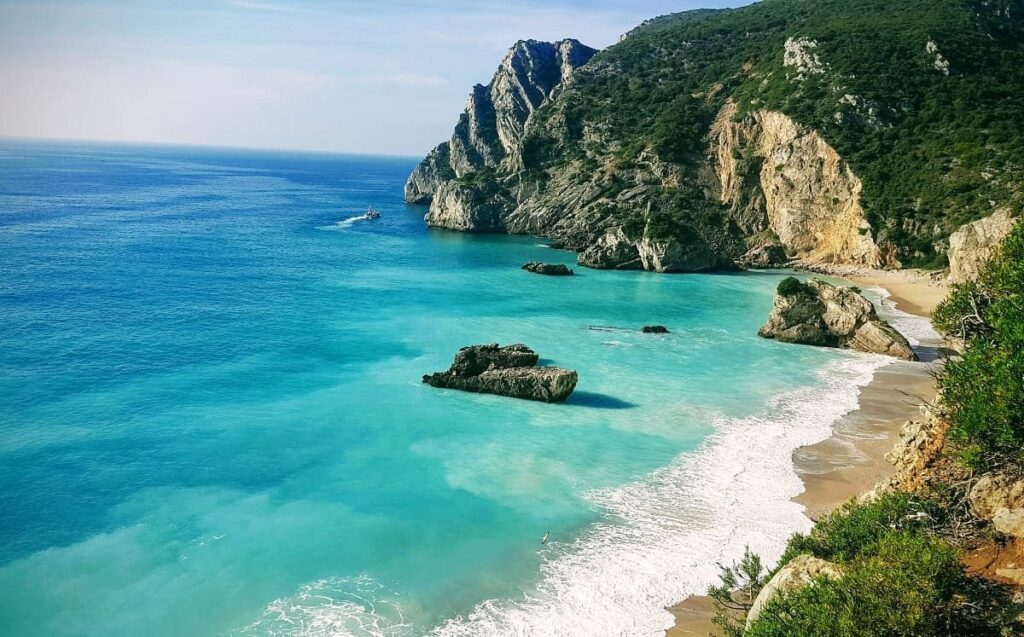
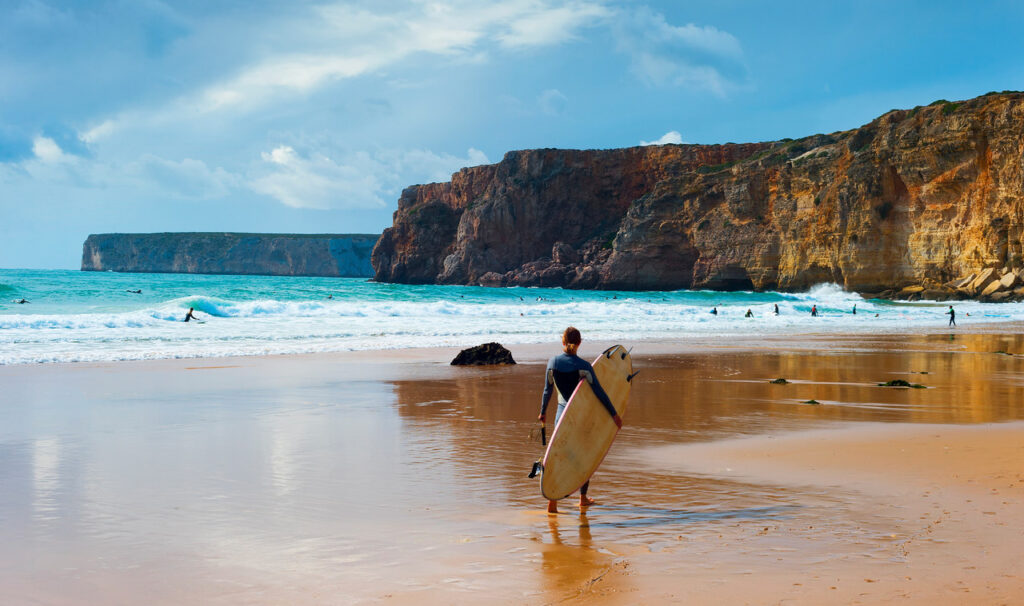
The Costa Vicentina is Portugal’s south-west Atlantic coast, running from Porto Covo in southern Alentejo to Cape St Vincent in the Algarve. Once the bathing season is over, people come here to walk rather than to swim: there are marked walking trails along the coast, so you can plan short walks between villages, viewpoints and coves. The Rota Vicentina association, which maintains the trails, recommends walking its trails from September to June: in autumn temperatures are usually milder and the wind is lighter than in summer.
From Lisbon, the northern part of the coast is the easiest choice: Porto Covo, Vila Nova de Milfontes, Zambujeira do Mar or Odeceixe. If you are starting from the south, stay in Aljezur: from there it is easy to combine the ocean with a short stretch of the Fishermen’s Trail (Trilho dos Pescadores) and, in late autumn, to check the programme of the sweet potato festival (Festival da Batata-Doce). For a weekend, pick one base and one route rather than trying to cover the whole coast.
Important. Once the bathing season is over, many beaches no longer have permanent lifeguards. Before a walk or a swim, check the bathing season dates for the specific beach and the sea state forecast. Even on a sunny day, big waves, rip currents and unstable cliffs are a serious risk. Keep away from cliff edges.
Cities: Évora, Coimbra or Guimarães
If strong wind or rain is forecast on the coast, you can use the same autumn window for cities. At this time of year it is easier to spend a whole day walking around Évora, Coimbra and Guimarães, and museums and restaurants become part of the route rather than a refuge from the midday heat.
Évora is the easiest choice if you are coming from Lisbon. The historic centre is compact, so in a day you can walk from the Roman temple and the cathedral to Praça do Giraldo and the Church of St Francis (Igreja de São Francisco). If you stay overnight, you can also explore the Alentejo countryside around the city.
Coimbra is easy to reach from both Lisbon and Porto. In autumn the university city returns to its usual rhythm after the summer holidays. If you are short of time, build the day around the university, the old town and the Mondego riverside rather than a few far-flung museums.
Guimarães works for a short trip from Porto: you can see the historic centre on foot, and with two nights you can add Braga as a separate day. The official pages on Évora, Central Portugal and Guimarães will help you check the opening hours of the main sights before you go.