A box of pencils, a hand-painted tile, a tin of sardines — the everyday things of Portugal each have a story of their own. The best place to hear it is where they are made. In Portugal, working factories open their doors to visitors: they show the machines, introduce the craft, and sometimes let you try it yourself.
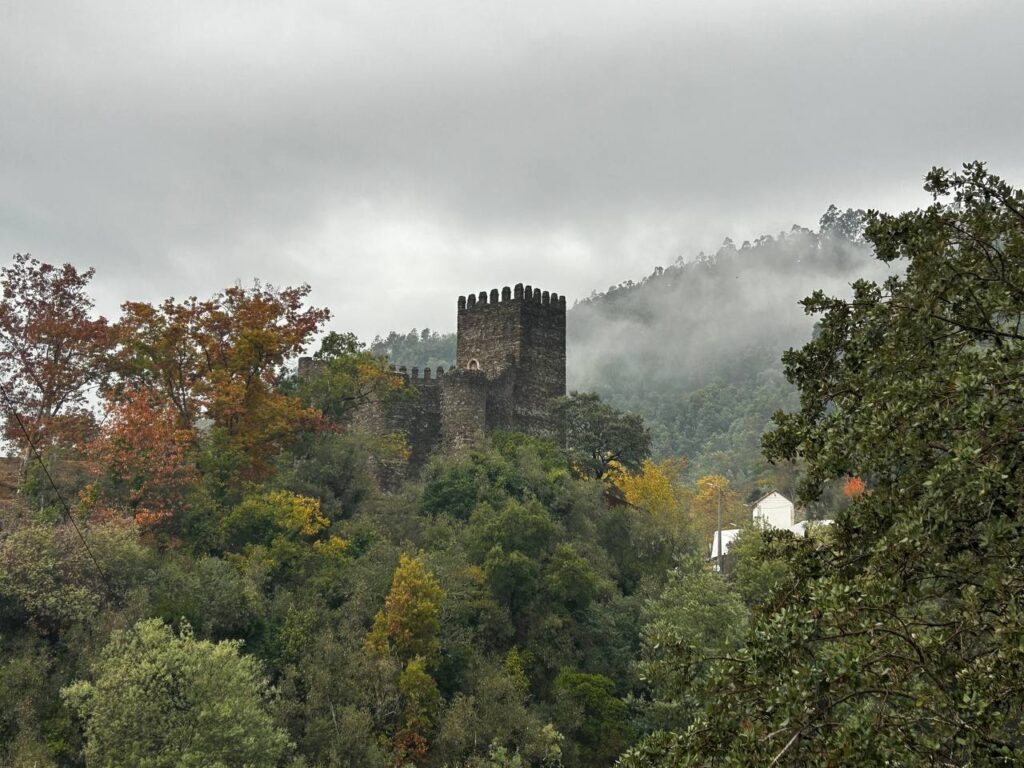
We have picked five places, each with its own character. In Lisbon you can watch azulejos being made; near Porto, pencils and tinned fish. In Ílhavo, porcelain comes with a walk around a factory village. One more route leads into the Serra da Estrela mountains, to a wool mill — that one is worth a separate trip.
Viarco: how an ordinary pencil is made
São João da Madeira, south of Porto
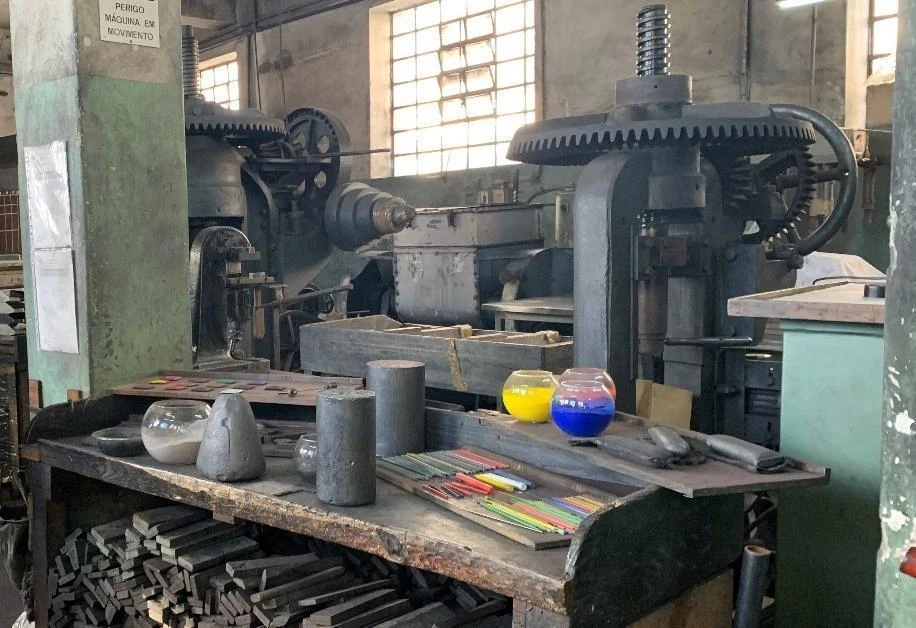
Viarco’s history began in 1907. Today it is Portugal’s only pencil factory. Old machines are still in use here, including equipment a century old. That makes the tour interesting both for people who love to draw and for those who like to see how machinery works.
For the leads made here, graphite is mixed with clay and water. The mixture is then shaped, dried and fired before it is set into a wooden casing. Coloured pencils have a different composition and skip the firing stage altogether. So even two similar-looking pencils can have quite different production stories.
Visits are arranged by the town’s industrial tourism centre — the Welcome Center in the Torre da Oliva. It can also help you plan a route around other local factories. If you want to make a day of it, the hat museum nearby tells the story of another of the town’s key industries.
How to visit. Booking in advance through the Welcome Center is required: turismoindustrial@cm-sjm.pt. According to the published schedule, the factory receives visitors on Monday afternoons and throughout the day from Tuesday to Thursday. On Fridays, visits take place in the morning. The price, available times and whether you can join on your own are confirmed when you book. Contact details are on the Viarco visits page.
Sant’Anna: azulejos before they reach the wall
Lisbon
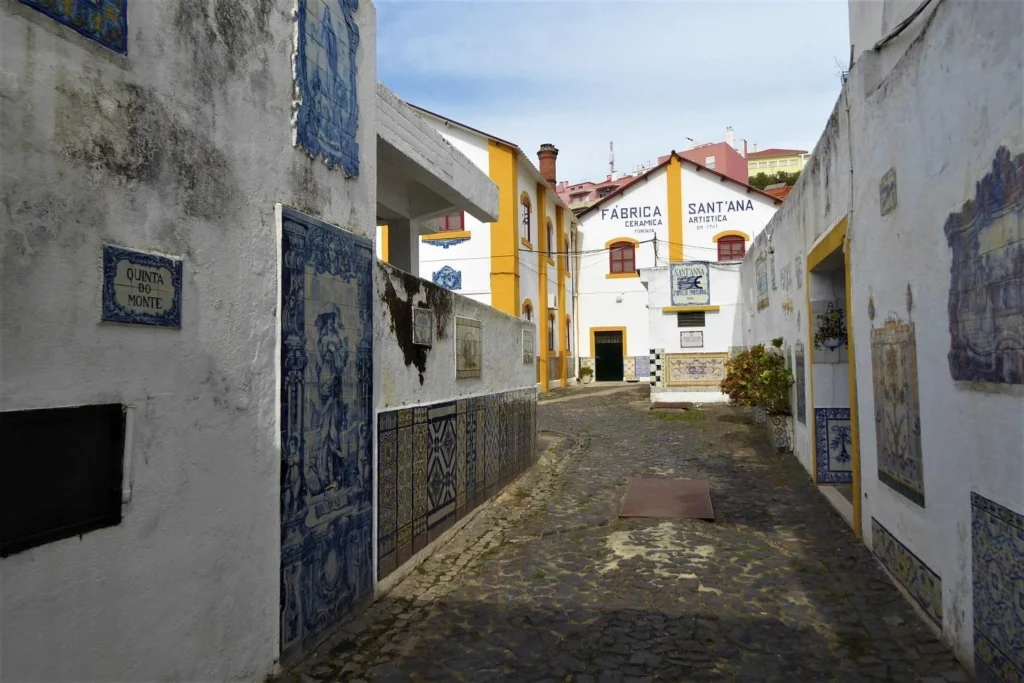
The Sant’Anna factory grew out of a small pottery workshop founded in 1741. After the 1755 earthquake it produced tiles for the rebuilding of Lisbon. Today you can study familiar patterns before they become part of a façade.
Production is still done by hand: craftspeople shape the pieces, glaze, paint and fire them. The tour covers the factory’s history and traditional Portuguese ceramics. For those who want to have a go, there is a private azulejo painting workshop, which also includes a visit to the production floor. You can see what it looks like on the factory’s Instagram.
It is a good option if you want to see a workshop without leaving the city. When booking, choose the format straight away: the tour on its own or the tour with painting.
How to visit. Both formats are by advance booking through the tours and workshops page or info@santanna.com.pt. Price, duration and language are agreed with the factory. Production is at Calçada da Boa-Hora, 96. Sant’Anna also has showrooms, so check the address in your booking confirmation.
Pinhais: from sardine to paper-wrapped tin
Matosinhos, near Porto
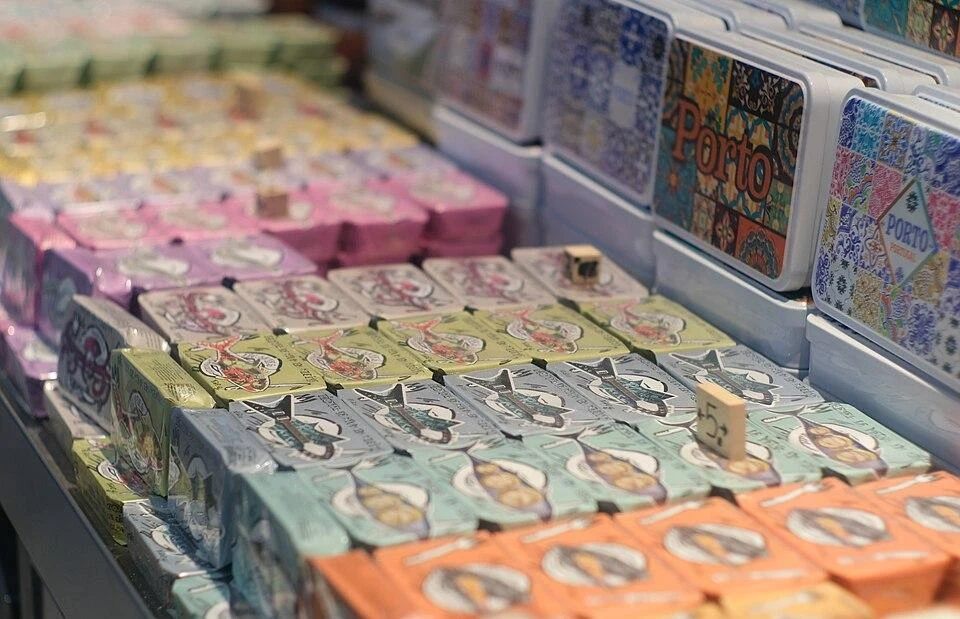
The Pinhais factory produces tinned fish under the Pinhais and NURI brands. Its “living museum” introduces visitors to the production process and the people who work here. The programme includes a tour, wrapping a tin in paper, and a tasting.
This is a visit to a working plant, so what you see depends on the production schedule. Fish is not processed every day, partly because of limits on sardine fishing. If that stage is what interests you most, ask about it before you buy a ticket.
How to visit. The official website lists the basic Live Museum Tour from €22. A tin to take home is included in a separate, more expensive option, Your Own Tin. You can buy a ticket for a chosen time slot; tours are available in English. From November to April the museum is closed on Sundays. It is about a six-minute walk from Câmara de Matosinhos station on metro line A.
Vista Alegre: porcelain and life around the factory
Ílhavo, near Aveiro
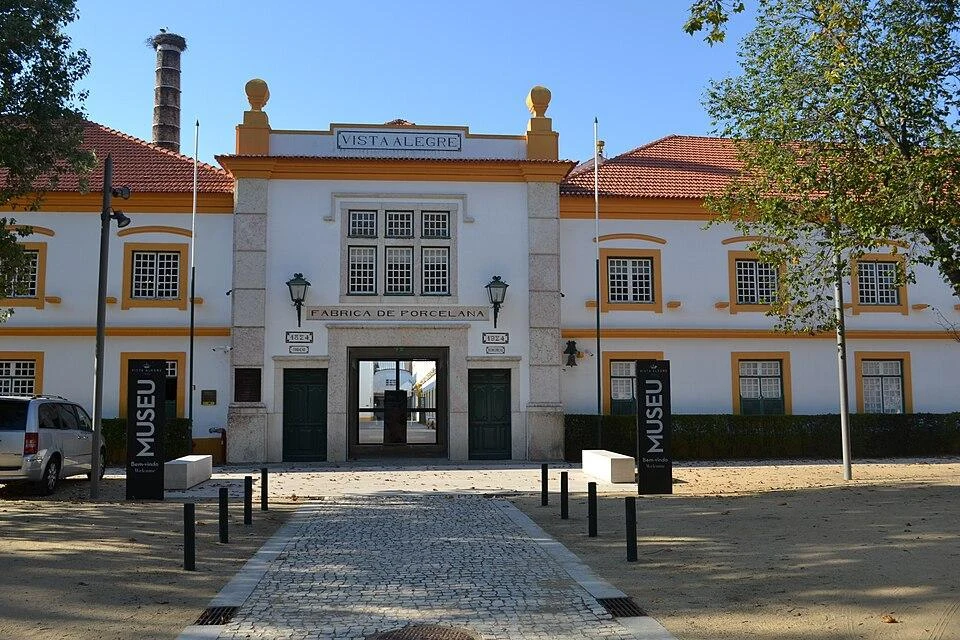
The Vista Alegre porcelain factory was founded in 1824. A village for its workers grew up around it, with houses, a theatre and other shared buildings. So there are two stories to come for: how the tableware is made, and how the factory community lived.
A visit begins at the museum, which shows how porcelain — and the tastes of the people who bought it — changed over time. On working days the museum route includes the hand-painting workshop, where you can watch artists decorate the pieces. Visitors see the decoration stage of porcelain-making; the full production cycle is not part of this programme.
After the exhibition you can look into the chapel and walk around the village. The workers’ houses and shared buildings show how production shaped the life of a whole community. Allow time for the walk on top of the museum visit.
How to visit. A standard adult ticket to the museum and chapel costs €6. In winter the museum is open daily from 10:00 to 19:00; last entry is 45 minutes before closing. To see the working studio, come on a weekday outside the factory’s summer and Christmas breaks. Guided tours, including in English, are booked in advance: museu@vistaalegre.com. Ask there about studio access times as well. The museum route details are on the Vista Alegre page.
Burel Factory: wool, looms and mountains
Manteigas, Serra da Estrela
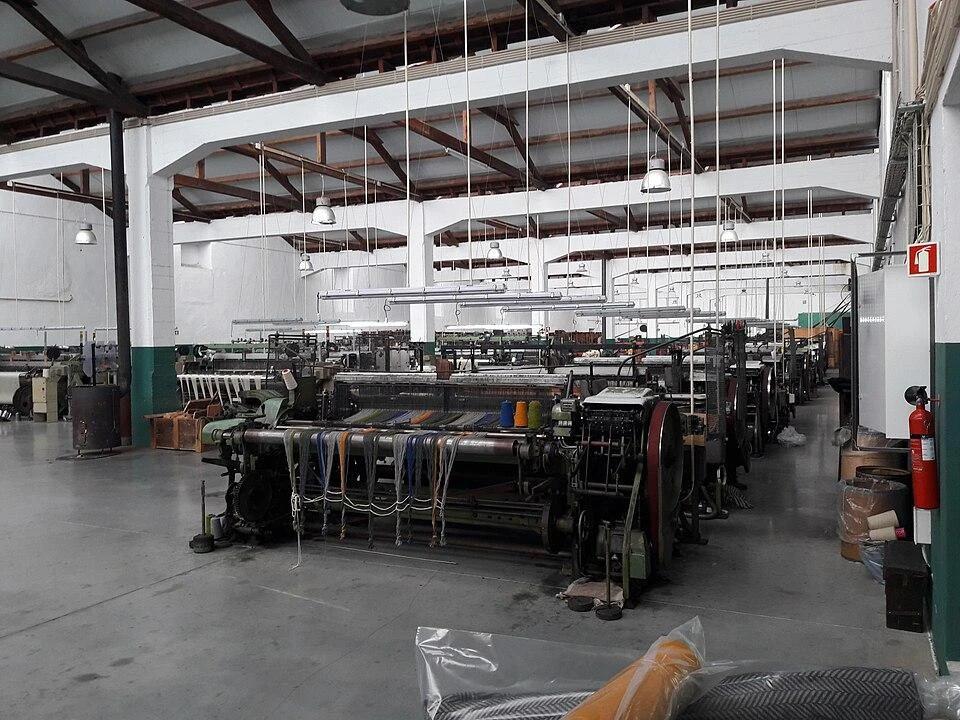
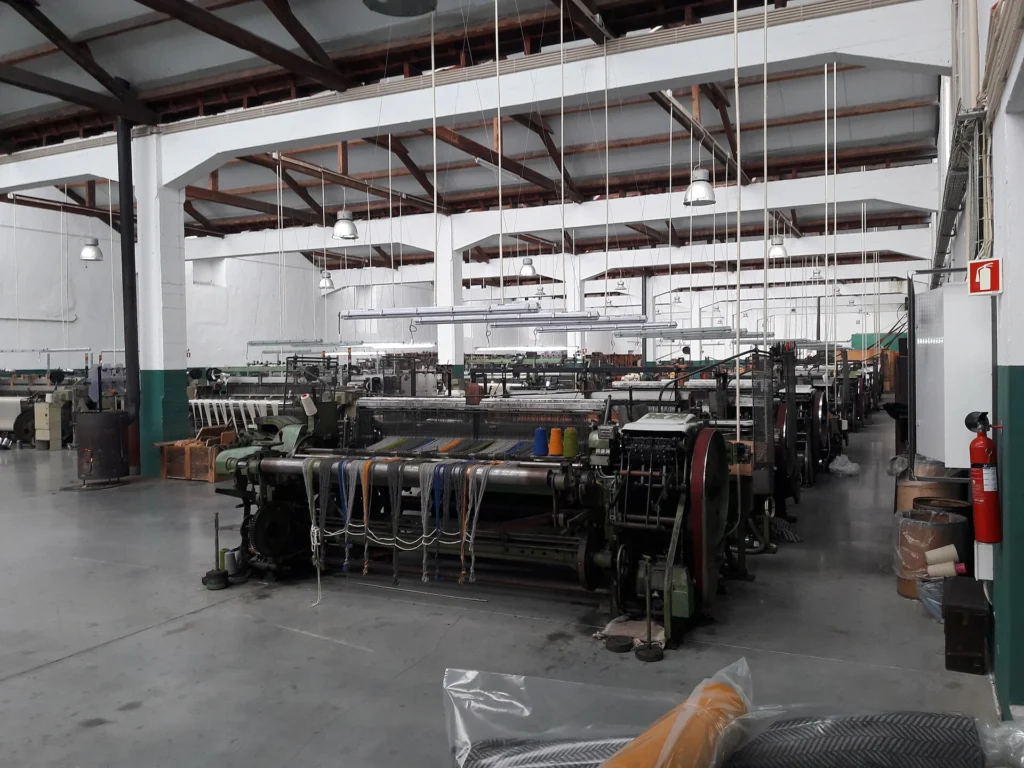
Burel is a dense woollen cloth rooted in the traditions of the Serra da Estrela. It is used for clothing, homeware and acoustic panels. In Manteigas it is made by Burel Factory, which has kept its old looms and the skills of local craftspeople.
The factory has its own comeback story. The Lanifícios Império mill opened in 1947 but later came close to disappearing. In 2011 new owners began restoring it. They kept the equipment and carried on production together with people who knew it from the inside.
At the mill the wool is carded, spun into yarn and woven. The cloth is then treated with hot water and mechanically compacted, which shrinks it and gives burel its characteristic density. Carding machines more than a hundred years old are still in use, and by watching them work you can follow how fibres gradually turn into fabric.
How to visit. Factory tours cost €5 per person. They run Monday to Saturday at 11:00 and 16:00. Advance booking and confirmation are required: factory@burelfactory.com. Agree on the language of the visit when you book. Manteigas is up in the mountains, so the factory fits best into a longer trip around the Serra da Estrela.
From cork to marble
Beyond this selection there are other industrial routes. In the Algarve, there is the Eco-Fábrica de Cortiça cork factory in São Brás de Alportel and the Tech Salt salt mine in Loulé. In the Alentejo, the Rota do Mármore in Vila Viçosa is a route dedicated to the marble quarries.
These and other places are listed in Turismo de Portugal’s national catalogue. It is organised by region, with the industry and website given for each site. The catalogue covers working factories, workshops and industrial heritage museums — a way to keep discovering what is made in Portugal in another part of the country.