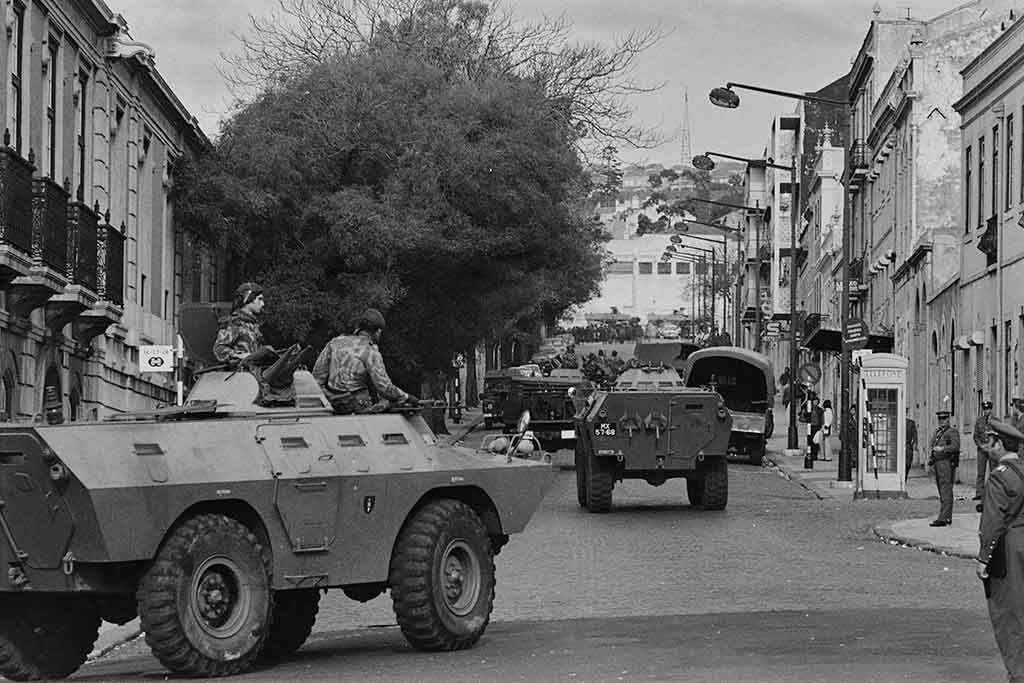
Everyone knows about the Carnation Revolution of 25 April 1974, when Portuguese soldiers elegantly toppled the Estado Novo dictatorship with barely a shot fired. But few people know that it was followed by total chaos that almost ended in civil war. It all came to a head exactly a year and a half later, on 25 November 1975. Journalist and researcher of Portuguese history Alena Khazinurova looked into what really happened for Xpat.Land — and explains why the date is still viewed with mixed feelings in Portugal.
A red south and a conservative north
Right after the dictatorship fell, Portugal was in turmoil. The soldiers who had made the revolution quickly fell out with one another. Some wanted to build a multi-party European democracy; others dreamed of socialism on the Soviet or Cuban model. Within both the left and the right there were many political movements and factions of varying degrees of radicalism. The divide between “red” Lisbon and the south on one side and the more conservative north and centre on the other was especially stark.
In the south, huge estates owned by the wealthy (latifúndios) had existed for centuries, worked by landless peasants for next to nothing, while hundreds of thousands of factory workers lived in the capital. Emboldened by the freedom that came with 25 April, they began seizing landowners’ estates en masse and setting up collective farms there; the former owners fled to Brazil or Spain. At the same time, many large factories and companies were nationalised, including the airline TAP, the railway company CP and the energy companies that were later merged into today’s EDP.
North of Lisbon, the picture was completely different. Hundreds of thousands of small farmers and devout Catholics lived there (the south had historically been less religious). They feared that the communists from the capital would take away their own small plots of land, force everyone into collective farms and close the churches.
In the north, people began ransacking Communist Party offices, and the country found itself one step away from a real civil war between north and south.
In the middle stood moderate politicians and military officers who wanted to build an ordinary European democracy and prevent both a new dictatorship — this time a communist one — and a bloodbath.
A hot summer and a November revolt
The summer of 1975 became known in Portugal as the “Hot Summer” (Verão Quente) because of the constant rallies, riots, strikes and power struggles. By November, the situation had spiralled out of control: military units stopped obeying one another, and striking workers blockaded parliament for two days with the deputies and the prime minister inside.
The final straw was a dispute over General Otelo de Carvalho, one of the main heroes of the Carnation Revolution and an idol of the left. The moderate authorities tried to remove him from his post; the left refused to accept it and demanded the decision be reversed. Then the revolt began.
On 24 November, farmers from different parts of the country gathered near the town of Rio Maior. They brought their tractors, blocked the roads to Lisbon and threatened to cut off the capital’s water, gas and electricity altogether (the town sits right on key infrastructure routes) unless the general was removed.
A coup that failed
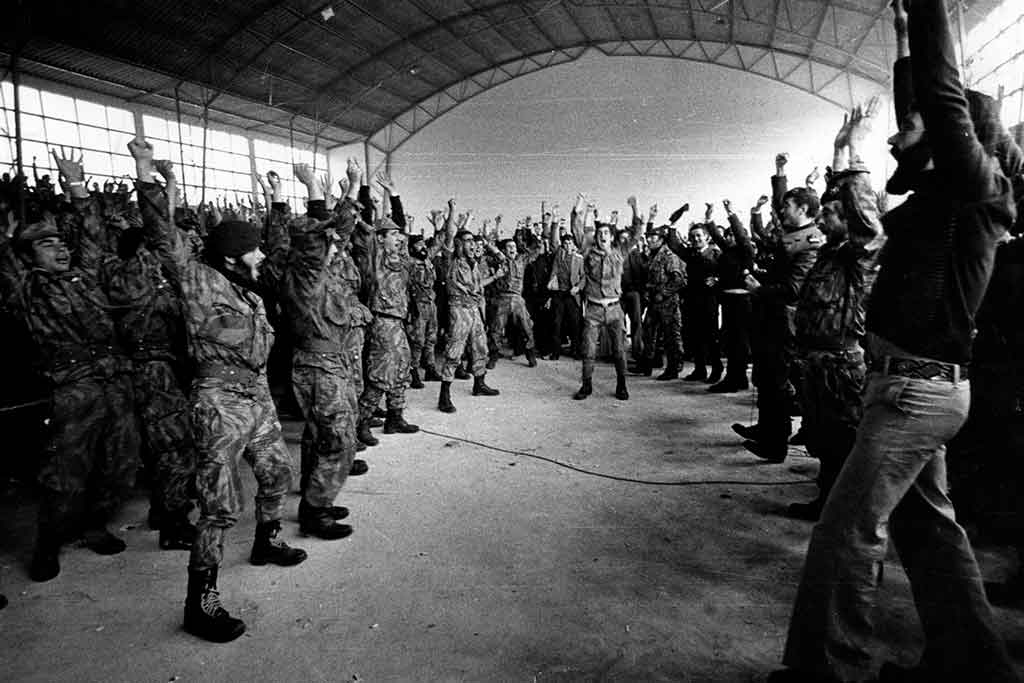
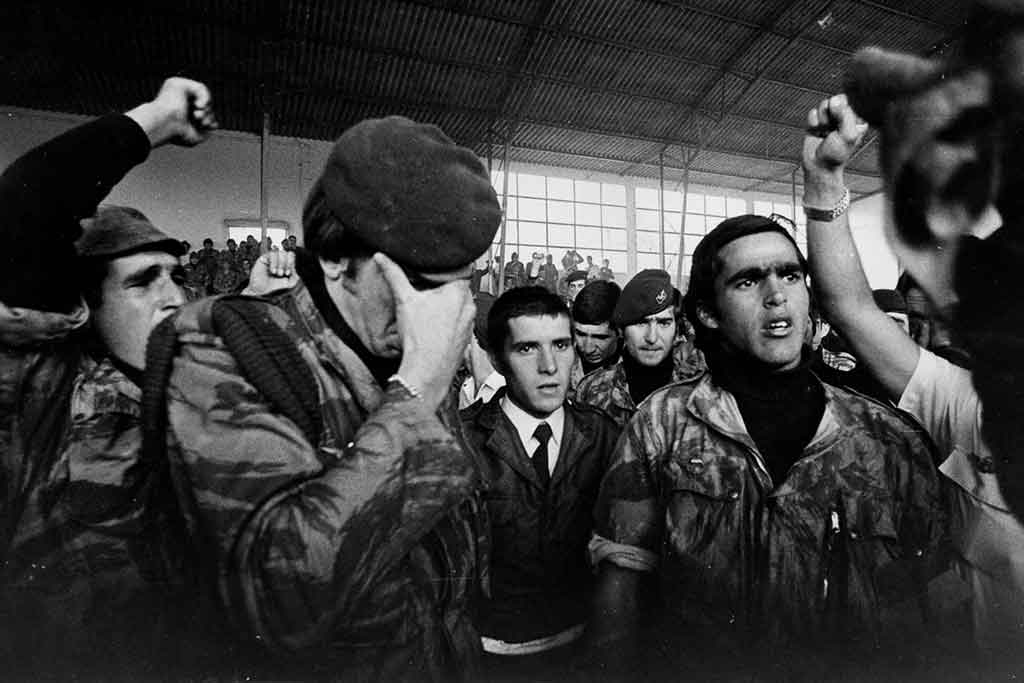
At dawn on 25 November, the radical left went all in. Soldiers from several units mutinied, seizing several air bases, the Air Force headquarters and the TV centre, from which they read out their demands live on air. They boiled down to one thing: preventing a “right-wing comeback,” defending workers’ gains and moving the country towards socialism.
The coup was rather chaotically organised. For example, after seizing the air region headquarters in Lisbon, paratroopers arrested its commander, General Pinho Freire, but forgot to cut the phone lines or take away his telephone.
As a result, the “prisoner” calmly rang the Air Force command and the presidential palace, gave them a detailed briefing and launched a counteroffensive against his own captors.
What’s more, the mutineers had counted on immediate support from the powerful Communist Party and the factory workers. But at the decisive moment, the communist leadership stepped aside.
This is still the subject of fierce debate between left and right. The communists insist they had nothing to do with the coup attempt and that their leader, Álvaro Cunhal, immediately ordered party members not to get involved in the actions of radical left-wing groups. The right, however, maintains that Cunhal only told his supporters to stand down once he realised the mutiny was doomed.
Either way, the elite Commando Regiment (Regimento de Comandos) moved against the rebels. They acted swiftly and harshly: a state of emergency was declared in Lisbon, and by 28 November all the occupied bases had been retaken.
Three people were killed in one of the firefights, but serious bloodshed and a full-scale civil war were avoided.
Left without support, the radical left eventually gave up.
What happened next
Just a few months later, in spring 1976, Portugal adopted a democratic constitution and held its first parliamentary elections, followed by presidential elections.
The events of 25 November 1975 thus put an end to the revolutionary chaos and set the country firmly on its European path — although left- and right-wing Portuguese still argue over whether that day saved democracy or marked “the end of a beautiful dream.”