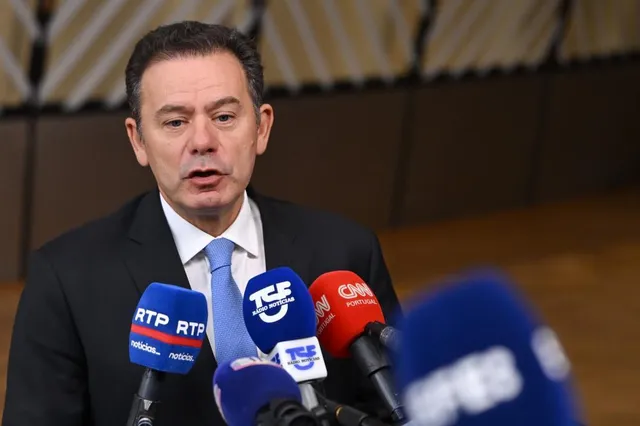
He lost twice and came back twice. Now the opposition is rewriting his budget. Who is Portugal’s prime minister, and will he survive this crisis?
On Tuesday 24 November, as the Portuguese parliament held its final vote on the 2027 budget, a man in a white tunic, with long hair and a beard, looking just like Jesus, appeared on the gallery of the chamber. While André Ventura, leader of the right-wing populist party Chega, was speaking from the rostrum, the two exchanged gestures, and Ventura joked: “Even Jesus Christ has come to say thank you.” It seemed he had managed to win over even Jesus. The speaker ordered the guest to be removed, but the police couldn’t bring themselves to twist Jesus’s arms. He left proudly of his own accord, gazing in bewilderment at a parliament where the commandment “love thy neighbour as thyself” isn’t held in particularly high regard, especially this autumn.
The budget, one might think, belonged not to Ventura but to Prime Minister Luís Montenegro. Though not quite anymore. It passed, but by that day it was no longer really the prime minister’s and the government’s creation: the Socialists and Chega, who otherwise can’t stand each other, had rewritten it together, from pensions to university fees. “If you want to run the country, come to an agreement among yourselves,” Montenegro told the opposition a week before the vote. The trouble is, the opposition had already come to an agreement — just without him.
Montenegro has governed since 2024 without a majority in parliament, and his main talent has been finding allies, sometimes on the left, sometimes on the right. Now those allies are making deals without him. Voters are leaving too. A year and a half ago, Montenegro’s coalition won the election with 32.7%, but a November Intercampus poll put it at just 21.4% — in third place, behind the Socialists and Chega. For the first time, a politician who has repeatedly escaped hopeless situations has no one to make a deal with.
To understand how he got here, and why it’s too early to write him off, you need to know how Portuguese politics works. Xpat.Land editor-in-chief Ilya Zhegulev explains who Luís Montenegro is and whether he’ll survive this crisis.
How power works
Modern Portugal has had almost no strong leaders who ruled the country single-handedly. That’s by design: in this system, nothing works without agreements. Even a prime minister with a parliamentary majority comes up against the president, who can veto laws, and the Constitutional Court, which regularly strikes them down. And a single-party majority is rare: in half a century of democracy, it has happened only four times.
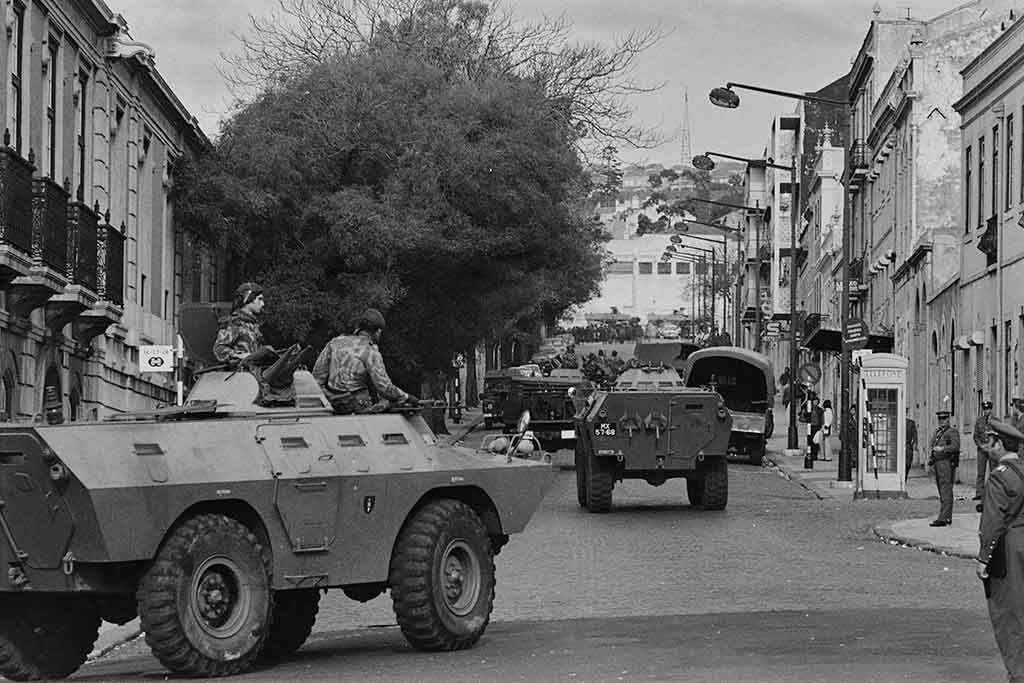
In how power is structured, Portugal is closest to France, only with a weaker president. The president is elected by popular vote and can send a law back, veto it and dissolve parliament, but the country is run by the government, which survives only as long as parliament tolerates it. As in Israel, people vote for party lists, and seats are allocated in proportion to votes, so it’s hard for any one party to win a majority, and every major law has to be passed with someone’s help. The system was designed this way on purpose: the 1976 Constitution was written by people who remembered almost half a century of Salazar’s dictatorship, and they divided power so that it could never again be concentrated in one pair of hands.
After the dictatorship fell in 1974, two parties took turns governing the country for almost half a century, and both were founded by lawyers. They were compared to America’s Democrats and Republicans, but the whole Portuguese spectrum is shifted to the left: both parties defend free public healthcare and state pensions, both are pro-European and pro-NATO, and they argued only about how much state the economy needs. The Socialist Party, PS (Partido Socialista), was founded in exile in 1973 by Mário Soares. Under Salazar he was jailed and deported; after the revolution he became prime minister and then president — and took Portugal into the European Community. The PS is centre-left: more public spending, stronger unions, higher taxes on the rich.
The Social Democratic Party, PSD (Partido Social Democrata), was founded in 1974 by Porto lawyer Francisco Sá Carneiro. He became prime minister in 1980 and was killed in a plane crash a few months later; Porto’s airport is named after him. The PSD is centre-right: less state, lower taxes, more freedom for business. The name “Social Democratic” dates from the years when calling yourself right-wing after the dictatorship simply wasn’t done.
This two-party system collapsed within a few years. In 2019, former PSD member André Ventura founded Chega (“Enough”), a right-wing populist party that campaigns above all against immigration and corruption. That same year Chega won one seat in parliament, and six years later it overtook the Socialists to become the second-largest force. Now there are three main parties, and none of them can run the country without at least the tacit consent of one of the other two. Luís Montenegro is the leader of the PSD and has been prime minister since April 2024. Like his party’s founder, he is a lawyer from the north, and in politics he still behaves more like a lawyer than an orator: he looks for wording that all sides can agree on.
The “Pea” from Espinho
Montenegro is hardly a flamboyant politician. He doesn’t give speeches that people quote for years, and he isn’t known for his wit. A columnist for ECO called his style “triumphant banality” and suggested that this might be precisely his strength, describing Montenegro himself as the prototype of the “average Portuguese.”
President Marcelo Rebelo de Sousa described him differently: a “politician of silence” with a “non-Lisbon” style, completely independent. “Now I get surprises every day,” the president complained. Advisers call Montenegro “a loner by nature”: he takes his time over decisions but announces them decisively. He is stubborn, trusts his instincts and admits that he “really loves to compete,” even with his own sons. At almost every turn in his career he has made bets that others considered losing ones — and each time he has unexpectedly outplayed everyone.
Luís was born into a family of lawyers in Porto in 1973 and grew up in Espinho, a seaside town south of Porto. As a child he was called Ervilha (“Pea”) because he was “chubby” and had green eyes. Despite his build, he played a lot of football, and as a teenager he worked as a beach lifeguard and a bar waiter. But for his career he at first followed in the footsteps of his father and grandfather, both lawyers: he graduated from the law faculty of the Catholic University and became a lawyer.
Still, even as a young man he was drawn to politics and joined the PSD through its youth wing in Espinho. In 2002, at 29, he was already a member of parliament. For almost ten years he remained a backbencher, but his political foresight paid off: he bet on the party’s rising star, Pedro Passos Coelho, backed him in the party leadership election, and Passos Coelho didn’t forget it.
In 2011, Portugal was on the brink of bankruptcy and took a bailout from the EU and the IMF. Passos Coelho became prime minister, and Montenegro became leader of the parliamentary group — a thankless job, to say the least, given the state of the country. It fell to him to defend cuts to pensions and salaries in parliament for six years. A line he uttered in 2014 still comes back to haunt him: “People’s lives are not better, but the country is much better.” It’s almost like Lukashenko’s “My people will live badly, but not for long.” Incidentally, nine years later, in opposition, he accused Socialist prime minister António Costa of “living on the moon” for claiming that people were better off. Strictly speaking, he wasn’t contradicting himself. As he’d said: the country is better off, not the people.
Montenegro was tipped as Passos Coelho’s successor, but Passos Coelho left suddenly in 2017, after the party’s defeat in municipal elections. Montenegro had counted on having another couple of years to build support, so he didn’t run. The party was taken over by Rui Rio, an economist and former mayor of Porto. At the congress that confirmed Rio, Montenegro openly criticised him and hinted that he would still fight for the leadership, then gave up his parliamentary seat, saying he wanted to give his children “what they had never had: a father at home.” He returned to legal practice, became a radio and TV commentator and set up a family consulting firm, Spinumviva, which we’ll come back to. On leaving, he warned MPs that “populism is the father of mediocrity, and mediocrity is the mother of poverty” — a year before Chega entered parliament.
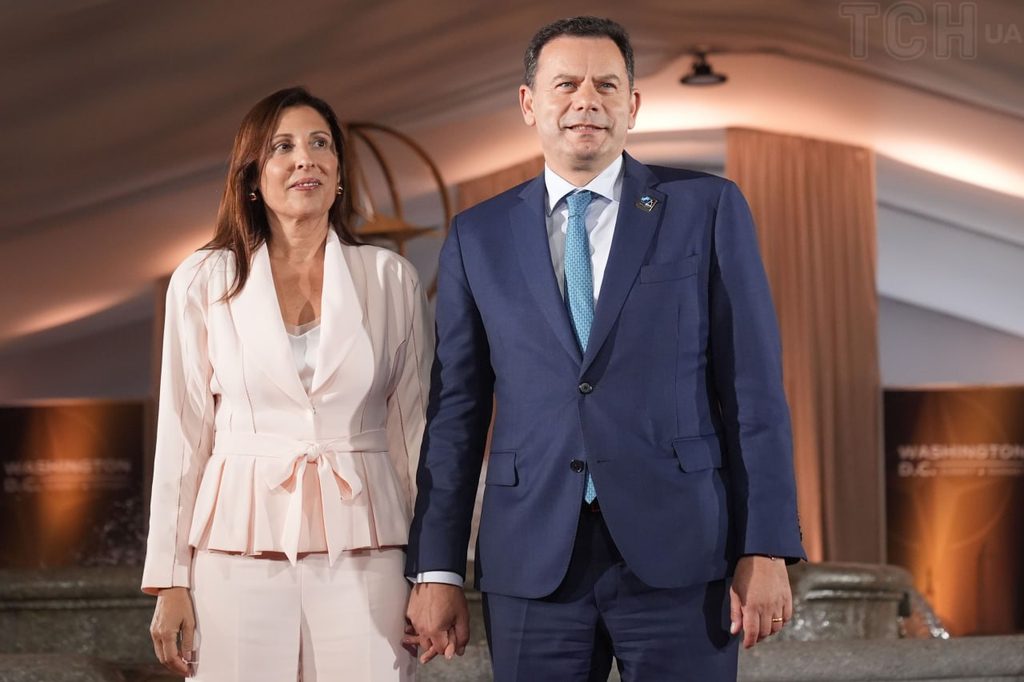
Luís Montenegro met his future wife, Carla Neto, as a teenager, and they have been together ever since
The road to AD
In the PSD, the leader is elected directly by party members, somewhat like a primary, but only those who pay their dues can vote (just under 50,000 people). In January 2020, Montenegro ran against Rio and, for the first time in the party’s history, forced a runoff. But Rio still won, with 53.2%.
Many Social Democrats didn’t believe Montenegro would ever lead the party. But he knew how to wait. In 2021 he stayed on the sidelines, and another candidate challenged Rio — and lost. That left just one strong contender in the field. Montenegro had a loyal team, known in the party as the “Montenegristas,” and the backing of the party’s largest regional branches. In May 2022 he won around 73% against 27% for Jorge Moreira da Silva, a former environment minister in Passos Coelho’s government — the best result in the history of the PSD’s direct leadership elections. Montenegro had no government experience, but a party that had spent seven years in opposition didn’t need a minister; it needed a fighter capable of beating the Socialists. He called his victory “the beginning of the end of PS hegemony.”
The prediction came true two years later. In March 2024, the PSD ran in a coalition with the small conservative party CDS-PP under the joint name AD (Democratic Alliance), the name that has appeared in polls ever since. AD won with 29.5% and 79 seats; the Socialists got 28.7% and 77 seats. Montenegro became head of a minority government and promised not to make deals with Chega. His formula “no means no” (não é não) towards Chega became one of the slogans of the time.
€4,500 a month that almost cost him his career
In February 2025, less than a year after Montenegro took office, the newspaper Expresso published a story about the prime minister’s family firm, Spinumviva. The Espinho-based casino and hotel group Solverde confirmed that since July 2021 it had been paying the company €4,500 a month, and that over roughly five years of working with them Montenegro had represented Solverde in negotiations with the state over extending casino concessions in Espinho and the Algarve. Montenegro gave up running the firm in June 2022, handing his stake to his wife, Carla, and sons Diogo and Hugo. The opposition began talking about a conflict of interest.
Prosecutors opened an inquiry that dragged on until the end of the year. The attorney general publicly complained that Montenegro, his firm and its clients were slow to hand over documents. In December 2025 the inquiry was closed with no evidence of a crime found, and Montenegro called it “a real criminal investigation.”
But Spinumviva isn’t the only story about the prime minister’s money. In his home town of Espinho, he built a six-storey villa of almost 830 square metres by the beach, and until 2022 his asset declarations said nothing about its value or how it was paid for. Prosecutors closed a first investigation, into tax breaks for the construction, in December 2024, finding no wrongdoing. But questions remained. In 2026 prosecutors opened a new case: they are still trying to establish how much the build cost and how Montenegro paid for it.
In total, the prime minister has declared 55 properties, including 49 rural plots, with a combined cadastral value of around €796,000. Small plots in the north of Portugal often pass down through inheritance, but Montenegro has never explained where so much land came from. He did, however, manage to have the details of these properties hidden from the public. He maintains that he has met all his declaration obligations and that his assets are fully covered by his family’s earned income.
Resigning because of success
The Spinumviva scandal could have buried Montenegro. The opposition demanded a parliamentary inquiry, and he chose the riskiest option available: he called a confidence vote in his own government. In the debate he called the Chega leader “André Catavento Ventura.” Catavento means “weathervane” in Portuguese, and Ventura contains vento, “wind”: Montenegro was hinting that his rival changes position whichever way the wind blows. “I have not given in to any private interest, I have not committed any crime,” he declared from the rostrum. Even his allies couldn’t understand why he was going all in. Observador wrote of a split in his team: some advisers opposed the confidence vote.
On 11 March 2025, parliament denied the government its confidence with the votes of the PS, Chega and the left-wing parties, and the cabinet fell after less than a year in office. It was only the second time in the history of Portuguese democracy that a government had fallen this way (the first was Mário Soares’s cabinet in 1977). It looked like the end. But Montenegro explained the snap election his own way: according to him, it was caused by “the success of the current government and the popularity of the prime minister” — the opposition, he suggested, was bringing the government down not because of Spinumviva but because it feared his success.
The bold gamble paid off. In the snap election of 18 May 2025, Montenegro’s coalition won 32.7% and 89 seats, not counting the overseas constituencies — more than a year earlier. The Socialists had their worst result in 40 years, and the Communists and the Left Bloc the worst in their history. Socialist leader Pedro Nuno Santos resigned, and Ventura declared the two-party system dead: for the first time, Chega had overtaken the Socialists.
In October, Montenegro also won the municipal elections. The PSD, alone or in coalitions, took 136 municipalities against 128 for the Socialists, and Montenegro pointed out that no PSD prime minister before him had won local elections while in power. For the first time since 2005, the party won in all five of the largest cities, including Porto and Lisbon. “Don’t get your hopes up — I’m certainly not going to resign,” he said that night.
A successful technocrat
Montenegro handed key posts to his old team. “Montenegrista” Joaquim Miranda Sarmento became finance minister, António Leitão Amaro became minister of the presidency, and the prime minister’s right-hand man, Hugo Soares, who once succeeded him as parliamentary group leader, now leads the PSD group in parliament and is also the party’s secretary-general.
His main argument is money. Portugal ended 2025 with a budget surplus of 0.7% of GDP, and public debt fell below 90% of GDP for the first time in 16 years. Fitch upgraded the country’s rating to A+, its fourth upgrade in two years. The government cut income tax, though even here not everything is straightforward: fact-checkers at Renascença caught the prime minister not exactly lying, but embellishing. He wrote that he hadn’t raised a single tax in two budgets, but excise duties on tobacco, alcohol and some fuels did go up under him.
Montenegro set out his philosophy in his 2025 Christmas address: the Portuguese should drop the “that’ll do” mentality and adopt “the Cristiano Ronaldo mentality,” playing not for a draw but for a win. He also promised the country about three and a half years without elections. The opposition responded by mocking a prime minister who had “decided to become a self-help coach with motivational speeches.”
Montenegro also stands out for his ability to make deals with both sides. He gets his budgets through with the tacit help of the Socialists, whose leader, José Luís Carneiro, explains his party’s abstention by saying the country mustn’t be thrown into a political crisis. On immigration, Montenegro works with Chega.
Immigration is what has changed most under Montenegro, and foreigners were the first to feel it. The government tightened the rules on entry and family reunification, and the path to citizenship became longer and harder. Both times, the Constitutional Court ruled parts of the laws unconstitutional. The new version of the foreigners law passed after an agreement between the PSD and Chega. The revised citizenship law was also adopted with Chega, and Ventura’s party’s votes proved decisive. Montenegro himself called these laws “a return to order after chaos.” Formally, he has kept his “no means no”: he doesn’t share power with Chega. But he passes immigration laws precisely with Ventura’s party, and critics say only the wording of the promise remains: no in government, yes in legislation.
In invisible mode
In the January 2026 presidential election, Montenegro backed former PSD leader Luís Marques Mendes, who came fifth with 11.3%. It was the worst result ever for a PSD candidate, and Renascença called it Montenegro’s defeat “by proxy.” The runoff was between Socialist António José Seguro and Ventura. Montenegro endorsed neither, although prominent Social Democrats, including Porto’s new mayor, Pedro Duarte, openly backed Seguro. Seguro won with 66.8%, the best result in the history of Portuguese presidential elections.
On the night of 27–28 January, Storm Kristin hit the country. The government was criticised from all sides. The Liberals accused the prime minister of not being involved enough in dealing with the aftermath. Interior Minister Maria Lúcia Amaral responded to similar accusations by saying that her work simply wasn’t visible, but it was being done. She resigned in February, and for two weeks the prime minister himself ran the interior ministry. The government approved a €2.5 billion aid package, but a bad taste remained.
The most painful blow fell on the labour reform Trabalho XXI (“Work XXI”): more than a hundred amendments to the labour code, from a system of more flexible contracts to easier dismissals — and, unsurprisingly, people in salaried jobs didn’t like it. The unions responded with a general strike on 11 December 2025, and on 19 June 2026 parliament rejected the reform at first reading. Chega bargained to the very end and ultimately voted with the left. Ventura declared that his party “is not for sale and does not bend,” while PSD parliamentary leader Hugo Soares accused Chega of “playing games with pensions at the last minute.”
“Hey, Montenegro!”
In the autumn, the street turned against the prime minister. In October, young people who couldn’t afford rent began pitching tents in central squares. It started in Porto, where police broke up protesters demanding affordable housing. Then a similar camp appeared in Lisbon. At least 2,500 people gathered in Rossio Square, jingling keys in the air and chanting: “Hey, Montenegro, I want a salary and a home.” Placards referred to the 55 properties linked to the prime minister himself. Montenegro first urged the protesters “not to be selfish,” then denied calling them that, and only almost 20 days after the first dispersal did he make an official address to the nation: “We are a peaceful country. There is no reason for Portugal to adopt models of violent protest.” The protesters didn’t leave. On the day of the budget vote, 15 tents stood right outside parliament.
Meanwhile, the opposition went after the budget. In recent years, the government had done the following: if there was spare money in the treasury at the end of the year, pensioners received a one-off top-up of €100 to €200 for those on small pensions. Montenegro called this a method that protected the sustainability of the pension system: if there’s money, we pay; if not, we don’t. In November, the Socialists and Chega, together with the left-wing parties, voted to turn any such top-up paid in 2027 into a permanent pension increase. The government will still decide whether to pay the bonus, but its choice is an unpleasant one: either a permanent cost for years to come, or becoming the prime minister who, for the first time in three years, left pensioners without a top-up. The opposition then cut the government’s access to reserves and froze university tuition fees.
On 19 November, Montenegro came to parliament for a closed meeting with his coalition’s MPs, who greeted him and saw him off with applause. But that didn’t stop the opposition. The finance minister called the alliance of the Socialists and Chega a “proto-government,” inadvertently admitting that the actual government no longer controls everything. The Socialist leader retorted that the prime minister was “desperate,” and Ventura advised him to “stop playing the victim.” On 24 November, the budget was passed after all, thanks to the Socialists’ abstention.
No more waiting it out
Now the numbers speak for themselves. As early as March, 60% of Portuguese believed the government was on the wrong track — including 30% of PSD supporters. Researchers analysed every poll since 1979 and concluded that only Passos Coelho during the austerity years and the Durão Barroso–Santana Lopes tandem had lost support faster than Montenegro.
In a Catholic University poll, AD is nominally first with 26%, with the PS on 25% and Chega on 23% — all three are almost neck and neck. Only 57.4% of those who voted for the coalition in 2025 would do so again. For Chega the figure is 90.1%, and for the Socialists 82.3%. 62.4% disapprove of the government’s performance, and most of those surveyed by Correio da Manhã want the prime minister to reshuffle his cabinet.
But there are signs pointing the other way too. In Pitagórica’s weekly tracker, AD has been rising for four weeks in a row, and approval of the government is up 2.4 points. The next scheduled election isn’t until 2029, and the Socialists, judging by the budgets, don’t want another snap election. In Montenegro’s party, people like to recall Aníbal Cavaco Silva, the most successful politician in the PSD’s history: an economist, he was prime minister for ten years, from 1985 to 1995, and then president for another ten. Observador calls him the “patron saint of Montenegrismo.” Cavaco also started out with a minority government and 29.9% support, and went on to win two absolute majorities in a row.
Montenegro knows how to wait: that’s how he once waited for his moment in the party. And he knows how to go all in: that’s how, in 2025, he won the snap election he had provoked himself. For now, he seems to have chosen waiting again. A year ago he promised the country three and a half years without elections, and now he is confident that voters will punish the opposition in 2029. But in the past he waited outside power, while others made the mistakes. Now he is waiting from the prime minister’s chair, and every month of waiting costs him support. His former patron, Passos Coelho, is already advising him to strengthen his electoral legitimacy — in other words, to call an early election. Which of his two habits Montenegro will choose, and whether he still has time to choose, will become clear soon.