
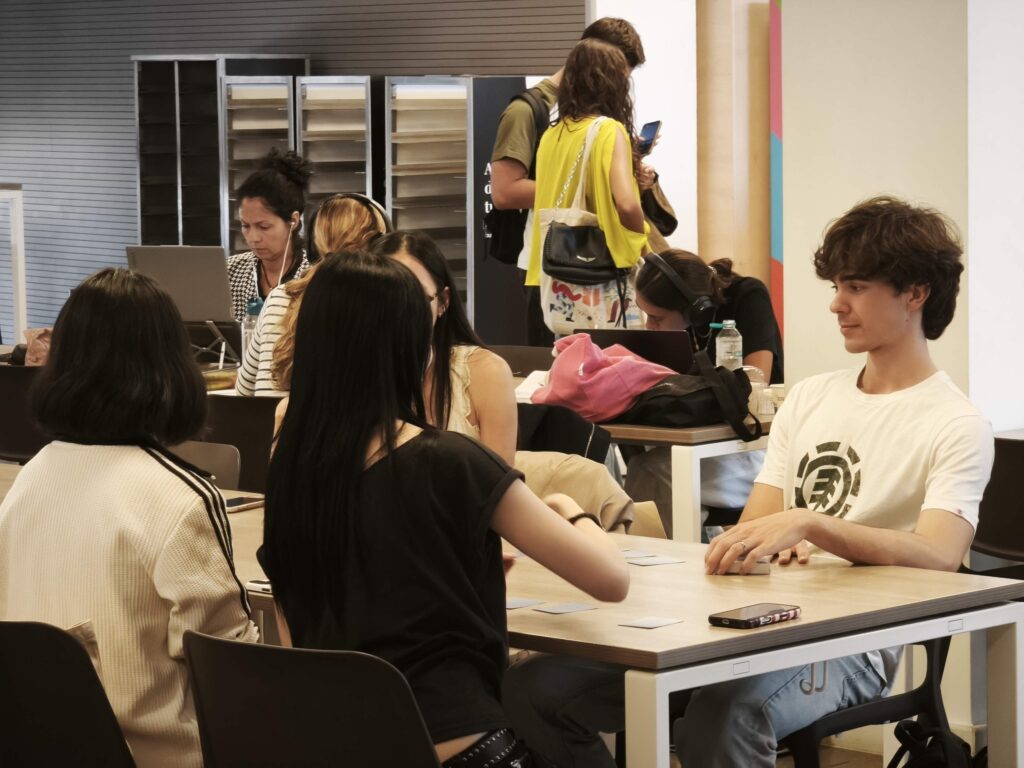
The Financial Times published its new ranking of business schools, with Nova School of Business and Economics placing second in the Masters in Management category. Portuguese education rarely reaches the top of global rankings, which makes Nova SBE stand out. Semyon Zhegulev, a second-year undergraduate, told Xpat.Land what it is like to study there — and how to get into the country’s most prominent campus in the first place.
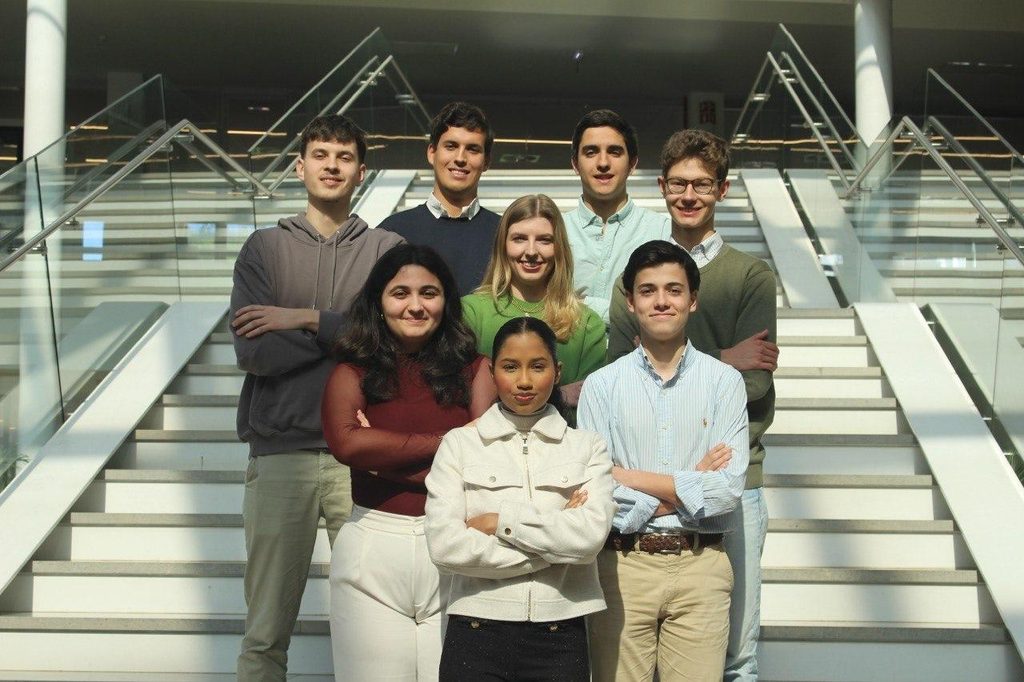
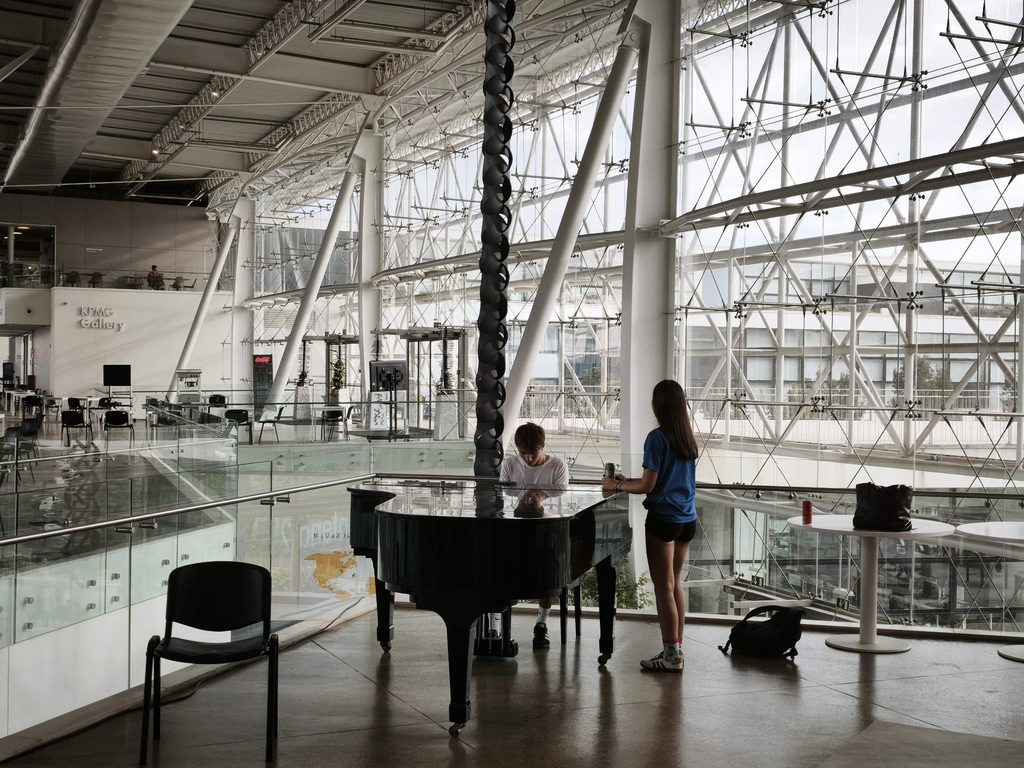
The first exam of the year started at 8:30 in the morning. The first and the hardest: Calculus I. When you enter a business school, especially one near the top of the rankings, get ready for serious maths. Nova School of Business and Economics — Nova SBE for short — sits inside the world’s top ten for master’s programmes in finance, according to the Financial Times ranking for 2026, the year the school first made it into the top group, Tier 1. Its graduates set the tone at Deloitte, EY, McKinsey, Amazon and Google. To get there, you need to be good with numbers. That day I had been up since six, rushing into the new KPMG hall.
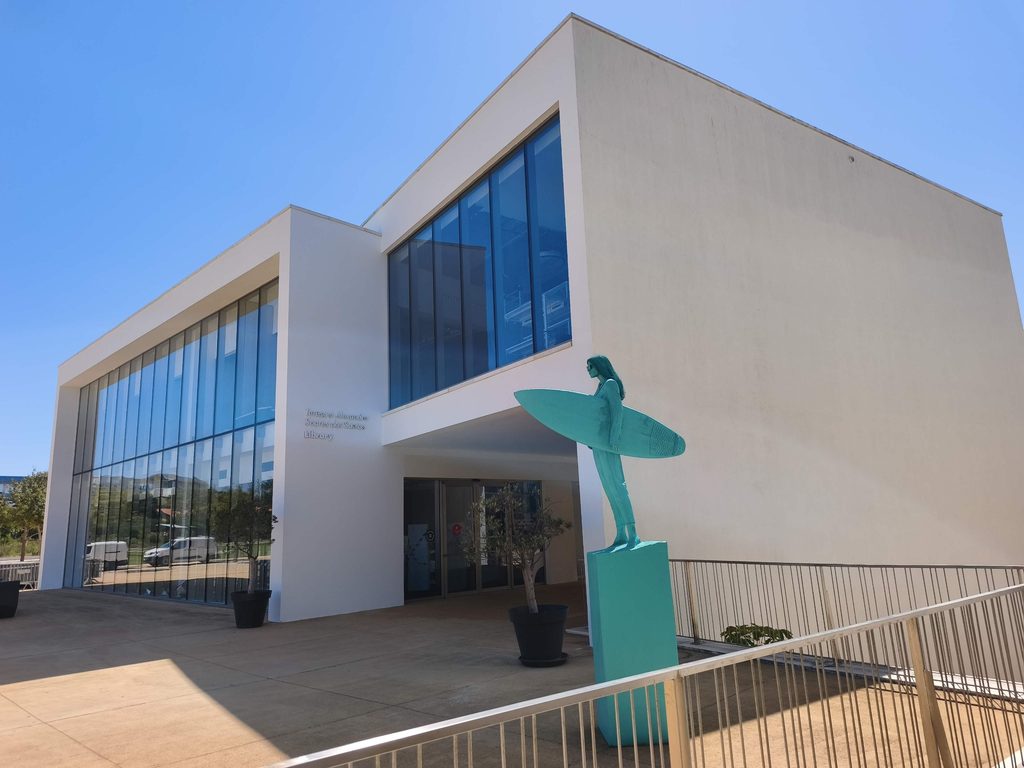
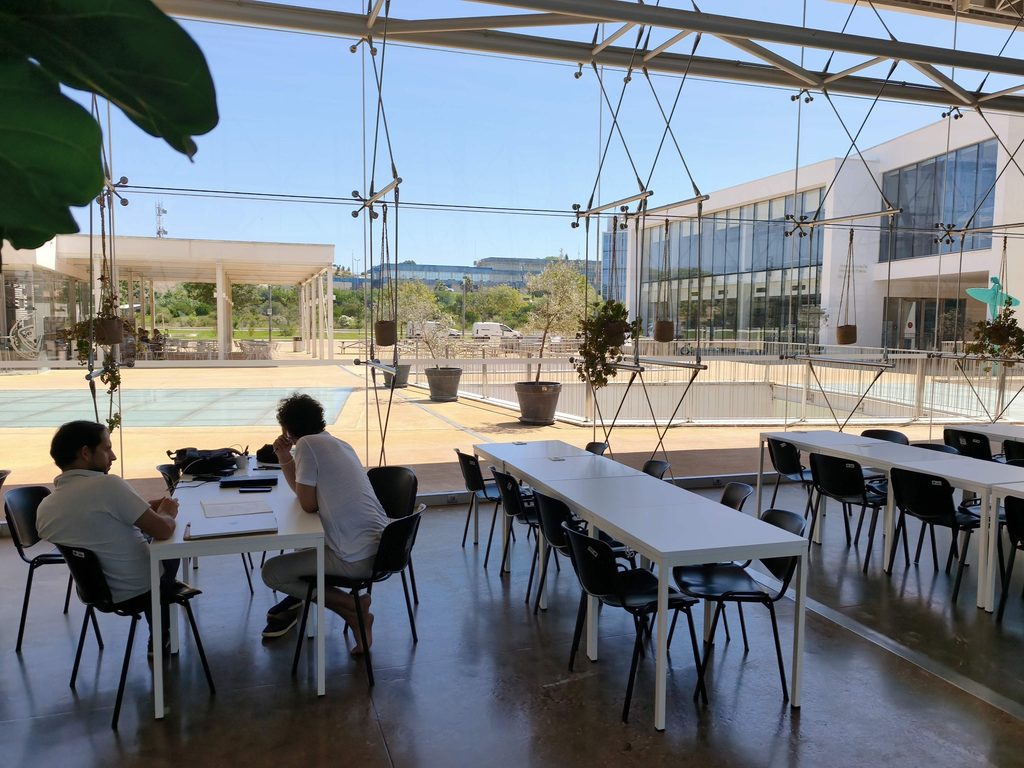
Three hours later, empty-headed and surrounded by people from all over the world, I walked out of campus. The breeze off the Atlantic balanced the hot summer sun. A few steps further and I was already in the water. Nova sits just outside Lisbon, and it is easy to forget you are in Portugal at all: white modernist buildings on the shore, finance bros in the hallways, everyone speaking English.
I remember standing at a sunset party with Ariana Grande playing in the background, talking to people from Brazil, Taiwan, Serbia and Portugal.
Ocean, palm trees, a dream come true. The dream was to study in Europe and build an international career.
And I have only just started: a semester at Supernova, half a year of my first undergraduate year, and one internship behind me.
Two faces of one university
Nova has two faces. One is the public university, founded in 1973: Portuguese-language teaching, state funding, tuition of around €900 a year. Nova SBE, where I study, is formally one of its faculties — the old economics faculty, dating to 1978. But it lives differently. It has its own foundation. The land for the Carcavelos campus came from the Cascais municipality, the construction was paid for by Portuguese companies, teaching is entirely in English, and the price list is its own. In 2018 the school moved here from a former Jesuit college in Lisbon’s Campolide district, and remade its image along the way: more open, more modern, more international.
But it is not only PR that built the reputation. The school holds the triple crown of accreditations — EQUIS, AMBA and AACSB — which fewer than one per cent of business schools worldwide carry, and it is the only Portuguese member of CEMS, an alliance of some thirty schools. In 2025 its International Master’s in Management climbed to fourth in the Financial Times world ranking — the first time a Portuguese school had broken into the global top five.
The rankings and the rebrand worked on the master’s programmes, where most students are German and Italian and the Portuguese come only third. The undergraduate picture is different: it is still mostly Portuguese, but the most capable of them. Getting into Nova SBE as a national is genuinely hard — the last candidate admitted in 2025 scored 17.46 out of 20, and everyone above them had to score higher, which is close to impossible. It is worth it, though. What Nova SBE is proudest of is exactly this: the degree works as a ticket to almost any country where opportunities are far thicker on the ground than in Portugal.
Learn here, leave here
Half of Nova’s master’s graduates take their first job abroad — 58% for the Master in Management, 88% for the CEMS programme. Alumni live in 65 countries. In an admissions brochure that reads as a promise of international mobility. Read the same numbers from Lisbon and they say something else: the country’s best business school measures its success by how many of its graduates leave.
“The undergrad is basically only Portuguese plus foreigners on exchange,” says Thomas, a master’s graduate from northern Italy. “The master’s is another story. Europeans do the whole thing here, and the Portuguese say: I’ll go somewhere else. Everyone wants to leave, make money and come back eventually. But almost nobody comes back.”
He watched it happen by nationality. The Germans and the French went home. The Italians stayed more often than the rest. The others who stayed were mostly non-EU — Russians, Egyptians, Chinese — the ones who needed the European document. Thomas himself worked at a few local startups after graduating, spent nearly four years in the country and eventually joined the family business back home. I won’t be going back to mine, but I will most likely leave Portugal too: the career opportunities people come here for are thin on the Portuguese market.
What it costs to study here
Admission works differently depending on who you are. Portuguese students pay around €750 a year. For non-EU internationals, Nova SBE’s bachelor’s programmes cost €7,500 a year. And as a Portuguese student you either get in at the reduced price or you don’t get in at all.
Those numbers mean different things depending on where you are standing. Portugal’s minimum wage in 2026 is €920 gross, €818 after social security. For Thomas, from northern Italy, the same school was cheap: eleven thousand euros for three semesters, less than Milan, and easier to get into back in 2022. For a Portuguese student, or for someone from outside Europe, it can be out of reach. That may be part of why locals look at other European universities instead of staying home.
Which raises a separate question: how does an expat get into this school at all? If you have no EU citizenship and no Portuguese school certificate, the national admissions route is closed. What is left is either the special regime for international students, with the faculty’s own entrance exams, or Supernova, a foundation programme run by the whole NOVA university rather than by the business school alone. That is the obvious path, and the one I took. It lasts a semester, costs €3,500 plus a €500 registration fee, and comes with compulsory language classes in English or Portuguese, waived at B2 and above. The point of it is that if you meet the conditions, you get a guaranteed place in the first year of the degree you chose. The conditions are strict: pass every subject you signed up for with at least 10 out of 20, and miss no more than 20% of classes. Fall short and you do a second semester and pay for it again. Most of my cohort, unfortunately, ended up there. I got through after the single semester, and in February I became a full first-year student. Nova SBE is the only school in the university where you can do that after the autumn Supernova intake, instead of waiting until September.
Debates, surfing and the Big Four
Still, the hard maths, the tough selection and the dense curriculum are not the main thing about Nova. At a school like this you learn to form your own opinion, and the best way to learn that is to learn to argue. That is why I joined the Nova Debate Club. We take on the global and local agenda every week; that week we were arguing with a former minister responsible for housing and a former deputy prime minister responsible for the economy.
Beyond the weekly discussions about economics, world politics, Portuguese brain drain and plans to change the world, Nova also offers a quieter life. You can go to the gym, surf, get decent coffee, join a picnic or just hang out on the beach, surrounded by young people from everywhere.
Nova has its own LinkedIn, but for students only: local and international companies, mostly banks, recruit straight out of the school. The standard career options are consulting and finance. Everyone is set on excelling in them, which means internships at the Big Four, investment banks or consultancies. The finance bros are a regular sight next to students carrying surfboards.
The main event in that calendar is the Nova SBE Career Fair, held on campus twice a year: in February with both Portuguese and foreign openings, in September with international ones only. Fifty companies or more turn up, along with talks and networking cocktails. The February 2026 edition brought in over fifty companies and twenty-one company talks.
That is where I found my internship. I latched onto the stand of one of the Big 4 companies and would not leave until I had the most important contact of my year. It came up in ordinary small talk that the company has an International’s division, this information was not mentioned on any recruitment platforms, everywhere it said that the interns must speak Portuguese. However after talking to the representative at the fair I was able to get a contact that helped me secure the first step of the recruitment process. My proactivity in searching for the opportunity at the fair plus reaching out to the contact may also have given me bonus points in the process of recruitment.
Lisbon is not forever
In a place like this you think a lot about the future. But for those who have already walked the path, the future looks different.
“Lisbon is a place where Europeans want to be, but not forever. You don’t even get to bond with Portuguese people. And Lisbon is not really Portugal,” Thomas says.
Lisbon is a place of change — of places and of people. Europeans want to be here, but not for good. If you are after stability, this is not where to look for it, unless you arrived with money already. What it does offer is international connections, plenty of fun and the most beautiful sunsets anywhere. Both Lisbon and Nova SBE. Thomas has long since gone home to Italy, where stability is a given, and he misses the Portuguese buzz every day.
I am still here, and free of exams for today — so I might as well enjoy it, with a surfboard in one hand and a plan for next week’s debate club in the other.
Reporting contributed by Marina Bocharova.