If you ask me what Xpat.Land is about, the simple answer is:
— Life in Portugal.
That really is the easier answer. We write about paperwork, schools, healthcare, real estate, taxes, work, language, traditions. About everything a person runs into once they end up here. But the longer we spent preparing the project, the more often I caught myself thinking that Portugal is not the main subject. It just happens to be the setting.
What interests me more and more is a different story altogether. We are living in the first era in which living somewhere other than where you were born has stopped being the exception.
Not so long ago, moving to another country was a once-in-a-lifetime event. People left rarely. Usually for good. Letters took weeks, phone calls were expensive, a plane ticket was a luxury. Changing countries meant changing almost everything about your life.
Today it is different. A flight between Lisbon and London sometimes costs less than dinner in a restaurant. You can work from anywhere in the world. Friends are one video call away. Children talk to their grandmother as if she were sitting in the next room. Yes, if the countries involved are the kind that try to regulate their internet, it all depends on how good your VPN is. But there will always be as many workarounds as there are regulations and bans.
A person can live in one country, work for a company in a second, pay taxes in a third and spend holidays in a fourth.
We have not yet fully grasped how radically the world has changed. The question used to be: “Why did you leave?” Today the far more interesting question is: “Why did you choose to live here, of all places?” Because the answers are becoming remarkably different.
A Saudi family buys a house in Porto. Partly because they want peace and quiet. Partly because they want a European education for their children. Geopolitics stops being a news feed and becomes a family circumstance.
A Russian leaves because of the war. Finds a job. Then a second one. Learns the language. Makes friends. And one day notices that his new life has stopped being “new.”
A Tunisian once arrived in Europe with no money and no guarantees. Years passed. His children now consider an entirely different country their own.
A Ukrainian is building an international company. His office is in Cascais not because he dreamed of living there, but because it is more convenient for doing business in several countries at once.
An English engineer spends a few years working in Singapore, then moves to Dubai, and after that may well find himself in Lisbon, in Parque das Nações.
All these people are completely different. Different cultures, different languages, different reasons for moving, different incomes, different outlooks on life. But a year goes by. Or three. And gradually it turns out that they have all begun to live with the same questions.
Where do you find friends? How do you figure out the local rules that no one writes down in any manual? How do you raise children who already feel more local than you do? How do you build a career without your old network? How do you stop comparing everything with your previous life? How do you make sure the new country stops being a temporary address?
And finally: how do you become happy in the place where life once brought you?
It seems to me that this is where the story of relocation ends. And the story of a person begins. We love discussing the reasons for emigration. Politics. Wars. The economy. Taxes. But honestly, all of that is only the prologue.
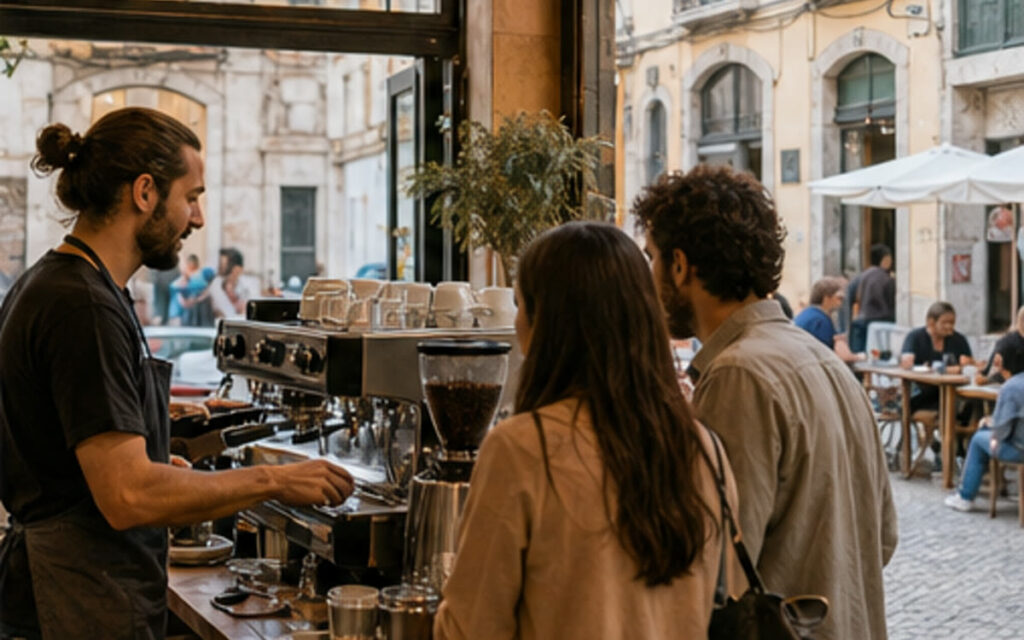
The real book begins after the suitcases are unpacked. When you have to find your first school. Your first doctor. Your first friends. Your first favorite café. The first place you start calling “ours.” And it is wonderful that it is the first time all over again. As if you were starting life from scratch. As if you were living your youth a second time. That is exactly how I feel. Even though it is far from easy.
That is when you understand that moving is not the hardest part. Learning to live is much harder.
Perhaps that is why I have less and less desire to argue about words. Expat, immigrant, migrant, relocant… Each of these words seems right to some and offensive to others. Behind each one stands its own story, its own politics, its own ideas about who is a “real” expat and who is not.
But honestly, I think this is yesterday’s argument. Because the modern world no longer fits into these categories.
You can come for a year and stay for twenty. You can get citizenship and still feel like a citizen of the world. You can spend your whole life between several countries. You can have several homes and, at the same time, none.
So for me, Xpat.Land is not about emigration. It is not even about Portugal. Portugal simply became the meeting place for people who once started life over. The idea behind the project is much broader.
I do not care at all why a person ended up here. What matters is something else: whether they managed to become happy here. Because that, it seems, is becoming the central question of the twenty-first century. Not “why do people leave,” but “how do they build a happy life in the place they came to.”
If Xpat.Land can help even a little in finding the answer to that question, then it exists for a reason.
None of this means we are not interested in how exactly Portugal builds its relationship with people like us, what the rules are here, and whether, together, we can change them. I believe we can. If we are heard. This is the land we live on, and we would like to know that we can stay on this land. If we choose to. Xpat.Land is about that too. It does not matter what language we speak. We are in this together, and there are already a great many of us.