
Moving to another country radically changes your life. Around you is an unfamiliar city, a different language, new people, and rules you’ve yet to figure out. The first months tend to unfold in much the same way for everyone: trying to make sense of the bureaucracy and the routines of a new daily life. And then, naturally, a person begins to look for the familiar — people who speak their language, news they can follow, jokes that need no explanation. This is how the émigré bubble forms, and stepping outside it often turns out to be very hard. One simple way to get out of it now and then is volunteering. Davier Sevie, writing specially for Xpat.Land, describes the opportunities Lisbon has to offer — she found five that appealed to her, though there are, of course, many times more.
By the time I moved to Lisbon, I already had experience living in other countries. So the question of how to find friends and a social circle didn’t particularly worry me. Something else was more interesting: where could I be useful, and what do people in this country actually need?
A long time ago, an acquaintance told me that the best thing you can do in another country is not simply to live in it, but to help it develop. I often recall that phrase.
When you move, you fairly quickly figure out what you need. Where to live, where to go, what to do, whom to spend time with. But it’s harder to understand what you yourself can give.
There are plenty of interests, and plenty of skills too. You might love plants, music, art, or sports; you might know how to write, film, or organize events. But first you have to find the people and places for which all of that would genuinely be useful.
It was also important to me not to get shut inside my own worldview and my usual circle. Lisbon offers every condition for that. People here have come from the most varied corners of the world, with different experiences, cultures, and ideas about life. And yet you can live in the same city for years and never cross paths.
Volunteering is precisely what creates those encounters. There’s an element of chance and spontaneity in it that adult life often lacks. You never know who will show up today, whom you’ll end up working with, or where an ordinary conversation will eventually lead. You can spend a few hours tending plants, preparing a space for an event, making content, or assembling sets, and find yourself next to someone you’d never have met in ordinary life.
That’s how I came to want to figure out where and how you can volunteer in Lisbon. The result was five very different communities. In one you can work with your hands; in another your professional skills come in handy; and somewhere it all starts with music, sports, or art. And the most interesting thing is that you don’t need to know in advance exactly what you’re looking for. Sometimes it’s enough just to show up and see where it takes you.
The word “volunteering” still carries a rather serious reputation: when people hear it, they think of charity, helping animals, environmental campaigns. In reality, urban volunteering is arranged far more diversely: you can grow plants, paint walls, set up a stage before a concert, help out at a market, build props, photograph an event, work on social media or a website. And sometimes just wash, carry, or clean something. In other words, saving the world every Tuesday from 6:00 to 9:00 p.m. is by no means required.
You can choose activities to suit yourself. For those who spend the whole workday at a computer, a garden might be a good fit. For those who love being around people, events are the thing. A designer can help with the visual side, a photographer can handle the shoot, and someone without any special skills can simply show up and find out what help is needed today.
That’s how volunteering becomes a gentle way to blend into a new culture and a new city.
Rizoma: a shared enterprise
One interesting example in Lisbon is Rizoma Cooperativa Integral in Anjos.
There’s no single founder behind Rizoma: it’s a cooperative, and it emerged as a collective initiative by people who wanted to create a more sustainable and fairer model of consumption, work, and city life in Lisbon.
The project does have people who took part in launching and developing it from the very start. Among them is Mariana Reboleira, one of Rizoma’s co-founders and a social-entrepreneurship specialist from Lisbon. Together with other organizers and coordinators, she helped build the cooperative in its early stages.

Mariana Reboleira
This isn’t a classic volunteer organization either. Within this multisectoral organization, run on a horizontal management model, there are strands connected to consumption, culture, housing, agriculture, services, and craft. The most straightforward way to get involved is to help out in the cooperative shop: members of the consumption section take a three-hour shift once every four weeks, helping with the day-to-day running of the space, choosing products, and working with local suppliers.
But it doesn’t end with the shop. You can take part in the cultural strand — organizing concerts, film screenings, workshops, and other events; in the craft strand — swapping skills and helping with events; in the agricultural strand — joining projects around local food production, agroecology, and cutting food waste. There’s also a cooperative coworking space and projects for freelancers, while a separate group works on affordable non-profit housing.
In short, Rizoma is built on people’s active participation in the life of the community. Membership involves regular participation. For example, members of the consumption section contribute a minimum of €15 to the cooperative’s capital and take a three-hour shift once every four weeks.
This format suits people who want to get to know others gradually, join in shared processes, and widen their circle. Rizoma brings together people of the most varied nationalities, cultures, and backgrounds, so the community itself becomes a good environment for meeting people you’d be unlikely to cross paths with in ordinary life. Taking part regularly helps you feel part of this environment — and of the city itself — more quickly.
Arroz Estúdios: music, people, plants
Arroz Estúdios offers a different format — a non-profit cultural organization connected to music, art, and events.
Steven MacKay is the founder and president of Arroz Estúdios; he comes from Manchester, in the UK. Before moving to Portugal, he worked on music and cultural projects in Britain: he worked with venues and festivals, created art installations, and performed as a DJ.
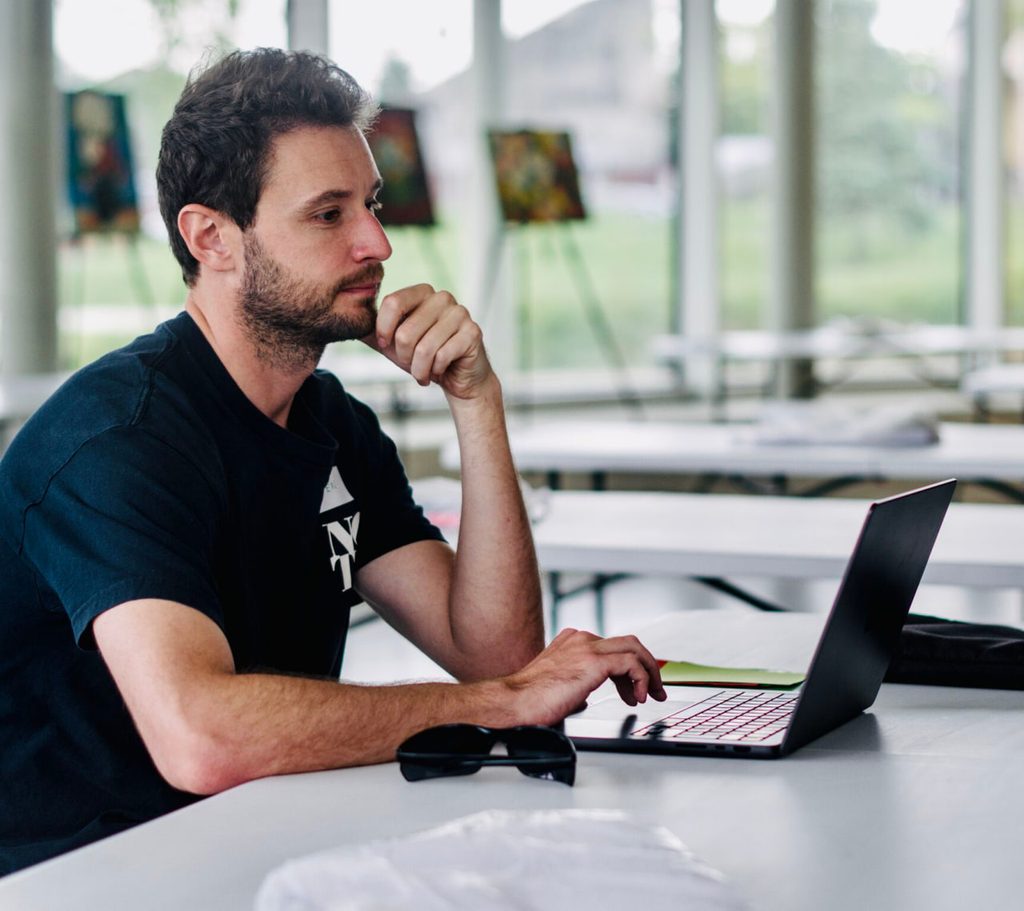
Steven MacKay
He moved to Lisbon in 2018. Here he launched Arroz Estúdios — a social and cultural project that gradually grew into a space for artists, musicians, organizers, and independent cultural initiatives. Later, Steven also founded Rare Effect, an art and technology festival.
Spaces like this are appealing because there are usually far more ways to get involved than you’d guess from the outside. Behind a concert, a market, or any other event stands a whole team: the space has to be prepared, things assembled, things carried, decorated, cleaned up, or put in order. There’s also a garden, so one option can be caring for the plants.
But the possibilities don’t stop there. You can find out about additional volunteering strands right on site. Sometimes the simplest way to start is to come to a concert or an event, get to know the space and the people, and ask how you can be useful. There’s no need to invent a special pretext for meeting people or to keep a conversation going. You just do something together, and the connection arises on its own.
Prisma: a place for your own people
Another option is Prisma Estúdio, a small cultural and artistic space.
Prisma appeared in Lisbon in 2019, when the artist and illustrator Jonathan Marques — who had moved to Portugal after several years of travelling — found, together with an acquaintance, the premises of a former plant shop and seed warehouse, Casa do Campo. The space was originally called Casa da Semente and was conceived as an open art studio and a place where artists could work, exhibit, and meet. Just two months later it hosted its first group exhibition, featuring more than 20 artists.
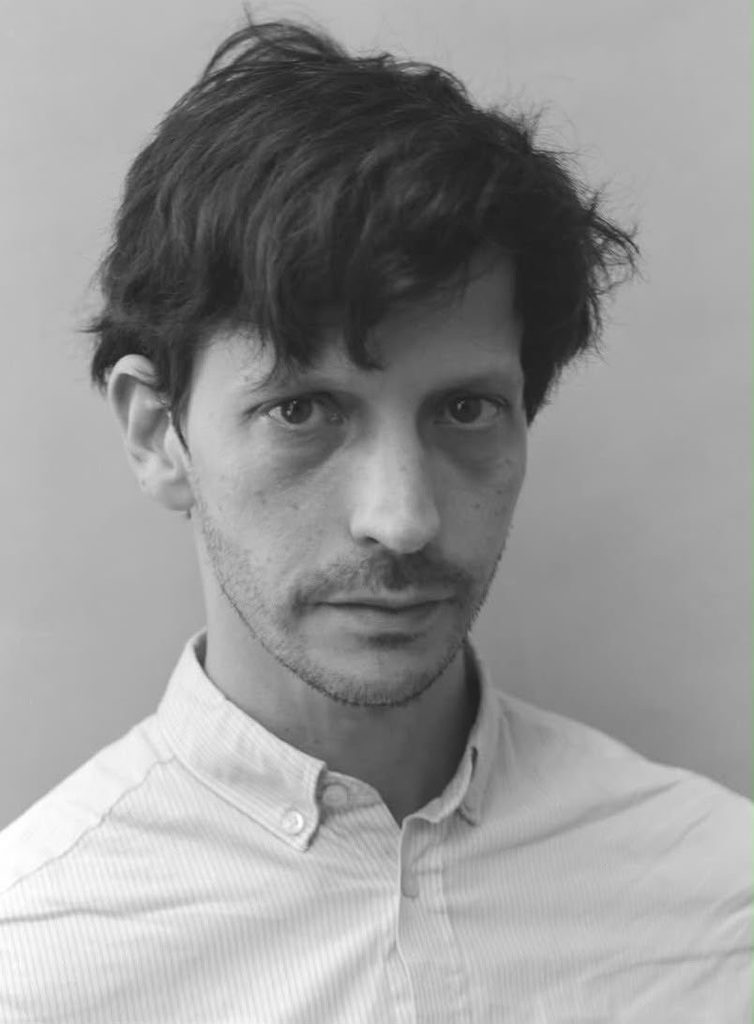
Jonathan Marques
Later the project took the name Prisma and turned into an independent art association with exhibitions, concerts, creative gatherings, and an international Artist in Residence program. In 2022 the residency expanded: artists gained the chance to live in the apartments above the studio. Today Prisma continues to operate as an international creative space, bringing together artists, musicians, and other local and international projects.
Here volunteers can do a great variety of things: help with the bar, curating, social media, design, the website, or the garden. Prisma also has a garden-care team that looks after the plants and composting, as well as maintaining the space.
Prisma hosts musical jams, exhibitions, and gatherings that draw people from different countries. Many of them are people who once moved to Lisbon too and are now looking for their own space here, a circle of friends, and the chance to do what interests them.
You don’t have to come with some grand goal of urgently integrating and making useful contacts. You can come to a jam, help with the plants, take part in setting up the space, or simply spend an evening here. The person you’re repotting plants or listening to music with today might turn out tomorrow to be a friend, a colleague, or just that understanding person nearby whom you especially miss in a new city.
NOW SOCIETY: about an active life
This is the option for those who feel closer to sport, wellness, and an active lifestyle.
Bella S. Kristensen, the founder of Now Society, came to creating a community with a background in marketing, communications, and international projects. She studied at Copenhagen Business School, worked in London and Colombia, and later settled in Lisbon.

Bella S. Kristensen
Now Society appeared in 2025. It’s a community for connecting and taking care of yourself, built around a fairly simple idea: it’s easier to meet people when you’re not just standing around with a drink at yet another networking event, but doing something together. So it organizes group runs and hikes, Pilates, breathwork, workshops, and other events where physical activity becomes an occasion to connect.
Bella has her own experience of volunteering as well: for many years she has handled PR for Project Béisbol, a non-profit that supports children’s sports programs in Latin America. Now Society is a particularly good illustration of how a personal interest in wellbeing, connection, and building bonds between people can, over time, grow into a full-fledged urban community — and how quickly you can become part of it if what you want is not just to meet people in Lisbon, but to do something together.
Volunteering here can be tied to something you already know how to do: helping with Instagram, event organization, communication, or partners. It’s a good option for anyone who wants to put professional skills to use in a more informal setting while also meeting people who share similar interests.
Another advantage is that, by helping the community, you can find yourself at all kinds of events and gradually discover what suits you best. Today it’s a run, tomorrow Pilates, then hiking or wellness practices. And even if sport has never been your main way of making friends, here it becomes more of an occasion to end up in the same place as others looking for a new circle in Lisbon.
Lisbon Queer Market: about love
Another example is Lisbon Queer Market, a community project that brings together the queer community, art, and independent local projects.
Erin Delaney is an American, an event organizer, and the founder of Lisbon Queer Market. She first came to Portugal in 2021, and later moved to Lisbon and began organizing gatherings for queer people.
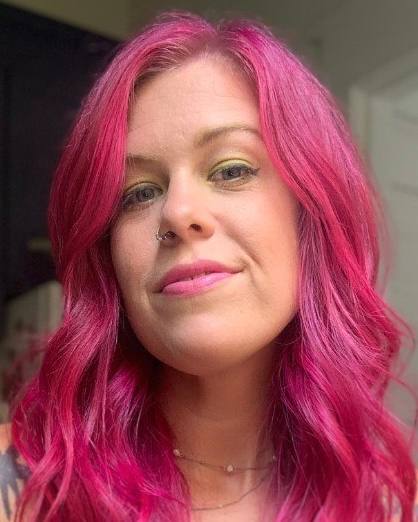
Erin Delaney
She created Lisbon Queer Market as a safe space for the community and a platform where queer artists, makers, and small independent brands can show their work and find new audiences.
Volunteering here doesn’t necessarily look like the classic “helping at an event.” You can work on decorations and stage design, prepare the space for the market, and generally make sure everything looks beautiful. And when you’re surrounded by color, glitter, and unusual objects, the work quickly stops feeling like work.
On market day, the project usually needs people who help participants and guests and take care of the dozens of small tasks without which a big event simply wouldn’t happen.