
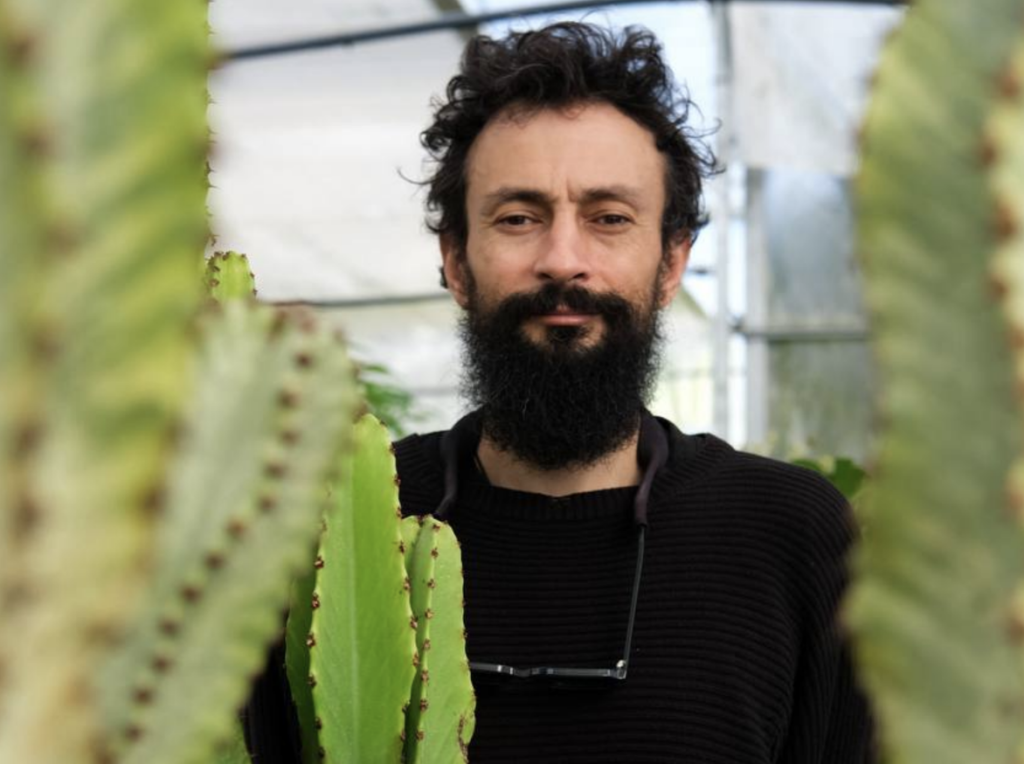
Alexey Polivanov is 43. Long ago he managed an electrical goods warehouse, and for the past 12 years he and his wife built a clothing brand, where he was at various times a model, a loader, a salesman and a store manager; as he puts it, he did “everything: physical and mental work alike.” After moving to Portugal, he decided, unexpectedly even to himself, to become a gardener. Alena Khazinurova spoke to him for Xpat.Land about how it turned out, what the market for such services looks like in Portugal, whether newcomers should try to break into it, and how profitable it is.
“My wife came back, and we had 100 pots on the balcony”
Alexey burst into gardening with no preparation whatsoever: by the age of 40, his only experience was picking raspberries at the dacha and digging potatoes in his grandparents’ garden as a child. But Lisbon inspired a passion for plants, simply because they are everywhere here: everything grows, blooms and smells wonderful.
“Once my wife and son went to Moscow for a few months, and I stayed behind on my own. I’d wander around the city, look around, cut a little piece off one plant, stick it in soil at home, then another one, and buy a few things. Some plants took root and some didn’t. I wanted to understand why. I started looking things up online, watching YouTube videos and following Instagram bloggers, and I got really into it. In the end my wife came back, and we already had around 100 pots on the balcony, from tiny to huge,” says Alexey.
“You can’t make a big margin on plants”
In March 2024, with his wife’s support, Alexey opened a plant shop, Mir Station, in the Campo de Ourique district. Again, he jumped straight in: he admits he did no market research, no competitor analysis and no business plan. He invested around €4,000 in the business: rent was €1,100 a month, and the rest went on minor renovations, furniture, lighting, and the plants and pots themselves.
They didn’t hire any staff; Alexey worked as the shop assistant himself. Even so, at best they broke even, and more often monthly costs exceeded revenue.
“You can’t make a big margin on plants, considering rent, utilities, card payment fees… And the plants themselves constantly need care and pest treatments, and some of them die.
A business like this can pay off if you have a big shop and a steady flow of customers, or if you’re some Portuguese granny with your own little flower shop in premises you own.
Plants aren’t bread; people won’t buy them all the time,” says Alexey. Mir Station’s customers included passers-by as well as Russian-speaking expats who heard about the new place by word of mouth or through social media ads.
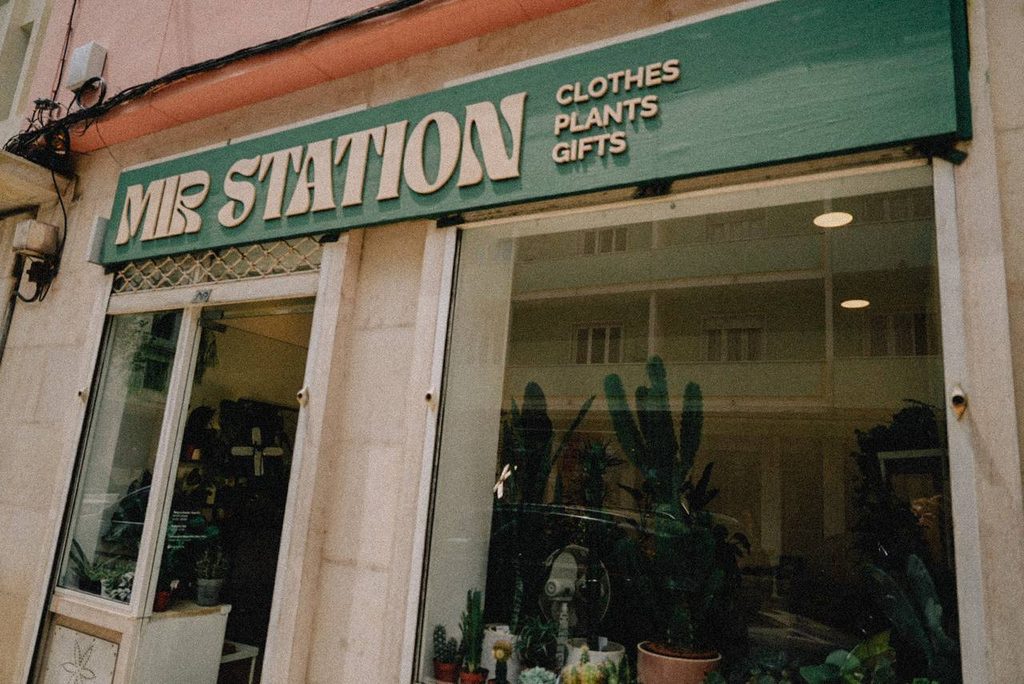
Photo: Alexey’s archive
The shop never turned a profit. Alexey realised the idea hadn’t worked: on top of everything, he was often away from the shop, visiting clients to help them repot and treat their plants.
The shop lasted just under two years, and by the end, in Alexey’s words, it had become “an overly expensive warehouse.” It had to close. The only thing that kept him out of the red was that for the last six months Mir Station shared the rent with a colleague who sold cut flowers in the same space.
“Yes, I’ll help you”
Instead of the shop, Alexey rented a storage unit for €300 and focused on call-out services. He now treats plants for pests, repots and prunes them. He also plans greenery for commercial spaces such as cafés and clinics. He looks after plants while people are on holiday, offers consultations, and can take on the full planting of a balcony, terrace or garden. And he learned all of this on the job.
“The first client who came to me said: ‘We have a problem. We’ve got loads of pests.’ I went over, took a look and said, ‘Yes, I’ll help you,’ though I had no idea what the pest even was… I took photos, found a course on pests, completed it, found the right products and cured the plants. You see a problem, you solve it. Now that I’m repotting plants every day, I can tell from a photo or video what a plant is lacking. But that didn’t come right away, only with experience,” says Alexey.
“The Portuguese are reluctant to try anything new”
The first major difficulty of working with plants in Portugal, according to Alexey, is the limited choice of both plants and supplies. For example, he has noticed that in neighbouring Spain any roadside shop will have 15 different types of soil, while in Portugal there are only two or three brands. The same goes for the range of plants.
“There are all kinds of plants in the world, but only the standard ones get imported here, without any attempt to diversify, even with different colours. The Portuguese find it hard to try anything new; their logic is: ‘People buy this from us, why should we do anything new?’” Alexey laments.
The second thing he points to is the laid-back Portuguese mentality: people aren’t always prepared to keep a close eye on product quality. At local wholesale markets, Alexey notes problems with plant quality, including insects.

Photo: Alexey’s archive
“They’re probably just buying cheap plants. At first glance they look fine, but when you take a closer look, the roots are all rotten or the whole plant is crawling with pests. I find it surprising, because it should be bad for the wholesalers themselves: if a truckload of plants arrives and some of them are infested, the pests can spread across the whole nursery. But apparently they’re OK with it,” he says.
“Entering this field from scratch isn’t the best idea”
Gardener Artem Alekseev, who started his career in Russia and now specialises in maintaining the gardens of private houses and villas around Setúbal, agrees that you’re unlikely to make millions from gardening. In his experience, earnings in the field range from €1,100 a month as an employee to €4,000–5,000 a month if you’re self-employed.
“The market for gardening services in Portugal is quite large. Walk through a residential area on a weekday and you’ll see vans from gardening companies as well as workers in gardens, constantly cutting something or buzzing away with something. There’s demand all year round, so there’s competition too,” says Artem.
According to him, newcomers will find it hard. Even someone with experience in another country will most likely have to retrain, because the flora, climate, materials and people’s mentality are different in Portugal.
“Entering this field from scratch isn’t the best idea, in my view. But if you have a huge desire and enthusiasm, I’d advise starting as an employee at a garden maintenance company: gain experience, learn the details, get a feel for it. After a while, once many of your questions have answered themselves, you can strike out on your own through the thorny bramble thickets and indestructible reeds,” Artem advises.
He recommends finding clients by word of mouth: here it is “the best advertising, and it’s free.” And there should be no shortage of clients in Portugal.
“Your clients are anyone who has something growing. Even a single tree and a couple of bushes need care. Gravel mulch laid around a planting bed (a dense group of plants set close together — Xpat.Land) a couple of years ago already needs fixing: the membrane underneath has worn out, and weeds are creeping in at the edges, spoiling your enjoyment of the garden over a cup of coffee. Trees, especially fruit trees, keep throwing out useless shoots that need pruning. And simply clearing fallen leaves from the yard is laborious, dusty and, worst of all, never-ending,” Artem adds.
Alexey, however, is now ready to call his business profitable. He says gardening makes up about 60% of the family’s income: enough to cover his child’s school, food, car repairs and various day-to-day expenses. But the figures depend heavily on the season, and it’s too early to call them stable. There’s less work in summer and winter; in August, when Portugal traditionally goes on holiday, you can end up “well in the red,” while autumn and spring bring more orders, as everyone is planting and repotting. On average, they earn around €3,000 a month.
In some months, big projects have brought in as much as €5,000.
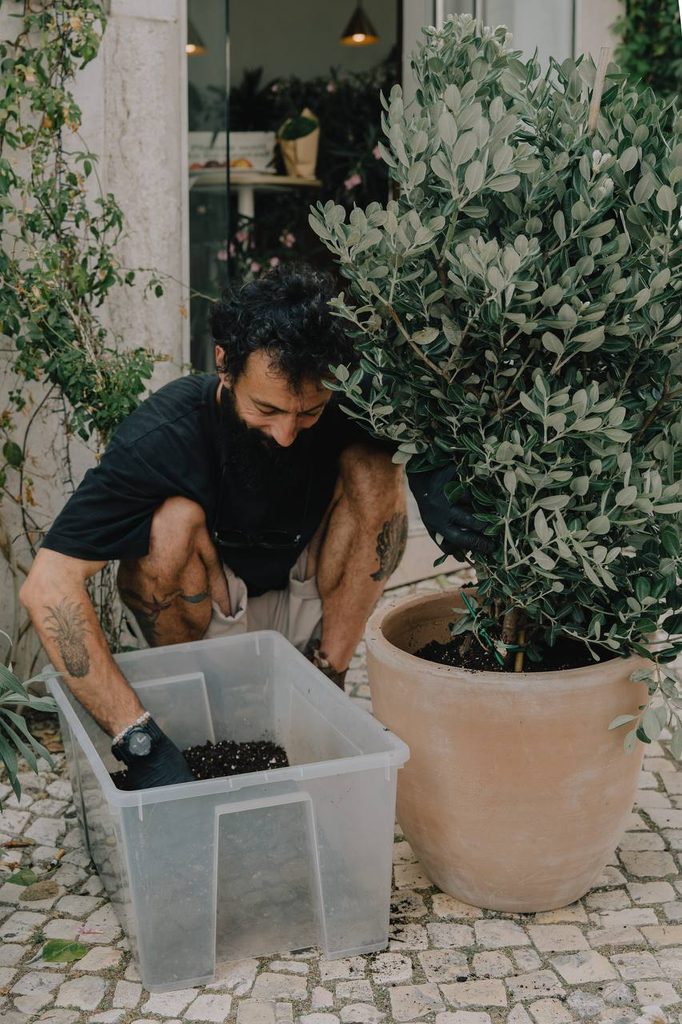
Photo: Alexey’s archive
Alexey currently charges from €50 for a consultation, from €35 for a one-off service (repotting, treatment, pruning), from €35 an hour for full interior planting, and from €140 a month for a weekly plant care subscription. But it was a long road to these figures.
“At the beginning I could work for months without a day off. Even now I work with plants every day: in my spare time, when I get home from clients, I tend my own plants, around 150–200 pots of them. Repotting and watering them all takes a lot of time. But I enjoy it, and I want to grow this business,” he says.
It may not be an oil well, but Alexey has gone from nothing to earnings that not every employee can boast of. And if Artem is right, that’s not the ceiling: self-employed gardeners can earn €4,000–5,000 a month. That’s quite enough to live on in Lisbon, and in that situation you depend only on yourself.