
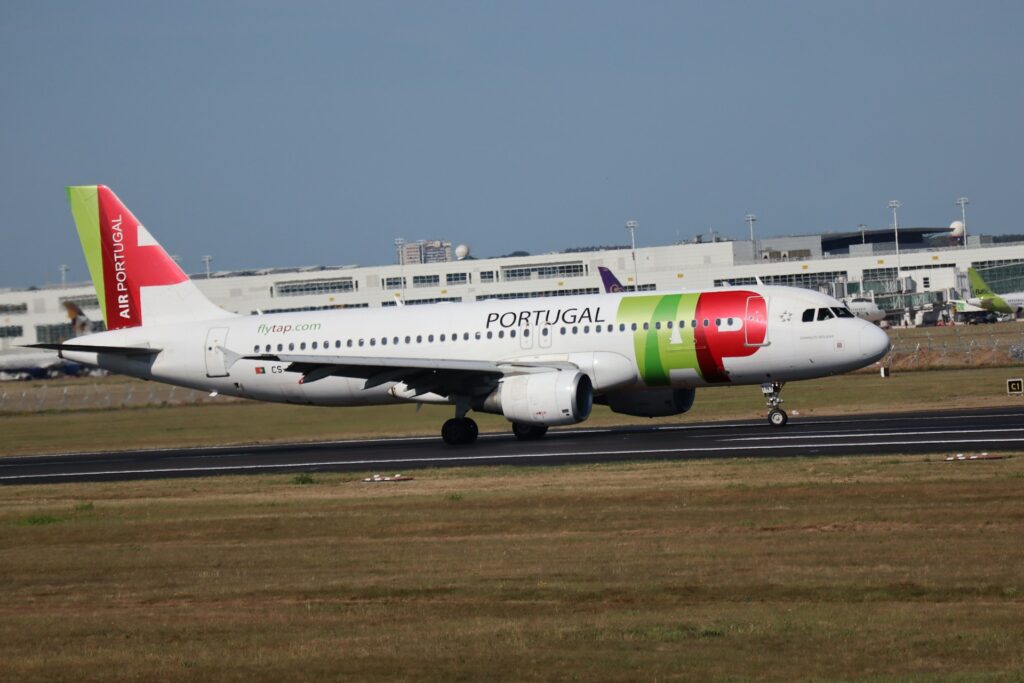
Portugal’s government has selected Germany’s Lufthansa as the strategic partner for the partial privatisation of national airline TAP. The Council of Ministers approved the decision on October 14, Prime Minister Luís Montenegro announced. Lufthansa will pay €1.201 billion for a stake of up to 49.9%. That is 16% more than the €1.038 billion offered by rival bidder Air France-KLM.
The total comprises three parts. Lufthansa will pay €1.025 billion for 44.9% of TAP, another €58 million in adjustments related to ground-handling operator SPdH (formerly Groundforce) and in-flight catering company Cateringpor, and €118 million for the 5% stake reserved for employees. The Portuguese state will retain 50.1% and appoint some members of the board.
There were initially three potential bidders. The British-Spanish group IAG, which owns British Airways and Iberia, never submitted an offer because it needed a clear path to a controlling stake. Air France-KLM said it was disappointed with the outcome and promised to look for other ways to expand its presence in Portugal and South America.
Looking to the future
Lufthansa says the TAP brand, its headquarters and its Lisbon hub will remain in place, with flights to Madeira and the Azores guaranteed. Within the Lufthansa Group, TAP will become the main carrier for Brazil, South America and Portuguese-speaking countries. According to CNN Portugal, TAP’s fleet is expected to grow from 99 aircraft today to 117 by 2035, and eventually to 130 after the opening of the new Luís de Camões Airport. A flight school employing 200 people is planned for Tancos, a military airbase in the Santarém district. Lufthansa has also pledged to establish an innovation centre and a corporate services centre in Portugal.
According to the Portuguese government’s calculations, the combined group would become the world’s fourth-largest airline group by revenue, at around €47 billion, behind US carriers Delta, United and American. These figures assume that both TAP and Italy’s ITA Airways are wholly owned by Lufthansa.
Montenegro has suggested that a second phase could see TAP come entirely under Lufthansa’s ownership, with the deal expected to close by July 2028. For the remaining stake, the German group is offering €1.351 billion: €488 million in shares, equivalent to 5% of the combined group, and €863 million in cash. The government stresses that this money is not guaranteed. It will be paid only if TAP’s EBITDA reaches at least €1.036 billion in 2028 and its net debt does not exceed €2.9 billion. A new law will be required to sell the controlling stake.
Why this matters to those of us living in Portugal
For people living in Portugal, TAP is first and foremost a way to leave the country and get back home. It remains the leading carrier connecting Lisbon with Brazil, Africa and the US, and that is not expected to change. What could change is how easily passengers connect to the rest of the world. Travelling via Frankfurt, Munich, Zurich, Vienna and Rome could become easier for those heading to Eastern Europe, the Caucasus, the Middle East and Asia. A single ticket within the same airline group usually means better-coordinated schedules and protection if a connecting flight is delayed.
Prices are a different story. TAP and Lufthansa currently compete on routes from Lisbon and Porto to Germany, Switzerland and Austria. Once they are part of the same group, that competition will disappear. The European Commission will likely demand concessions, potentially including the transfer of some airport slots to other carriers. But experience from previous mergers in Europe suggests that fares rarely fall as a result.
Frequent flyers should keep an eye on developments. TAP and Lufthansa are already members of Star Alliance, and Miles&Go members can spend their miles with partner airlines. In time, TAP’s programme could be merged with Miles & More, the Lufthansa Group’s loyalty scheme, which would mean changes to how miles and status are earned.
Northern Portugal has its own interests to consider. Air France-KLM had promised to develop its presence in Porto, while Lufthansa’s plans centre on Lisbon. As a result, the deal may bring less benefit to Porto residents than to those in the capital.
There could also be gains for the labour market. The flight school, innovation centre and corporate services centre are expected to create new jobs, some of which may be open to professionals who work in English.
Finally, this is about taxpayers’ money, including that of expats who pay taxes in Portugal. Bailing out TAP cost the public budget around €3.2 billion, and the sale is intended to recover at least part of that amount.
How TAP ended up on the auction block
TAP was founded in 1945. Following Portugal’s 1974 Carnation Revolution, the airline was fully nationalised in 1975. In the decades that followed, it struggled with losses and repeated injections of public money. In the early 2000s, Brussels demanded that privatisation begin in exchange for another round of state aid. Swissair, the Swiss airline, came close to acquiring a stake, but went bankrupt itself in 2001.
TAP was not sold until 2015. The centre-right government led by Pedro Passos Coelho handed control to the Atlantic Gateway consortium. Its members were David Neeleman, a US-Brazilian entrepreneur who founded JetBlue and Brazil’s Azul, and Humberto Pedrosa, a Portuguese businessman who owns the Barraqueiro bus group and Fertagus, a suburban rail operator. Pedro Nuno Santos, who later served as a government minister, recalled that the consortium paid just €10 million for TAP at the time. When António Costa’s Socialist government came to power, it partially reversed the deal: the consortium retained 45%, while the state reclaimed 50%.
Under Neeleman, TAP expanded rapidly. According to his figures, passenger traffic grew by 54%, and the airline added 13 new destinations, including six in the US. But the growth was financed through debt, and TAP ended 2019 with negative equity of €580 million.
The pandemic pushed TAP to the brink of bankruptcy. In the summer of 2020, the state extended an emergency loan of up to €1.2 billion and bought Neeleman’s 22.5% stake for €55 million, increasing its ownership to 72.5%. Pedrosa soon exited the shareholding as well, making TAP fully state-owned once again. The total cost of the bailout came to around €3.2 billion. In return, the European Commission demanded a sweeping restructuring programme involving job cuts, pay reductions, a smaller fleet and the surrender of some slots at Lisbon Airport.
Then came the scandals. Prosecutors investigated allegations that, under Neeleman, TAP had purchased 50 Airbus aircraft at full price, even though a discount had already been agreed. Neeleman denies the allegations. It later emerged that former board member Alexandra Reis had received half a million euros in compensation when she left the company. The fallout led to the departures of minister Pedro Nuno Santos and CEO Christine Ourmières-Widener.
TAP has been profitable again since 2022. Montenegro’s government seized the opportunity and approved a decree in 2025 authorising the sale of up to 49.9% of the airline. The prime minister believes that a partnership with Lufthansa opens the way to recovering the money invested in TAP in full.
What happens next
The parties will sign the documents for the first phase, after which the deal must be approved by the European Commission and ANAC, Portugal’s civil aviation regulator. Finance Minister Joaquim Miranda Sarmento has warned that the European Commission’s review could take between 18 and 24 months. The first phase is expected to close by early 2028.
For now, tickets, miles and routes will continue to work as before. However, the transition could bring disputes with pilots’ and cabin crew unions, so travellers should factor the risk of strikes into their plans.