
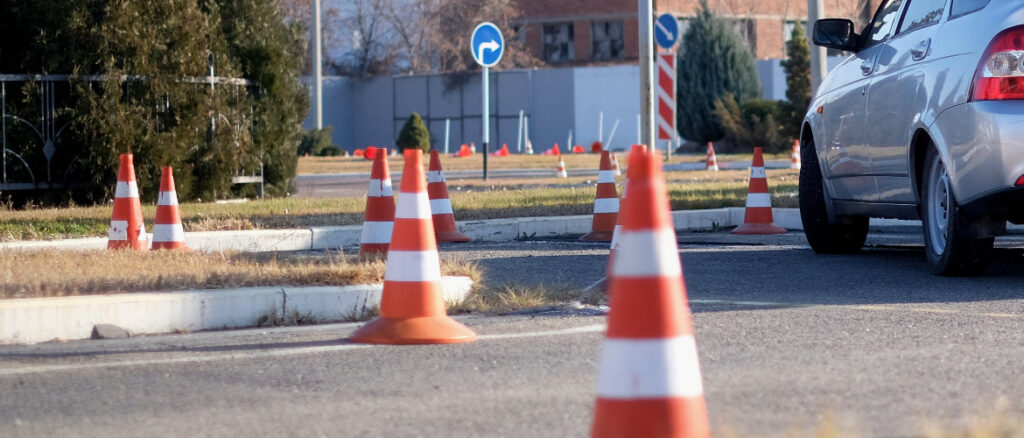
Xpat.land correspondent Yuliana Prus is taking lessons at a Portuguese driving school, aiming to get her licence next year. She shares how much it costs, how long it takes, and whether it’s realistic to go through the process without speaking Portuguese.
How I found a driving school
If you already hold a valid licence and just want a few lessons to feel more confident behind the wheel, almost any school will find you an instructor. But your options shrink considerably if you’re learning to drive for the first time, or if your licence isn’t recognised in Portugal. That was my situation.
When I decided to learn, my Portuguese was at A1 level: I could order at a café and handle small talk, but I didn’t dare study the traffic rules in Portuguese. I visited several driving schools in my neighbourhood, but none of them had English-language groups.
Staff at the local schools pointed me either to Segurança Maxima or to Radical, since both teach in English. I chose Radical because it was easier for me to get to. To enrol, I needed a residence permit and a número de utente.
How much it costs
At my school, the full course in English costs €750 if you pay upfront. You can split the payment in two, but then the course costs €800: €400 at the start and another €400 once you finish the theory part.
The price includes the theory course, eight simulator sessions, 22 driving lessons in a real car, the theory exam in English (one attempt), and the practical exam (also one attempt). Twenty-two hours of driving seemed too few to me, so I booked six extra hours. Each extra hour costs me €40.
The medical check isn’t included. I had it done at the driving school for €40, but any other licensed doctor would have done too. I also bought the English-language highway code book from the school for €30, and spent another €20 on a subscription to an exam-practice app.
That comes to €1,130 so far, and I haven’t taken the final exam yet.
Retakes, if needed, are paid separately. If I fail the first time, I’ll have to take eight extra lessons: together with the retake, that will cost €455. Some schools charge more for a second retake, but mine told me it would cost the same.
First steps: how theory is taught
At our school, the lectures run in a continuous cycle, so the course has no fixed start. New students join every day, and you simply start with whatever topic is being covered that day.
Students get a special card on which the teacher marks each class attended. Once the card is full, the course is complete. You need 28 hours of theory in total. Along with the card, I was given a learner’s permit, the licença de aprendizagem.
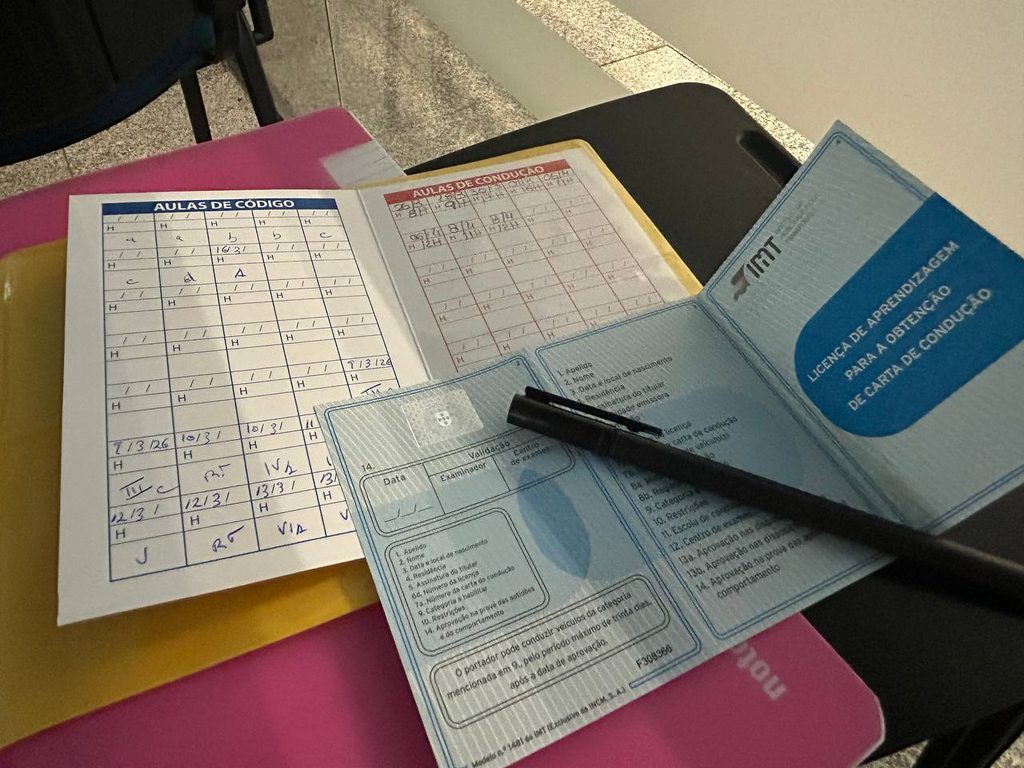
My theory classes were in person, two hours a day, Monday to Friday. Attendance is unlimited, so if you like, you can go through the whole course twice at no extra cost.
The theory exam
I prepared for the exam using mobile apps. You can study in English at the school, of course, but the free exam-practice apps are only in Portuguese. I found one free app in English, IMTT Testes de Código, but the translation was poor, obviously machine-generated, and I couldn’t study with it. In short, if you want the questions in English, you have to pay for a subscription, and even that doesn’t guarantee a good translation.
I used Testes de Código da Estrada, where the English version cost €20 a month. The app itself is convenient, but again, some terms were translated incorrectly, which distorted the meaning of the question. In the end, I kept the subscription for only a month and learned most of the questions in the same app in Portuguese. Yes, I had to brush up my Portuguese, but I could be sure I was getting the information without translation errors, and after about a month I had got the hang of the terminology.
I booked the theory test about three weeks in advance. It took place not at the driving school but at an IMT (Instituto da Mobilidade e dos Transportes) exam centre. Portuguese candidates were taking it alongside me. The briefing before the test was only in Portuguese.
The test itself was also in Portuguese and lasted 30 minutes: 30 questions, with no more than three mistakes allowed. Bags, phones and smartwatches had to be left on a shelf by the entrance. The questions were shown on a computer screen, but I was also given a printed English translation. Translations into other languages can be requested as well. Even though I understood all the questions in the original, I still checked the English version, just in case. I didn’t notice any translation errors.
Results were announced five to ten minutes after the test. The translation sheets were collected and shredded.
Practical lessons
Alongside the lectures, I had simulator sessions. These are practical lessons, but instead of a car you sit at a computer hooked up to a steering wheel and pedals. At my school, eight such sessions were required. I was only allowed into a real car after passing the theory exam.
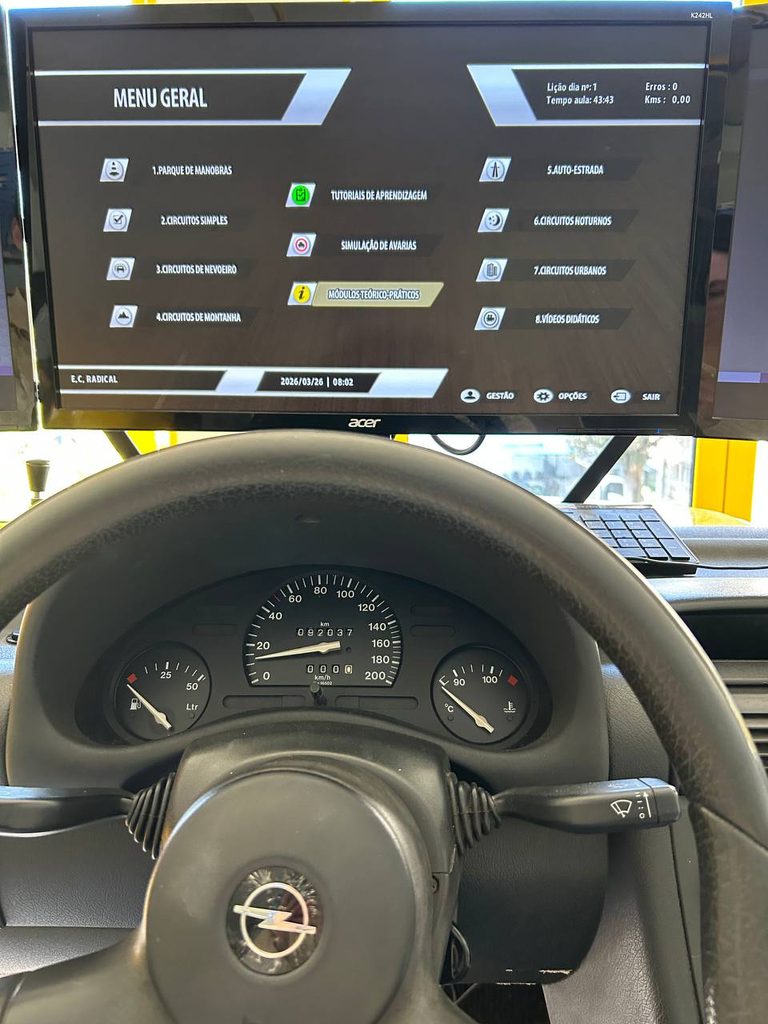
Driving lessons need to be booked about three weeks ahead, and it’s best to book ten or even all 22 at once, as instructors’ free slots fill up fast.
From the very first lesson, we drove on city streets rather than empty lots or car parks. I got a wonderful instructor: he’s always polite, praises me and keeps me motivated, even when things don’t go well.
The driving test
Like the theory exam, the practical test is booked in advance and takes place at an IMT centre. Students usually take it in the same car they learned in. I was warned that examiners mostly speak Portuguese, so you need to know at least a basic set of phrases.
You fail if you commit one of the most serious offences (the category is literally called muito grave), such as not stopping at a STOP sign or running a red light. Less serious errors also count, but reportedly not every examiner scrutinises your every move, and minor slips may go unnoticed.
Portugal doesn’t publish statistics on first-time pass rates. However, the IMT’s 2023 report shows that 65% of candidates passed the category B practical test that year, though we don’t know whether that was their first attempt or their tenth.
How long it takes
That depends on how busy you are in general. If your schedule is flexible and you’re ready to study intensively and drive at 10am on a Tuesday or on a Friday evening, you could finish in about four months. For me, that’s not realistic: I have work calls I can’t miss, I also attend a language school, and I travel. So it took me four months just to get through the theory, about two weeks of which I was on holiday.
I drive on average two hours a week. More often isn’t possible, because it’s hard to fit my schedule around the instructor’s free hours. So I expect the whole process to take between eight months and a year. I’ve read reviews from other foreign students, and some of them also said it took them about a year in Portugal.
Getting a driving licence in Portugal is a long process, but I’m actually glad I’m learning here, with its relaxed atmosphere. Compared with other countries I’ve been to, the traffic here is calm. And, as I mentioned, I was lucky with my instructor. Not to mention the stunning views you sometimes get from the car window!