
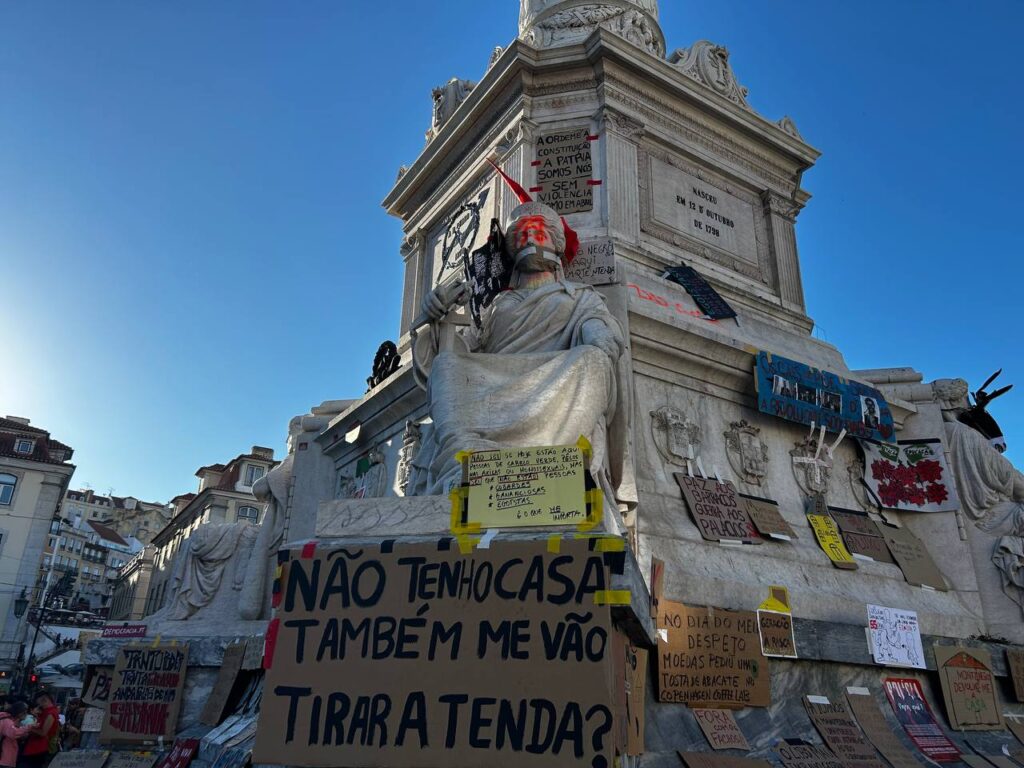
Over the weekend of 17–18 October, a large-scale protest began in Lisbon over the cost of rental housing. Protesters occupied Rossio Square and meant business: they slept in tents and said they intended to stay “for as long as it takes.” But on the morning of 20 October, police cleared the tent camp. Xpat.Land reports on who took part in the protest, what people are demanding and how daily life in the camp was organised.
“Don’t be selfish”
Rossio Square is often crowded, hosting fairs at Christmas and food festivals. On Monday, 19 October, it was packed again, but the occasion was far from festive. Tents have been pitched across the square, not market stalls this time but camping tents, about a hundred of them. People are getting ready to sleep outdoors. This is their way of protesting against high rents. Their message: look, soon we’ll all be living in tents, because we won’t be able to afford flats.
The protest began at the weekend. Protesters want the repeal of a new rental law that favours landlords at the expense of tenants. They are also calling for a rent cap. Their other demands include restricting the purchase of property as an investment, halting the demolition of old buildings until their residents are offered alternatives, and launching a programme to restore empty buildings.
An additional trigger was the police’s heavy-handed dispersal of a similar protest in Porto. Many people came to the Lisbon rally in solidarity with those who were hurt. In the camp, people keep bringing up a remark by Prime Minister Luís Montenegro, who, addressing the protesters in Porto, urged them “not to be selfish” when it came to public order. The phrase is played on in slogans and on placards, often not in the most polite terms: that is how people show their outrage.
Tempers were also stoked by the recent news that Luís Montenegro owns 55 properties. Placards in the camp read: “Our prime minister owns 55 real estate objects, and the people can’t even afford rent.”

The slogans are defiant, but the atmosphere in the camp isn’t particularly tense. People are settling in, tying water bottles to their makeshift homes: without them, the lightweight tents sway and blow over in the wind. From the middle of the camp you can’t even see any police, and you might think there are none, but uniformed officers are on duty across the road from the square.
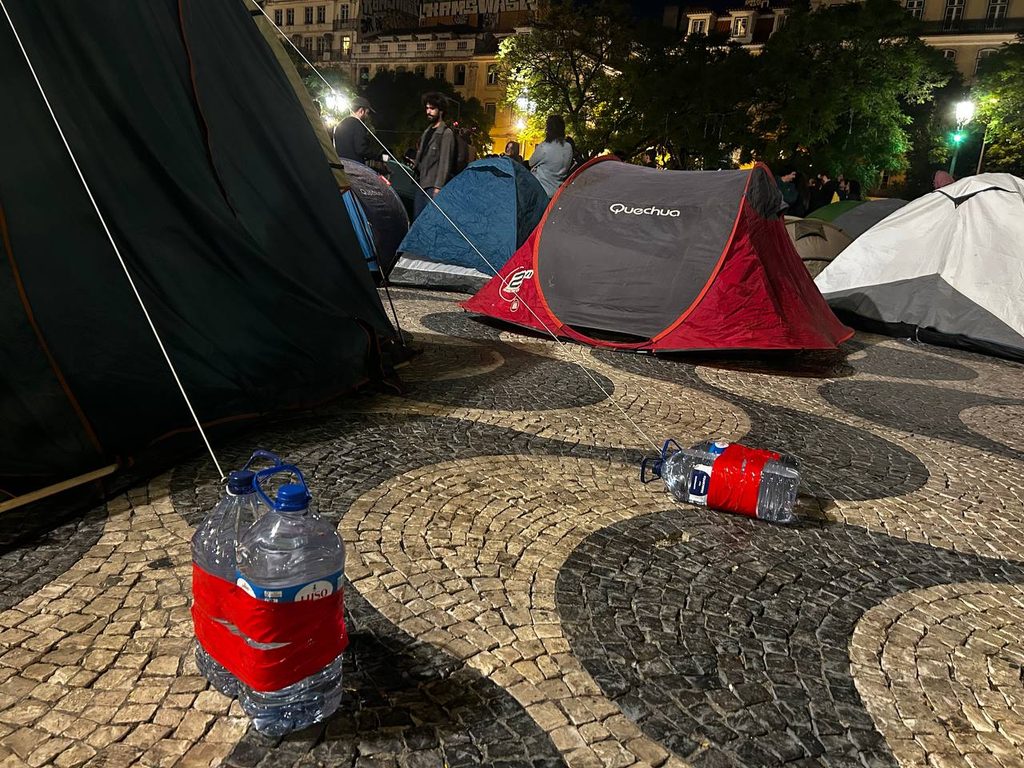
Photo: Xpat.Land correspondent
“I’m proud to be here today”
Sit down on a piece of cardboard between the tents, and you can chat with PhD candidates and people from fashion, the arts and education. Closer to the food distribution point, you’ll also meet genuinely homeless people asking passers-by for change.
The protesters include both young people and pensioners, although the latter mostly come without tents: they don’t plan to stay the night.
Some participants hide their faces behind bandanas, scarves or medical masks. Many ask not to be photographed. Some say that taking part openly could get them into trouble; others simply ask that their right to privacy be respected.
As one young Portuguese woman put it: “I’m proud to be here today, but I’m uncomfortable when cameras are pointed at me.”
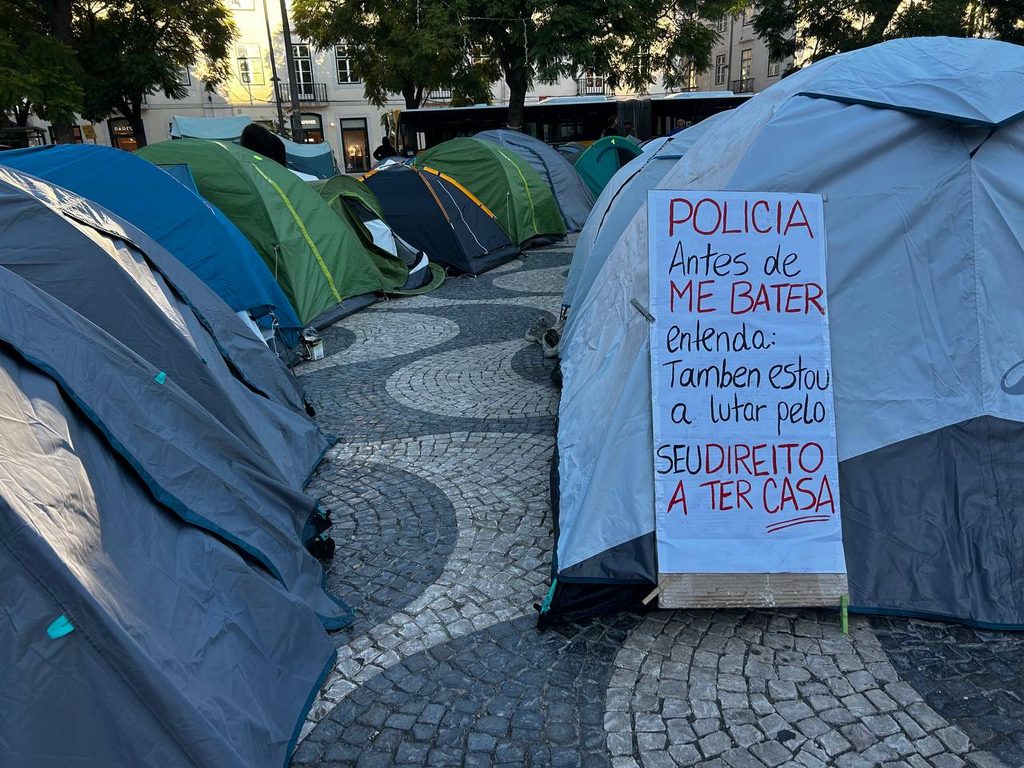
Photo: Xpat.Land correspondent
After what happened in Porto, she fears clashes with the police. While we were talking, she noticed a phone number written on my arm and asked what it was. I said:
“It’s my husband’s number. I don’t know it by heart, so I wrote it down in case the police detain me at the protest today.”
She replied:
“Lots of people came here with the same thought and prepared too: they wrote down important numbers.”
Her friend thought there would be no confrontation with the police and said she felt fairly confident. “We’re not doing anything illegal here, we’re just sitting,” she said. She believes that after the outcry over the dispersal in Porto, the police in Lisbon will show restraint: “If it happens again, it’ll mean Portugal has serious problems.”
Both women intend to stay at the protest for as long as it takes: they plan to go to work during the day and come back to the square in their free time.
Many people brought their children. A space with games and books has been set up specially for them. Photography and filming are banned entirely in the children’s area, and volunteers make sure the rule is followed.
Expats were actively encouraged on social media to join the protest, but few seem to have responded. It’s quite unusual to hear only Portuguese spoken around you in central Lisbon. That said, expats aren’t entirely absent. For example, a young woman from Iceland who came to Portugal to study has come to support the protesters. She saw on social media how the Porto rally was broken up and thinks the people who dared to repeat the protest in Lisbon after that are very brave. She herself doesn’t plan to spend the night on the square.
Chess, massage and an open mic
Much of the camp runs on mutual aid. There is a field kitchen and a food distribution point, for example. People bring food and dishes as they can. There are hot meals, fruit, croissants and other pastries, and a thermos of hot water so you can make yourself a coffee. There is a collection of warm clothes, sleeping bags and blankets for those who came unprepared for the cool night: after sunset the temperature dropped to 14°C. People also share power banks to charge their devices.
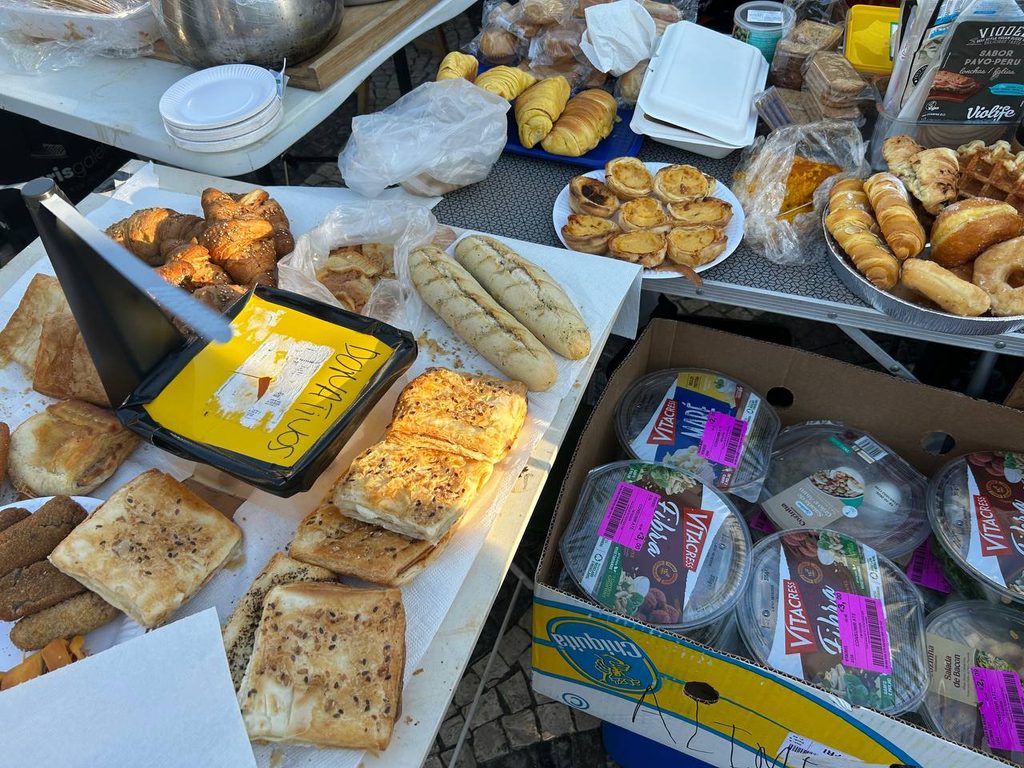
Photo: Xpat.Land correspondent
Cooking is organised collectively, but everyone washes their own dishes. Basins of water and washing-up liquid have been set out near the kitchen for this. There are bins, and volunteers periodically walk around the area collecting any litter they find.
Even the toilet question has been solved in a spirit of solidarity. Several people who live or rent offices in central Lisbon have offered protesters the use of their showers and toilets. Their contacts are available at the information desk.
To agree on the rules of communal life, an open mic was held, where anyone could suggest ways to make life in the camp more comfortable. Proposals included a shared lights-out time at midnight and dedicated common areas for meeting people and socialising.
The camp’s residents have organised their own leisure activities too. One participant, for example, offers massages to fellow protesters, and a spot has been set aside for chess tournaments.
“The housing problem brought us together”
After sunset, the square only got busier: many came to see the protest. It turned into a kind of concert. Here a man is dancing (he believes dance is also a form of protest). Now another man is rapping, mentioning housing prices along the way. After him, another performer picks up a guitar and also sings about social issues.

Photo: Xpat.Land correspondent
People don’t limit themselves to one topic; they discuss the state of the country and the world in general.
“I know the housing problem is what brought us together in the first place. But I think almost everyone here understands perfectly well that it’s not just about housing. The problem is systemic: it’s racism, families, extreme gentrification and many other things,” said a protester named Diogo.
Early on Tuesday morning, police cleared the tent camp. Local media reported arrests: according to Observador, 55 demonstrators were detained, allegedly for resisting the dismantling of the tents. The outlet also reports that two protesters suffered minor injuries. Nevertheless, the protesters have told Portuguese journalists they are ready to return to the square as early as the evening of 20 October.
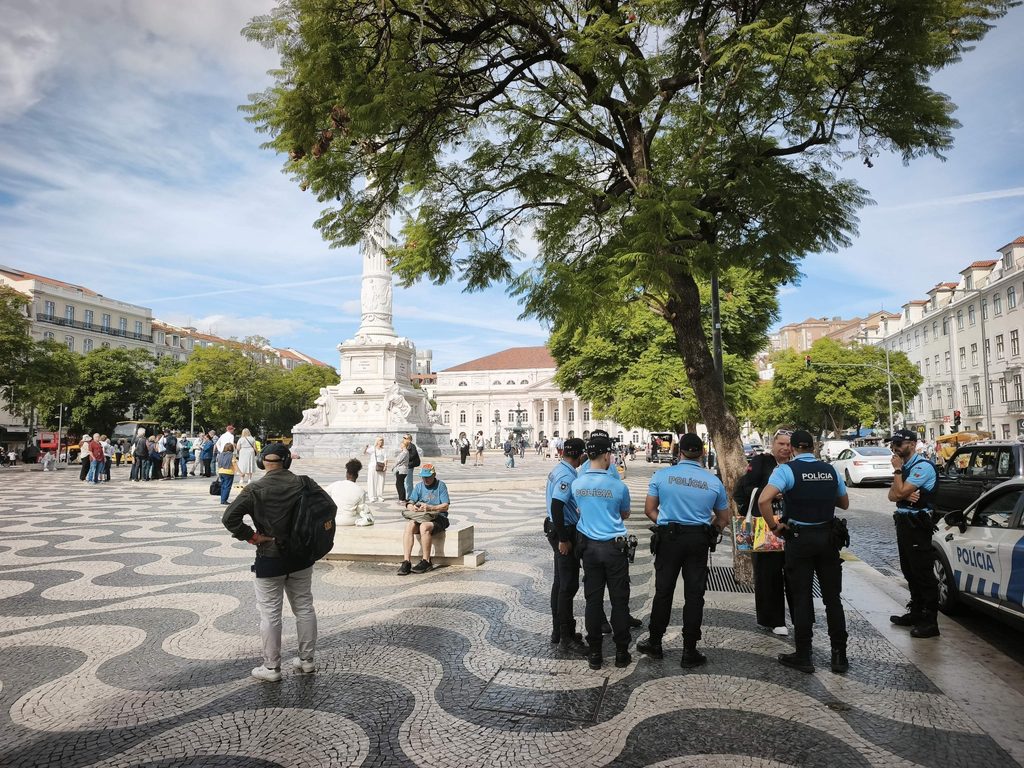
The square on the afternoon of 20 October. Photo: Xpat.Land