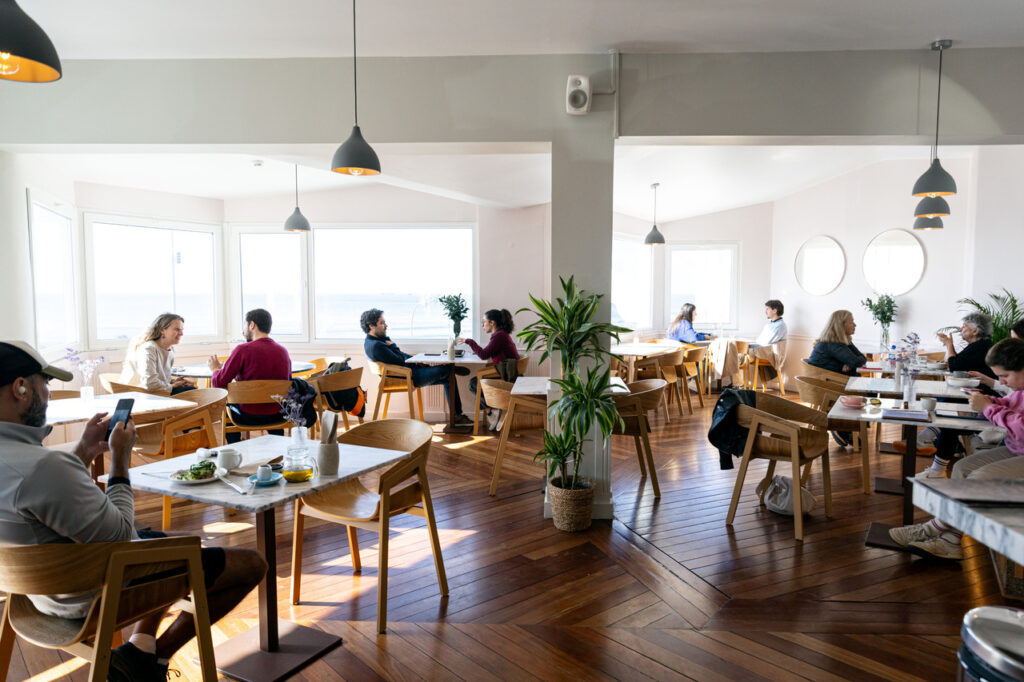
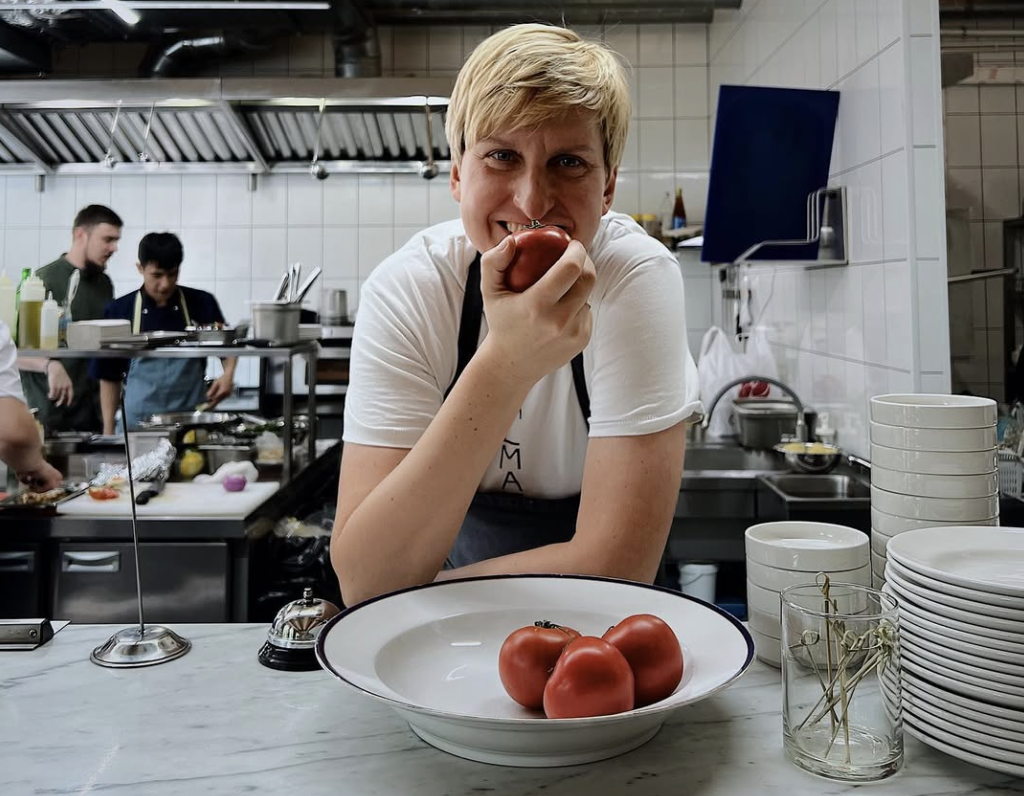
On December 21, 2023, her own birthday, Katya Plotnikova opened Borboleta in Porto. Before moving to Portugal, she had worked in the restaurant industry in Moscow, Russia. Not long before the opening, a restaurant wasn’t even part of the plan: together with her partner Yana Korzun, she had been planning to build a chain of sandwich shops with wine. Less than three years later, Borboleta made Time Out’s list of the 15 best restaurants in Porto, and Katya found out about it from her guests. On October 2, she will speak at the Food Connection Meetup, for which Xpat.Land is a media partner. Ahead of the event, we talked with her about why she chose Porto, why a foreign chef should study Portuguese culinary traditions, whether locals can be taught to love chicken liver again, and what has changed in Porto’s restaurant scene over the past three years.
Between Istanbul, Marseille and Porto
The story of Borboleta began about a year before Katya moved to Portugal. “I realized I wanted to grow in Europe, because there’s a different food culture here in the broadest sense: from the produce and the attitude toward restaurants to PR. I decided everyone should know about it, and I posted [about wanting to start a business] everywhere: in Telegram groups, on Facebook and on Instagram.”
Three potential investors responded, in Istanbul, Marseille and Porto. Instead of choosing a city from a distance, Katya decided to travel and meet each of them in person.
By then, a friend and former colleague of hers from Moscow had moved to Porto. That friend had a friend of her own, Yana Korzun, who happened to want to launch a project in the restaurant industry.
“That’s how our wishes and intentions lined up,” Katya recalls.
“This was no place for sandwiches”
At first, Katya and Yana planned a completely different project.
“Originally we wanted a chain of sandwich shops with wine. We started looking for a space, and it so happened that we found the one, with a big, beautiful garden. This was no place for sandwiches. It was meant to be a restaurant,” she recalls.
And so, instead of a sandwich shop, Borboleta was born. Borboleta means “butterfly” in Portuguese. For Katya and Yana, it stands for the butterflies in your stomach when you’re happy. They also heard something like bubbles in the sound of the word, since both of them love champagne.
Dividing professional roles turned out to be much simpler.
“I know how to cook, and Yana knows marketing and business development. Together we’re perfect partners. We make all decisions together and always move in the same direction. That’s very valuable.”
Katya describes Borboleta’s cuisine as signature bistronomy, a relaxed bistro format with fine-dining technique. “We use local produce, choose the best, and we often educate our guests about combining ingredients. We break stereotypes. We show guests a lot of new things: the ingredients all seem familiar, but people didn’t know other ways to cook them, or that one thing could be paired with another,” she says.
“So what’s the point?”
To understand the produce and flavors of her new country, Katya visits small village restaurants. “I have great respect for the ingredients the Portuguese love. I try to understand the traditional dishes and habits, and then the dishes come by themselves. I like taking something local and doing it my own way.”
She compares the process to wine: the more you taste, the better you understand.
“And it turns out our guests treat us with the same respect and start to trust us. Because we don’t overcomplicate things. We simply show the familiar from a different angle,” Katya explains.
Ingredients the Portuguese know well appear here in combinations that aren’t obvious to them. “For example, we add fruit or berries to fish tartare and use lots of herbs. We’re getting them used to eating chicken liver, which they barely pay attention to in everyday life. They probably ate too much overcooked liver as kids. Like I said, we’re educating them! It’s so interesting!”
The wine list evolved along with the restaurant. “Same with the wine. We grew from Portuguese wines only to international ones and the best Portuguese ones.”
After she moved, Katya was often asked why she hadn’t opened a Russian restaurant in Porto. “A lot of people ask, ‘So is your restaurant Russian cuisine?’ I say, ‘No.’ What’s the point of moving to a new country with such traditions and such produce, and cooking the food you’re used to? So what’s the point?”
What to try at Borboleta
Here I’ll step away from the conversation with Katya and add a personal recommendation. I’ve been to Porto twice, and both times I had dinner at Borboleta.
One of my absolute favorites is the beef tartare with charred eggplant cream and tomato salsa (€16). Every component is familiar, but the combination is anything but obvious.
For a main course, I’d recommend the lamb loin with roasted eggplant, tomatoes, shallots and tzatziki (€26). Another pick of mine is the tiger prawns with slow-cooked tomatoes, artichokes, red onion, garlic confit, tahini and lemon zest (€26).
For me, Borboleta is exactly the kind of restaurant you want to come back to, to see what the team has come up with next using familiar ingredients.
“Not just for once, but for every day”
Today Borboleta’s guests include Portuguese diners, foreigners living in Porto, and tourists. “We have a very large Portuguese audience, a lot of expats, and tourists in high season too. The audience has grown, and of course we now have a clearer picture of who our guest is.”
But a guest’s nationality is far from the main thing on Katya’s mind when she creates a menu. “I don’t take much into account when I come up with a menu. Seasonality, traditions and so on, of course. But what matters most to us is that guests find it delicious and interesting. Interesting not just for once, but for every day,” she says.
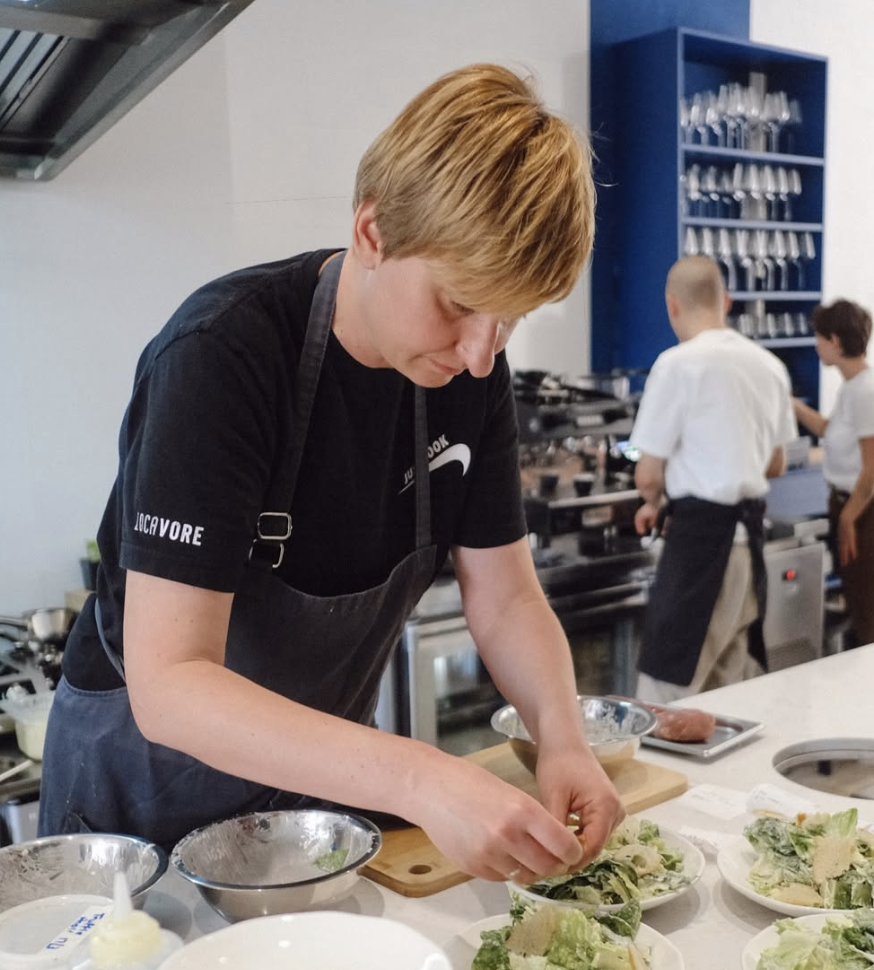
Over the past three years, many new projects have appeared on Porto’s restaurant map, and the city’s dining landscape has changed a great deal.
“A lot has changed. A huge number of new places are opening, more and more interesting spots and concepts. Of course there’s an influence [of newcomers from abroad on the local market]. There’s no way there couldn’t be.”
What particularly impresses Katya is that new projects are launching alongside traditional Portuguese establishments. “I really, really respect the Portuguese for not closing their traditional restaurants and for honoring their traditional cuisine and culture so much.”
Katya and Yana learned that Borboleta had made Time Out’s list of Porto’s 15 best restaurants from their guests. It wasn’t the first time this had happened: “We find out about almost every guide listing or best-restaurants ranking through our guests, when we ask how they heard about us.”
Katya is especially struck by how different this is from the restaurant promotion she was used to in Moscow.
“Before I moved, you had to advertise, host complimentary dinners for journalists and bloggers, hire a PR team. Here everything happens on its own, and it’s incredibly rewarding.”
The Time Out news came at a particularly fitting moment, Katya says. “I found out we’d made the top 15 restaurants in Porto, and I shed a tear. Because that very evening we’d had a lot of organizational meetings, with the kitchen and with the service team. Sometimes people don’t agree with our views. But when you get recognition like that, you tell yourself once again: ‘You’re doing everything right, don’t listen to anyone!'”
“We work miracles on this equipment”
Asked what Portugal has given her professionally, Katya answers briefly: “I’ve become even more interested in growing and learning, finding new suppliers, meeting new people.”
She has little desire to change anything in the past. The only thing she would do differently is order the restaurant equipment later. “We ordered everything for a sandwich shop, and then we found the space. But we work miracles on this equipment anyway!”
A year ago, Borboleta had 18 employees, and that seemed like the limit. Today the team has grown to 27, including both waitstaff and cooks.
Food Connection Meetup
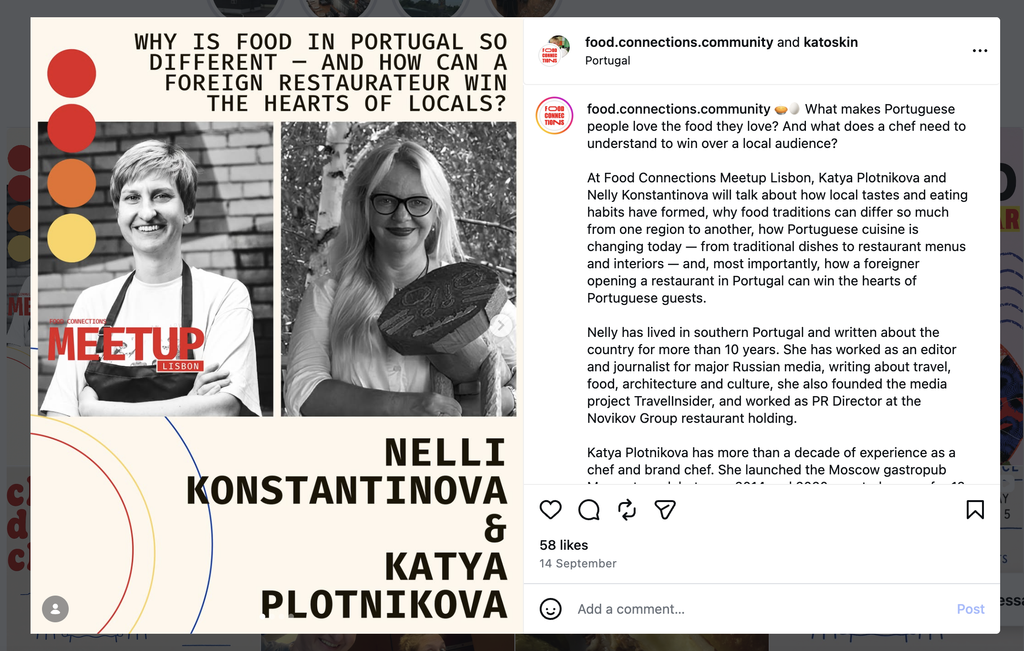
On October 2, Katya Plotnikova will be one of the speakers at the Food Connection Meetup. There she plans to go into something our conversation didn’t cover: how exactly Borboleta’s dishes are created.
“I’ll give examples and explain how my thinking works when I build a menu,” Katya says. She will be joined in conversation by journalist Nelli Konstantinova.
Borboleta’s story illustrates one of the changes now under way in Portugal’s restaurant scene. New residents bring different professional experience, tastes and ideas about food. In Katya’s case, that experience didn’t become an attempt to recreate her Moscow restaurant life in Porto. Her starting point was local produce and a wish to understand the local food culture. Still, Katya doesn’t want to talk about the restaurant as something already complete.
“I think a restaurant, like a chef, can never be complete. That would mean you’ve stopped developing” she says.