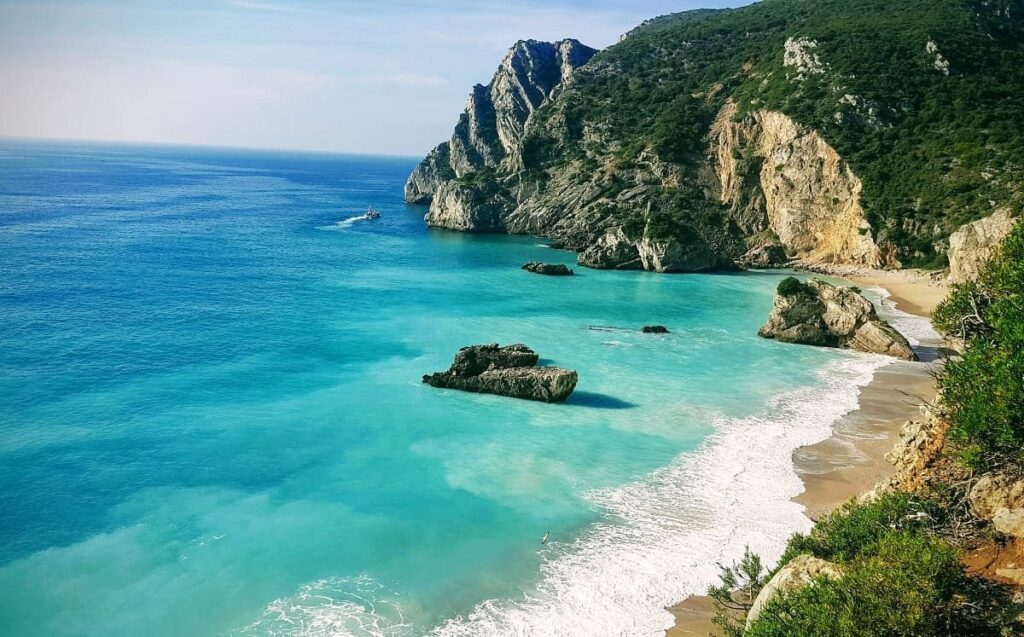
Summer in Portugal means Atlantic coastline, warm evenings and activities for almost every pace: from big-wave culture to slow wine tastings. Xpat.land has put together a practical guide in two modes: close to Lisbon or Porto, and further away for more unusual landscapes and fewer crowds.
Surfing
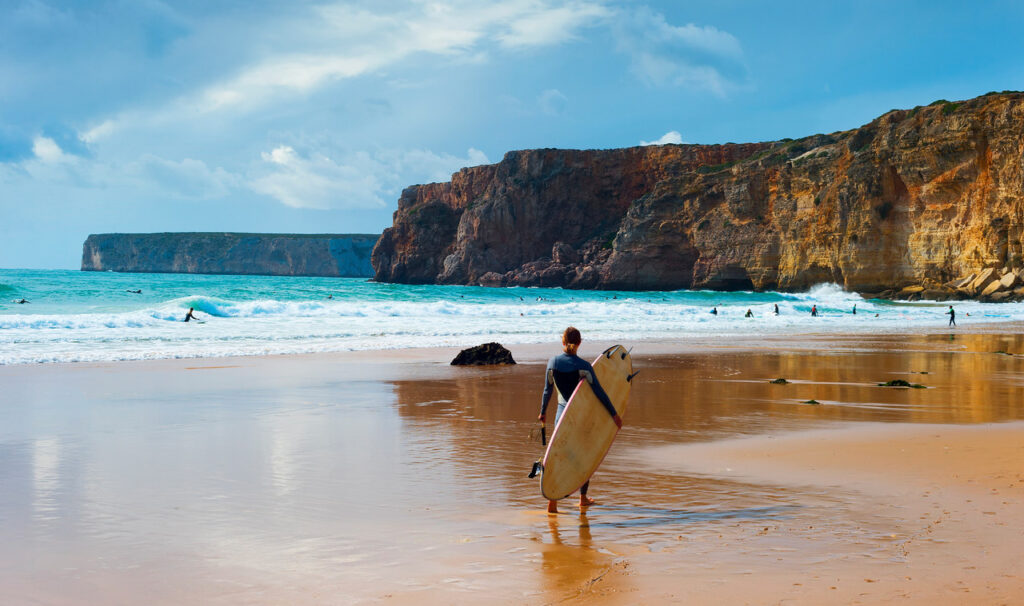
Portugal is often called Europe’s surf capital for a reason. Atlantic swell reaches the coast year-round, and beaches for different levels are often within a short drive of one another. In summer, waves are usually smaller and friendlier, the water is warmer, and it is a good moment to try a board for the first time.
For beginners, the industry is well organised: there are hundreds of schools, and a lesson with an instructor, board and wetsuit usually costs 30-50 euros.
Close by: from Lisbon, try Carcavelos, Cascais and Guincho. From Porto, Matosinhos and Espinho are accessible by metro or train. Further away: Ericeira, Peniche and Nazaré, where the lighthouse and surf museum are worth a visit even without entering the water.
Snorkelling and diving
Snorkelling means swimming at the surface with a mask and breathing tube. No tanks or certificates are needed, only basic confidence in the water. Diving is the next step: deeper immersion with an air tank, instructor or certificate.
The Atlantic offers wild underwater life: octopus, moray eels, schools of sargo, kelp and rocky caves. Visibility in protected bays is good in summer, while the water, usually around 18-22°C, stays refreshing.
A mask and snorkel cost around 15-30 euros. Organised snorkelling trips with boat, guide and equipment are usually 25-45 euros. A beginner Discover Scuba session costs around 60-90 euros, certified dives 40-60 euros, and an Open Water course about 350-450 euros.
Close by: Arrábida near Sesimbra, around 40 minutes from Lisbon. More adventurous: Berlenga Island near Peniche, Algarve caves, Lagos, Ponta da Piedade, Madeira and the Azores.
Kayaking and cave tours
Some of the most beautiful parts of the Portuguese coast are not visible from land: arches, hidden beaches and sea caves open up from the water. Kayaks are quiet, manoeuvrable and suitable for couples, families and anyone who wants a few hours between cliffs and turquoise water.
Close by: kayak tours along the Sesimbra and Arrábida cliffs. Further away: Benagil Cave in the Algarve, the famous cave with an opening in the ceiling. You can only reach it from the water, by kayak, SUP or boat from Portimão and Carvoeiro. Arrive around 8-9 in the morning; tours usually cost 20-40 euros.
Hiking
Walking routes are one of Portugal’s most underrated experiences. Landscapes change quickly: Sintra’s forests and palaces, ochre Algarve cliffs, northern granite mountains, waterfalls and semi-wild horses. Many trails end at a beach, viewpoint or village lunch.
Close by: Sintra-Cascais Natural Park near Lisbon and Peneda-Gerês about 1.5 hours from Porto. Further away: the Seven Hanging Valleys trail in the Algarve and Madeira’s levada walks. In summer, start early: there is little shade and you need plenty of water.
Wine tours
Portugal is one of the world’s oldest wine countries and remains relatively accessible for tastings. Port is the headline, but there are also Douro reds and whites, Setúbal muscat and northern vinho verde.
Close by: in Porto, start with the historic port cellars in Vila Nova de Gaia. From Lisbon, Azeitão and Setúbal are about 40 minutes away. Further away: the Douro Valley, river cruises, vineyard tastings and lunches overlooking terraced hills. Smaller family quintas are often a better experience than large tourist-focused estates.
Festivals and fairs
In summer, Portugal moves from one festival to another: major music events, medieval fairs and village celebrations. Tickets are often cheaper than similar events in the UK or Germany, and venues are frequently close to the ocean.
- Ageas Cooljazz, until 31 July, Cascais. Jazz, soul and pop outdoors; Gilberto Gil opened the festival on 8 July.
- Viagem Medieval, 28 July – 9 August, Santa Maria da Feira. A major medieval re-enactment with tournaments and night parades.
- NeoPop, 6-8 August, Viana do Castelo. A techno festival by the Atlantic.
- Vodafone Paredes de Coura, 12-15 August. An indie festival beside a river lagoon.
- Sol da Caparica, 13-16 August, Costa da Caparica. Portuguese music by the ocean, with day tickets around 30 euros.
- Vilar de Mouros, 18-22 August. Portugal’s oldest rock festival.
- MEO Kalorama, 28-30 August, Bela Vista Park in Lisbon. A city festival format with metro access.
Dolphin and whale watching
Marine mammals live surprisingly close to Portuguese cities. A resident group of bottlenose dolphins lives in the Sado estuary, while the Azores sit on migration routes for many whale species. Tours are regulated: boats should not chase animals or approach them too closely.
Close by: Lisbon and Setúbal tours, with Setúbal especially popular for families. Further away: Lagos, Madeira and the Azores, where sperm whales and even blue whales can appear. There are no guarantees, but in season many trips are successful.
Where to find tours and routes
GetYourGuide and Viator are useful for comparing reviews, instant confirmation and cancellation rules. Civitatis can be cheaper and often has Spanish- and English-language tours. Airbnb Experiences is good for smaller local formats.
Surf schools and dive centres are often better booked directly through websites or Instagram. For diving, check PADI accreditation. For whale watching, choose operators that mention responsible whale watching.
For hiking, use AllTrails, Wikiloc, Komoot, official PR and GR routes, and WalkMe Madeira for Madeira trail status. Download an offline map before you go: reception can disappear in ravines and on cliffs.
With children: Feira Medieval de Sintra
From 10 to 12 July, Sintra’s historic centre becomes a medieval town with knights, craftspeople, musicians and street performers. Entry is free, and the main location is Praça D. Fernando II. The programme includes tournaments, fire shows, camps, workshops, a children’s area and traditional food stalls.