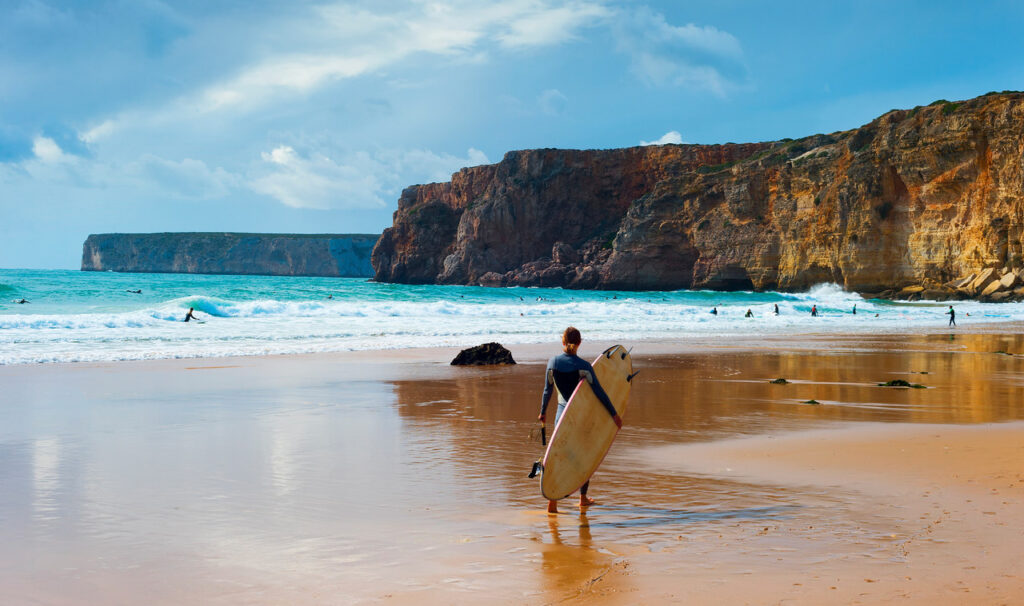
Portugal has hundreds of kilometres of Atlantic coastline, from windy northern beaches to the warmer coves of the Algarve. In summer, the famous beaches fill quickly, while the ocean often stays refreshingly cool. This guide collects seven less obvious places where you can escape the heat, see a memorable stretch of coast and avoid building the whole day around the most crowded routes.
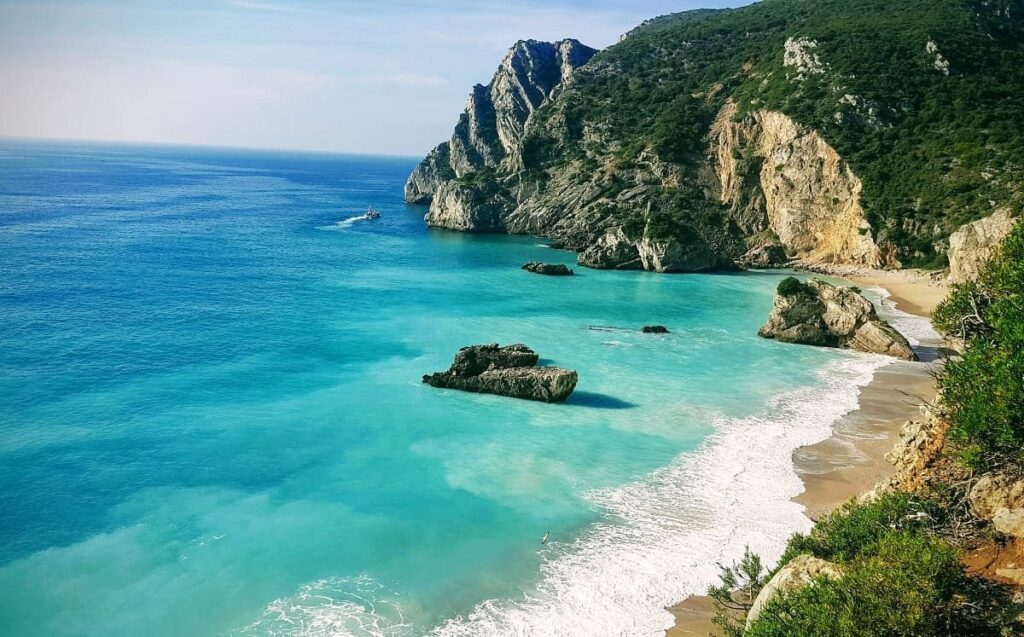
1. Praia do Ribeiro do Cavalo, Sesimbra
This beach is hidden between cliffs near Sesimbra. You can reach it by boat, kayak or a steep walking trail. There are almost no services on the beach, so bring water, food and proper shoes for the descent.
Swimming requires caution. There are no lifeguards, and the Atlantic can bring rip currents, tides and sudden depth changes. The same difficult access is also what keeps Ribeiro do Cavalo quieter and visually striking.
How to get there: public transport does not reach the beach. By car, drive from Sesimbra towards the port and Forte do Cavalo. After the fort, the paved road ends; continue about 800 metres on a dirt road to the parking area. From there, the walk is roughly 1.5 km one way and usually takes 20-40 minutes. The final rocky descent is the hardest part.
Boat-taxi is the easier alternative. In summer, boats usually leave from the Espadarte pier in Sesimbra port from around 9:00 every half hour. The crossing takes about 10 minutes, and a return ticket is usually around 12-15 euros.
2. Praia dos Galapinhos, Setúbal
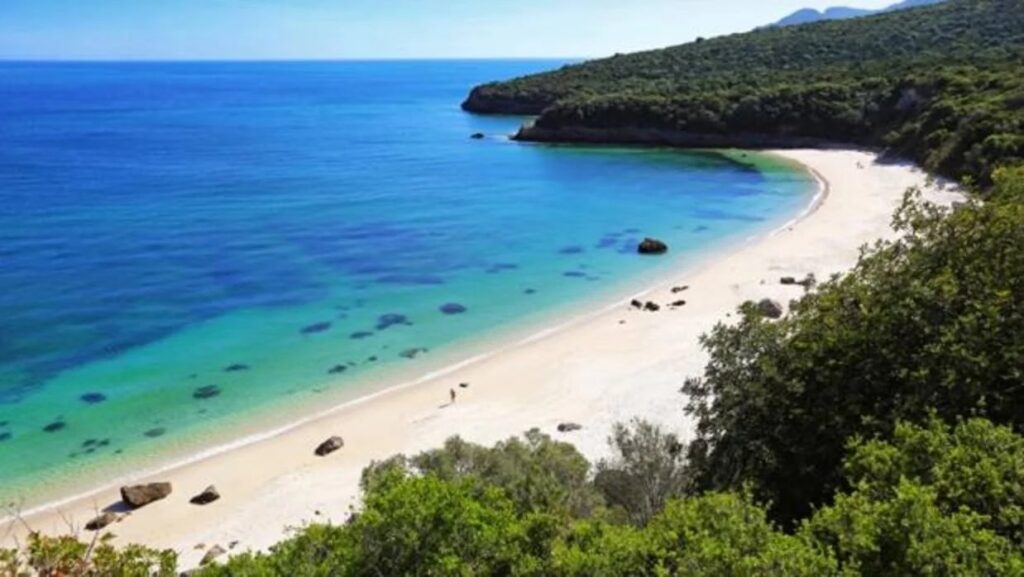
Galapinhos sits inside Arrábida Natural Park. In 2017, European Best Destinations named it one of Europe’s best beaches. Green forest drops almost to the turquoise water, and the cliffs make the sea calmer than on many open Atlantic beaches.
In summer, car access is often restricted under the Arrábida Sem Carros programme. The restrictions usually run from early June to mid-September, but the details change by season, so check the Setúbal municipality updates before going.
How to get there: Carris Metropolitana buses can take you through Azeitão to the Creiro parking area, followed by a 15-minute walk. If driving, access is usually limited to Creiro. Parking is paid, often about 5 euros in the morning and 3 euros after 13:00, and closes once full. From Galapos, cross the rocks to the right to reach Galapinhos.
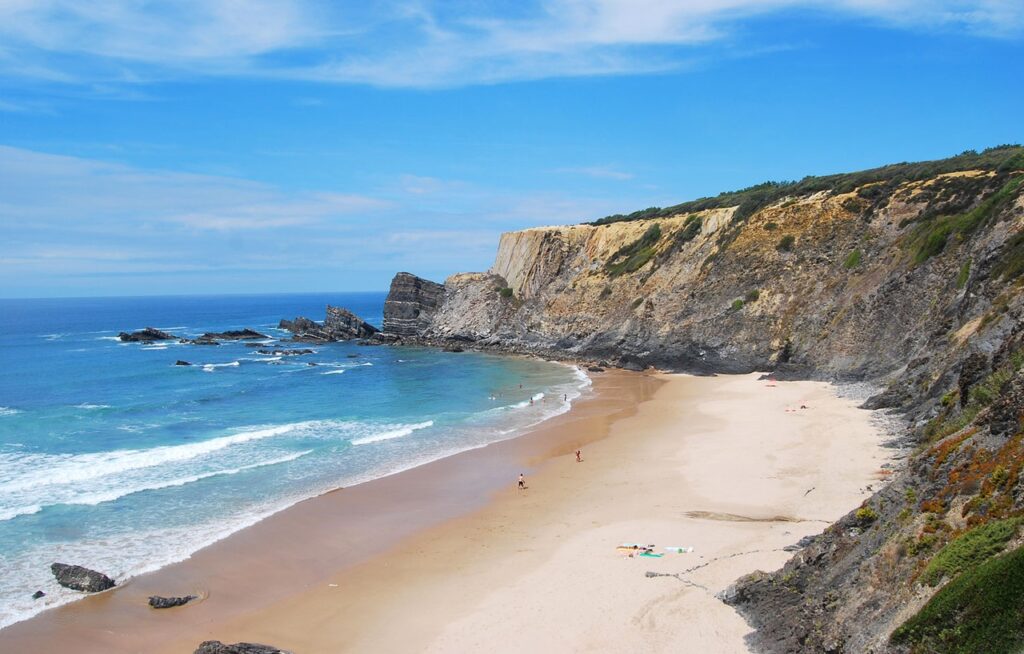
3. Praia de Odeceixe, Alentejo
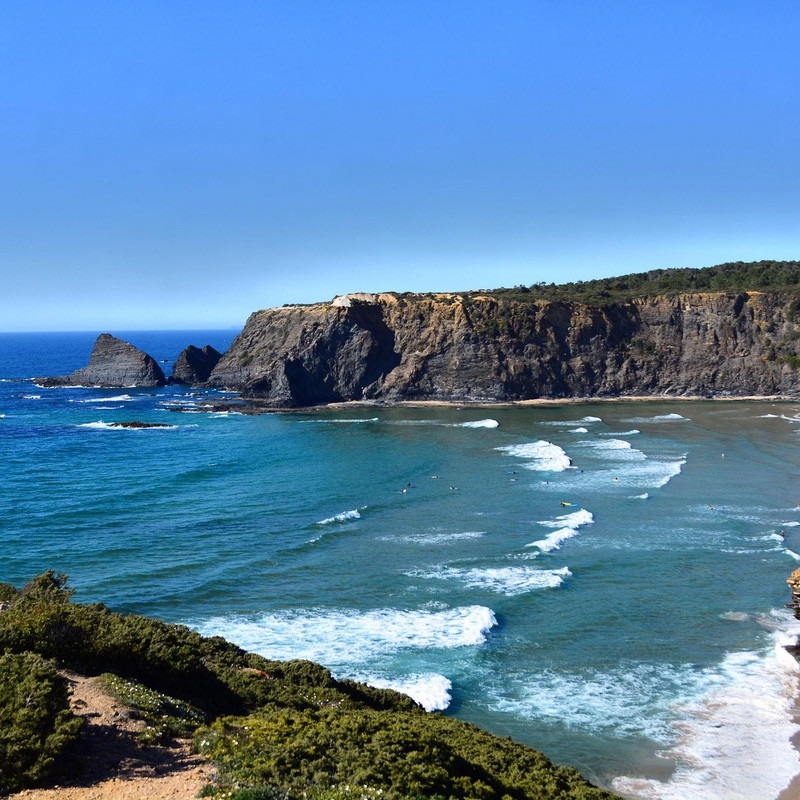
Odeceixe lies on the border between Alentejo and the Algarve and is often listed among Portugal’s most beautiful rocky beaches. Its appeal is the mix of ocean and river: cold Atlantic waves on one side, and the calmer, warmer Seixe river lagoon on the other.
How to get there: drive on the N120 to the village of Odeceixe, then continue about 3.5 km along the narrow road by the river. The beach car park fills by midday, so arrive in the morning or leave the car in the village and walk. Rede Expressos and regional Vamus buses stop in the village, not at the beach itself.
4. Praia da Marinha, Algarve
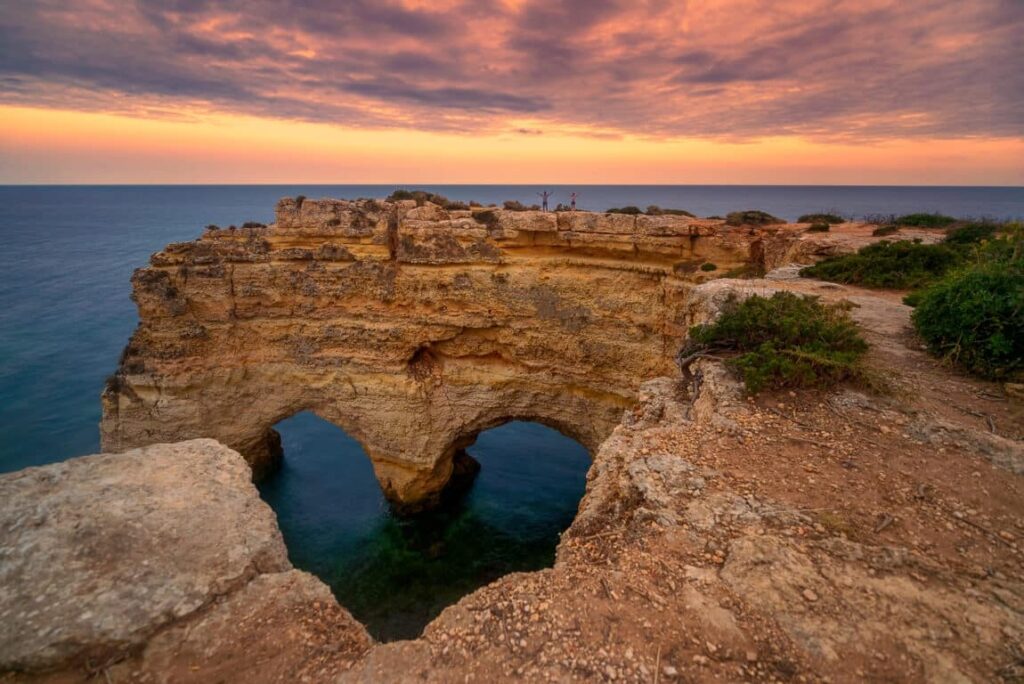
Marinha is one of southern Portugal’s most recognisable beaches. Rock arches and sea stacks nearby have been shaped by wind and water over time. CNN has included Praia da Marinha among the world’s beautiful beaches, and the Michelin Guide has also highlighted it among Europe’s best.
How to get there: the easiest option is by car or taxi. From the N125, turn off near Lagoa and follow the signs to Praia da Marinha. The cliff-top car park is free but fills early in summer.
5. Praia da Adraga, Sintra
Adraga is close to Cabo da Roca and near the wilder Praia da Ursa. A natural stone arch sits by the water, and the trails above the beach open views over the Atlantic and the northern Lisbon coast.
It is less obvious than many Sintra beaches and has one rare bonus for a more natural beach: a restaurant right by the water.
How to get there: driving through Almoçageme is the simplest route. Turn off the Sintra-Cabo da Roca road and follow the paved descent to the beach. Parking by the water is free. There is no direct public transport to the beach; buses stop in Almoçageme, followed by a roughly 2 km walk.
6. Praia da Comporta, Tróia Peninsula
Comporta is a long white-sand beach near the Sado estuary nature reserve. It is known for the mix of wild nature and quiet high-end leisure, and international media often mention celebrities spending time or buying villas in the area.
How to get there: the most scenic option is by water. Atlantic Ferries catamarans cross the Sado from Setúbal, covering about 6.6 km by water instead of roughly 100 km by road. Passenger tickets are usually around 4.90 euros one way or 9.30 euros return, with children under five often travelling free. The car ferry is around 21 euros one way.
7. Praia da Amália, Alentejo
This beach sits near the former summer estate of fado singer Amália Rodrigues. The path passes through eucalyptus trees and follows a stream, while the small bay itself feels cinematic: a little waterfall runs down onto the sand.
One important detail: at high tide the beach can almost disappear, so check the tide table before setting off.
How to get there: from the N120, take road 393-1 towards Brejão. In the village, head towards Azenha do Mar; at the junction turn left and look for the yellow flower sign. Turn right there onto a dirt road, park at the end and walk about 10 minutes through vegetation and along the stream. The final section includes steep stairs.