Since artificial intelligence will soon be doing all our work for us, we’ll have to find ourselves new things to do. And this is where Portugal comes in very handy: thanks to its geology, it can offer a healthy way to spend your time — visiting healing thermal spas. What’s more, a new thermal complex, Caldas de Moledo, will soon open right on the banks of the Douro River. Xpat.Land correspondent Oleg Chernitsky takes a look at the main spas — and their history.
Ever since the days of the ancient Romans, the territory of present-day Portugal, and especially its north, has been famous for its hot springs. In the first century AD, Emperor Titus Flavius Vespasian, who began building the famous Colosseum in Rome, founded a town here that was named after him: Aquae Flaviae, meaning “the Waters of Flavius.” It still exists, and its residents are still called flavienses, although the town itself is now called Chaves: over the centuries, the Latin letter combination fl- turned into ch- (pronounced “sh”) in Portuguese.
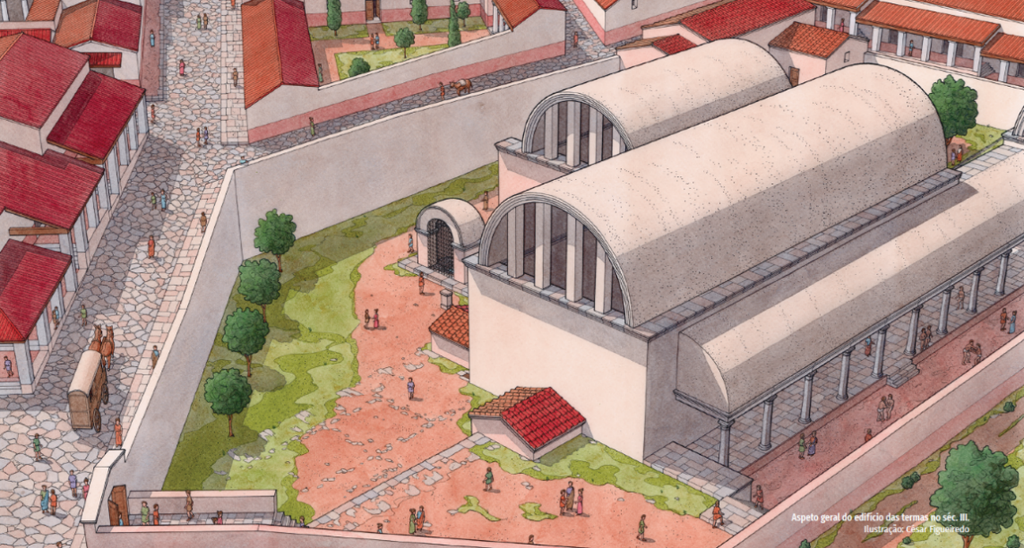
This is probably what the thermal baths of Chaves looked like in Roman times (illustration: Museu Termas Romanas de Chaves)
In Chaves you can visit not only the ruins of huge Roman baths, discovered by chance in 2005 during the construction of an underground car park, but also the modern thermal spa: the hot springs of healing water, with a constant temperature of 76°C, have not disappeared in 2,000 years. The authorities decided to build the car park elsewhere, and the ruins were turned into a museum, which opened to the public in 2021.
In 2025, the spa was expanded. Aquae Salutem, the first thermal complex in mainland Portugal with open-air hot pools, opened to the public (its address in Chaves: Praça Tito Flávio Vespasiano, 1). The word “mainland” matters, because similar complexes exist in the Azores, which are famous for their hot springs.
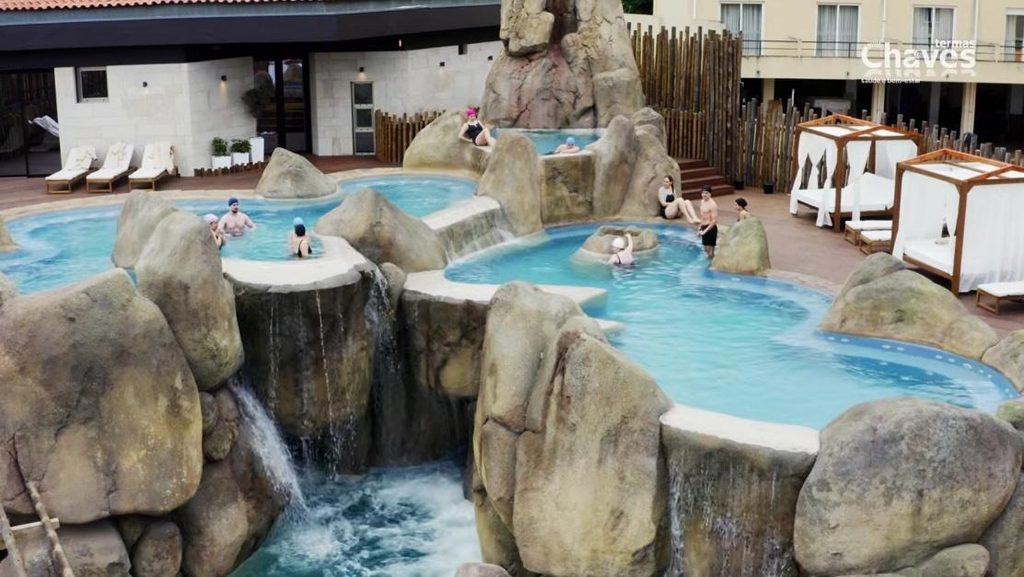
A still from the Aquae Salutem thermal complex video (the full video can be viewed here)
The new project brought the town resounding success: the number of visitors to the Chaves spa more than doubled, exceeding 30,000. Attendance at the spas of northern Portugal as a whole grew by 70%, exceeding 100,000. In total, Portugal’s thermal spas received 195,000 visitors in 2025, more than half of them in the northern region. Chaves ranked first in the country that year.
As early as 2027, these figures could rise sharply again — thanks to yet another new project. On 15 September, in the town of Amarante, where the Termas de Amarante complex opened in 2019, the leadership of Turismo do Porto e Norte de Portugal (TPNP) and the Portuguese Thermal Spas Association (Associação das Termas de Portugal) jointly presented a development plan for the sector. Among other things, the first part of the new Caldas de Moledo thermal complex is due to open by the end of this year, right on the banks of the Douro near the town of Régua.
The Caldas de Moledo spa was developed and turned into a resort in the 19th century by Dona Antónia Ferreira, whose portrait is familiar to every port wine lover. Widowed at 33, Dona Antónia threw herself into the family business: she not only ran the production of wine and fruit but also helped the poor and built schools. Locals affectionately called one of the richest women in Portugal “Ferreirinha,” meaning “little Ferreira.”
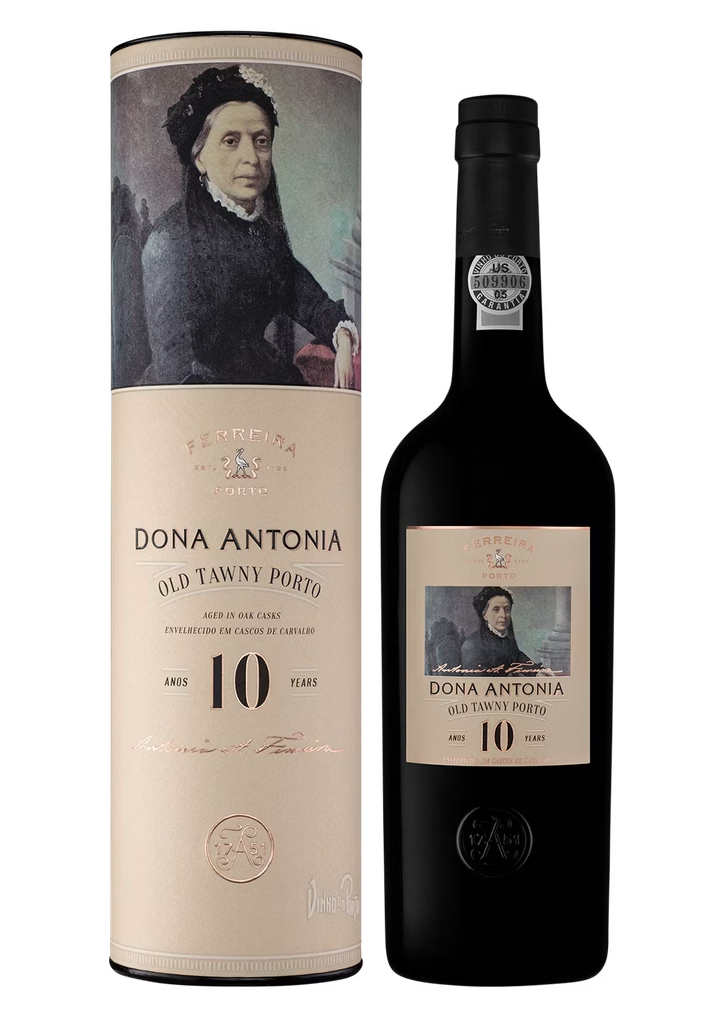
Dona Antonia port wine
Her palace in Moledo, visited by the Portuguese king Dom Luís, stood next to the healing springs. A hotel and a casino were also built there. Over time the site fell into decline, and today the property is split between TPNP and the municipality of Peso da Régua.
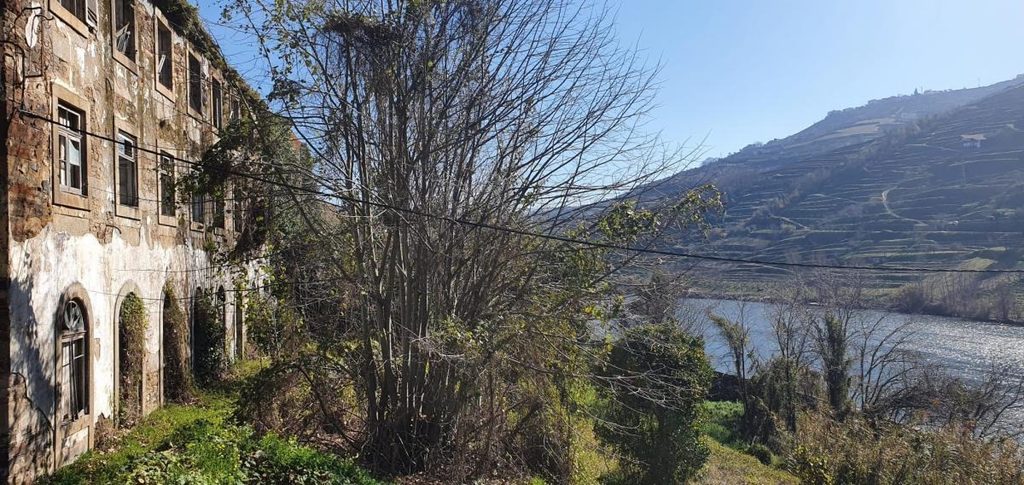
View of the vineyards along the Douro from the abandoned palace of the queen of port (photo: Turismo de Portugal)
“I inherited an abandoned thermal spa owned by Turismo do Porto e Norte de Portugal. For me, it is a matter of honour to bring this heritage back to life before the end of my term,” Luís Pedro Martins, president of TPNP, who has headed the organisation since 2019, told the Lusa news agency last week.
The phased restoration project, costing around €4 million in total, is funded partly through public programmes, while private investors will be sought through an open tender to restore the hotel and casino (preliminary project materials can be found on the website of Turismo de Portugal).
Once Caldas de Moledo opens, the total number of thermal spas in northern Portugal will reach seventeen.
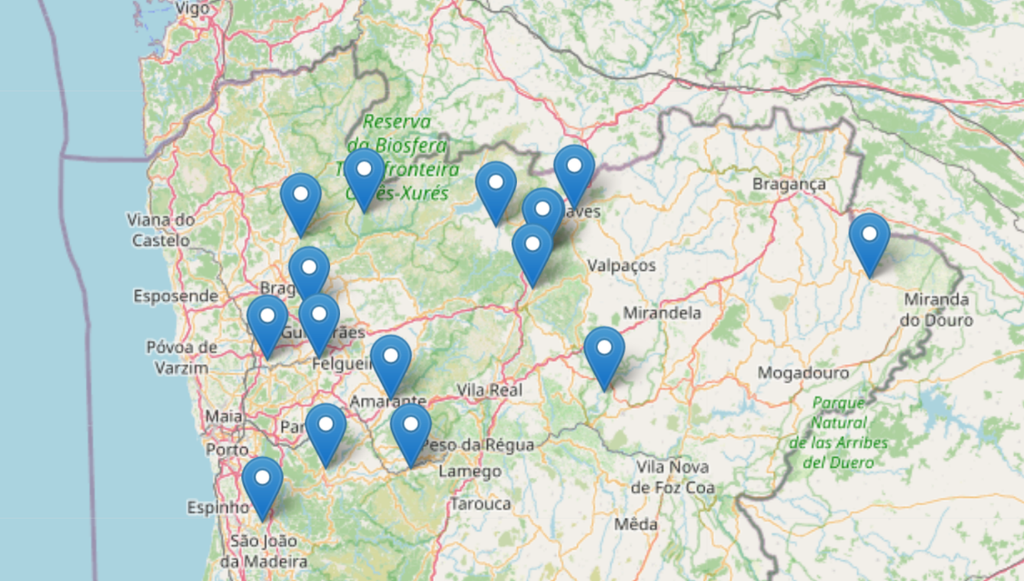
Map of thermal spas in northern Portugal from the official Termas Porto e Norte website
What other thermal spas are there
- Termas de Amarante in Amarante
- Termas de Caldelas in Amares
- Termas de Carvalhelhos in Boticas
- Caldas de S. Lourenço in Carrazeda de Ansiães. The spa is currently closed for a €2 million renovation.
- Chaves – Termas & Spa in Chaves
- Balneário Pedagógico de Vidago in Chaves
- Vidago Palace Thermal Spa in Chaves
- Taipas Termal in Guimarães
- Termas de Entre-os-Rios in Penafiel
- Termas das Caldas de Aregos in Resende
- Termas de S. Jorge in Santa Maria da Feira
- Termas das Caldas da Saúde in Santo Tirso
- Termas do Gerês in Terras de Bouro
- Spa Termal de Pedras Salgadas in Vila Pouca de Aguiar
- Termas de Vimioso in Vimioso
- Termas de Vizela in Vizela
How the springs came to be
Why, in Chaves and several other towns in northern Portugal, do hot springs full of health-giving minerals gush from the ground, as if this were Iceland or Kamchatka? The reason is that the spas sit above the active Penacova–Régua–Verín (PRV) tectonic fault, which stretches for more than 200 km.
Penacova is a small town in central Portugal, near Coimbra, where Penacova mineral water is bottled; Régua lies near Dona Antónia’s spa; and Spain’s Verín sits on the Portuguese border, forming a so-called “Eurocity” with Chaves. Hot springs rise there too, and there is even a special thermal visitor’s passport in which visitors to the spas of Chaves and Verín can collect stamps as a keepsake.
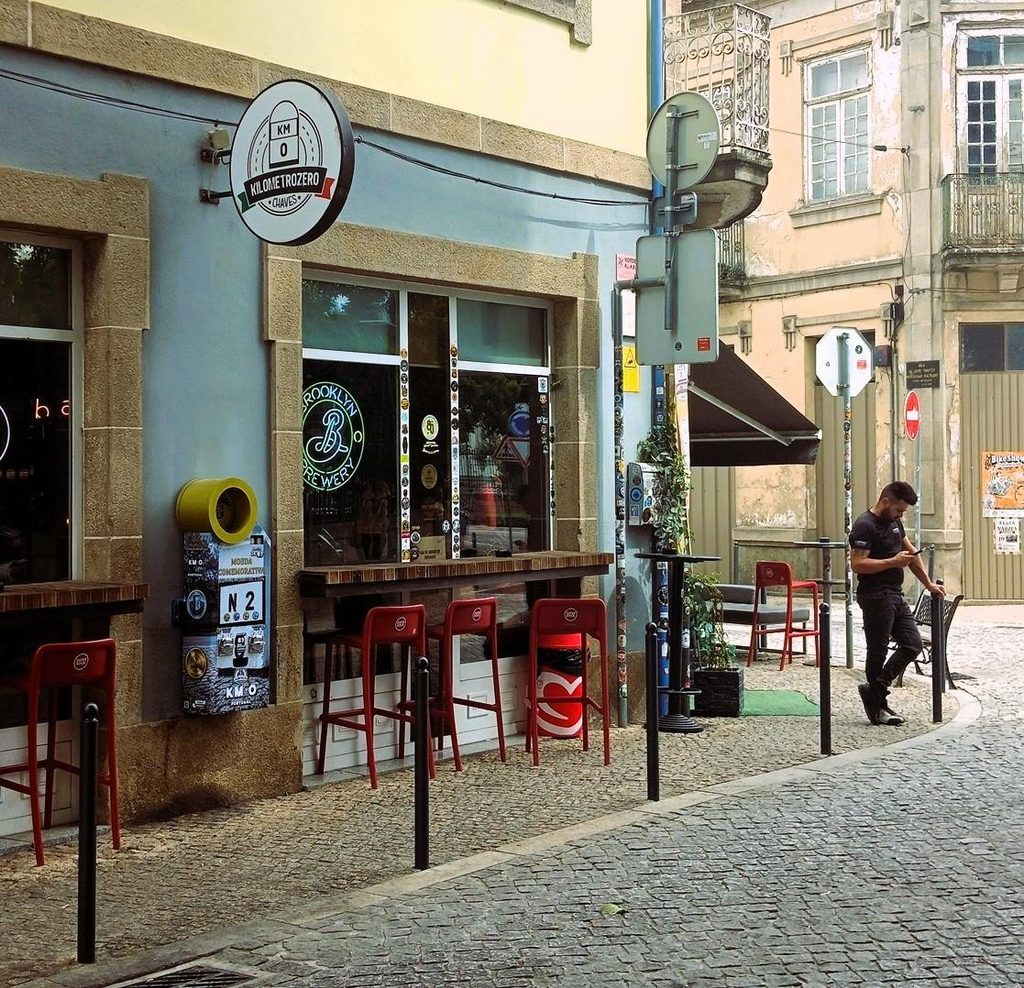
Chaves is also home to kilometre zero of the famous EN2 road, which runs across the whole country to Faro, the capital of the Algarve. Its route partly follows the line of the tectonic fault. Pictured: the bar at kilometre zero, where bikers usually begin their journey south. Photo: Xpat.Land
Visitors to Portugal’s spas: tourists and locals
So who are these spa-goers, or aquistas, as the Portuguese call them? They are mostly Portuguese, though Spaniards come too. There are few tourists from other countries, but their number is also growing. Visitors fall into two main groups. Some undergo a course of treatment lasting about two weeks or longer. Others come to relax for the weekend or just for a single session.
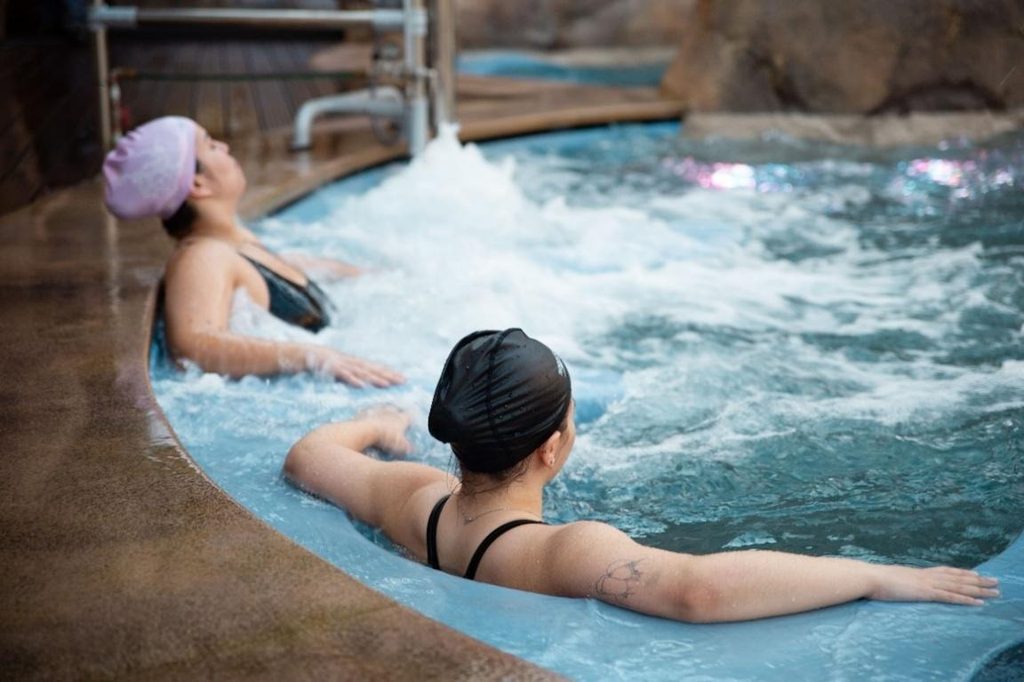
Aquistas in Chaves (photo: Termas de Chaves)
In 2025, Portugal raised its subsidy for spa treatment by €15, to €110. To receive it, you need an official referral from a doctor, and the course of treatment must last at least 12 days. The conditions covered by the programme include arthritis, rheumatism, rhinitis, asthma, urticaria, psoriasis, diabetes, obesity, venous insufficiency and anaemia, as well as some neurological and psychiatric disorders.
In autumn 2025, when the Chaves spa announced its record attendance figures, Olímpia Mairos, a journalist with Rádio Renascença, went there to talk to the aquistas.
A couple from the town of Santo Tirso near Porto — Dulce, 79, and José, 82 — have been coming to Chaves for a 13-day course for 25 years. They say that although it is expensive (around €1,500 for the two of them, covering accommodation, meals and treatment), it is good “for the body, the bones and the mind” — and helps them get through the year in comfort.
Manuela, 56, came all the way from the Algarve to treat her rheumatism and improve her quality of life, and also to compare the Chaves spa with São Pedro do Sul, which is in Portugal’s Centro region. Maria, 73, has been treating her osteoporosis here for the third year running, because it helps her “get through the winter.” Leonardo, 24, has just graduated with a bachelor’s degree and decided to unwind after the stress with Vichy showers and hot baths before entering the job market.
Wellness, Portuguese style
The boom in Portugal’s spas is helped by the global enthusiasm for spa treatments, healthy living and wellness practices (in Portuguese, bem-estar). Singles, millennials, families with children, and couples over 50 — this is how Luís Martins of TPNP rather broadly describes the spas’ target audience.
You don’t have to spend €1,500 to get acquainted with the Waters of Flavius. Next to the spa there is a small pump-room pavilion where visitors are given warm healing water in a cup for free. You can settle into one of the white wooden armchairs with special cup holders and reflect on the fact that this water gushes from the ground because, many millions of years ago, the ancient continents of Laurasia and Gondwana collided here.