Where to see totality, when to watch, and what to bring
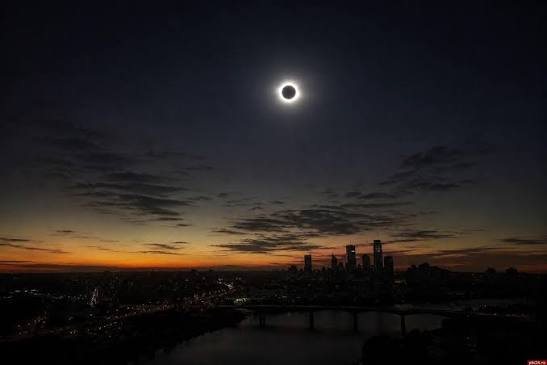
On August 12, Portugal will fall into the Moon's shadow for the first time since 1912. The country will have to wait until 2144 for the next total solar eclipse. This time totality will pass over only a tiny stretch of road N308 between the villages of Rio de Onor and Guadramil in the Montesinho Natural Park. At 19:30:17 the Moon will completely cover the Sun, and twenty-six seconds later it will reappear. Across the rest of the country the eclipse will be partial: in Porto the Moon will cover 98.2% of the solar disk, in Lisbon 94.5%, in Faro 92.7%, on Madeira 77.5%, and in Ponta Delgada 76.9%. Let's look at why even a 99% eclipse won't replace totality, where and when to go for the best view, what will be visible in different regions of Portugal, and how to watch the Sun without risk to your eyes.
Why 99% and 100% are different phenomena
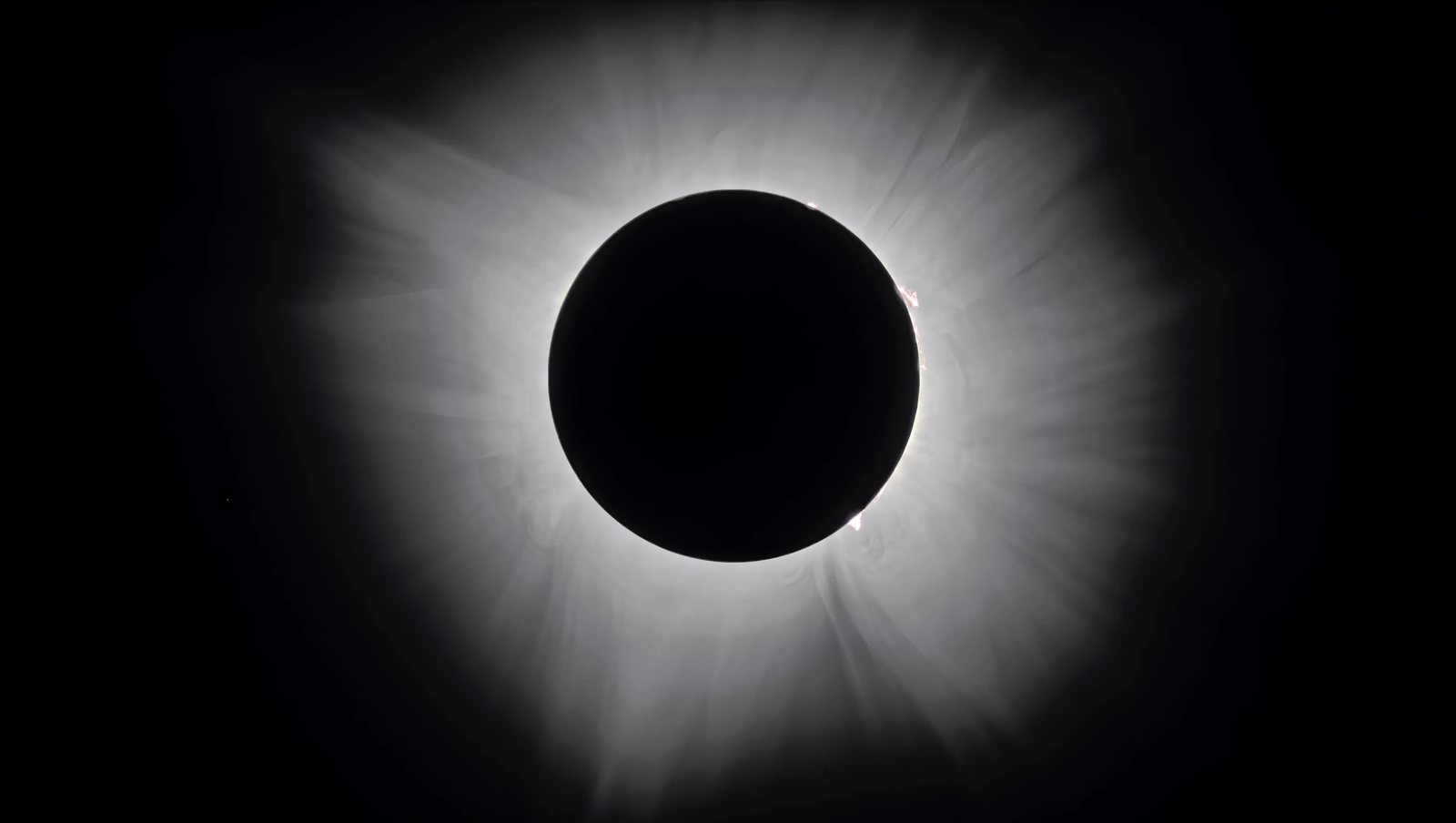
The difference between them is bigger than the numbers suggest. As long as even a thin sliver of the solar disk is visible above the horizon, there's enough light that the sky doesn't truly darken. The solar corona, the diamond ring, and Baily's beads — everything for which people cross oceans and book time off around a specific date at a specific point on the planet — are available only inside the path of totality.
What you'll see if you stay home
There's plenty to watch even so, even if you don't chase totality.
The Sun itself will turn into a thin crescent, but you can't read this with the naked eye — only through a filter. The disk will hang low over the Atlantic, almost at sunset, so through glasses you'll see a crescent lying on its side right at the horizon.
At 94% there's roughly as much light as in deep twilight, but its quality changes, and that's exactly what's disorienting. Shadows become unnaturally sharp: as the Sun turns from a disk into a narrow strip, the edges of shadows stop blurring. The light takes on a metallic, slightly grayish tint that's hard to relate to anything. People often describe it as a feeling that "something's wrong with the world," without immediately understanding what.
It's worth looking down at the ground, at the asphalt beneath trees. The gaps between leaves act like pinhole cameras and project hundreds of little crescents. This is the most striking thing available outside the path of totality, and it photographs on a phone without any filter. An ordinary colander works the same way.
It will get noticeably colder — by several degrees. Birds will fall silent or start behaving as if at sunset; Lisbon's gulls usually react noticeably, and the chirring of the cicadas changes too.
What there won't be: darkness, stars, Venus, the corona, the sense of night in the middle of the day. The streetlights most likely won't even come on. In Lisbon you're in for a very strange evening; in Montesinho or Zamora, night falling in the middle of the day.
Where to go
For real totality — to Montesinho. With an important caveat: access there is restricted and requires prior registration through the national Ciência Viva program. Just showing up and setting up won't work. These are two tiny villages in a protected zone, with no parking and no infrastructure for thousands of people, and you need to be on site many hours before the event.
The more sensible option is to cross the border. In Spain the path of totality is much wider: Zamora, Sanabria, and further east. There's more time in the shadow, no access restrictions, and space for a car. It's about an hour's drive from Bragança.
Wherever you end up, one hard rule applies: the eclipse coincides with sunset, and the Sun will hang between three and twelve degrees above the horizon. Without an open view to the west you'll see nothing at all. A neighboring house, a hill, a line of trees — any of these obstacles cancels all your plans. It's worth scouting the spot a few days in advance.
When
The partial phase will begin between 18:33 and 18:42 — first in the Alto Minho, a little later in the Algarve. The maximum will come between 19:30 in Bragança and 19:38 in Faro. It all ends between 20:23 and 20:31, but in many places around the country the Sun will set before the eclipse finishes, so you simply won't see the end.
What to bring
The one truly essential item is glasses certified to ISO 12312-2. Ordinary sunglasses provide no protection at all, and a welding mask is only fit for use from DIN 14 and above. It's worth buying now: in the first half of August, certified glasses in Portugal will be snapped up completely, and counterfeits traditionally flourish on marketplaces in those weeks. If you plan to shoot, your camera or phone needs the same kind of filter on the lens — the sensor burns out no better than a retina.
Everything else is ordinary logistics, easy to forget in the anticipation of the spectacle. Warm clothing: in Trás-os-Montes it gets cold sharply in the evening, and during the eclipse the temperature drops further. Water, food, a flashlight — you'll be coming back in the dark. A full tank, because gas stations in the countryside close early. And a western horizon checked in advance with a compass or an app.
Don't bring a drone into the natural park — it's prohibited.
How to spend the day
If you're heading north, you need to leave in the morning: the roads to Bragança will grind to a halt on August 12. You should be at your spot three to four hours before the maximum.
Put your glasses on at half past six, when the partial phase begins. The most interesting part starts closer to 19:20, and that's the moment to look around — the light, the shadows, the sounds.
At 19:30, if you're inside the path of totality, you can take the glasses off — only there and only for those seconds. A minute earlier or later means a retinal burn that can't be healed.
After 20:30, don't rush to leave. The traffic on the way back will be epic, and an extra hour with a thermos on site will save three hours in the convoy.
What to honestly expect
The probability of clear skies is about 55%. The interior of Trás-os-Montes is usually clear in August, but the Atlantic coast, including Porto and Lisbon, often produces low cloud or sea haze right at the horizon — exactly where the Sun will be. No one can give guarantees.
And one more thing worth thinking about in advance. Twenty-six seconds is very little. The first few will go to registering what's happening, the last to regret that it's over. If you make the trip all the way to Montesinho and spend those seconds staring at your phone screen, you'll essentially miss them. Plan to watch.
For those who find all this excessive fuss, there's a consolation prize: on the night of August 27–28 there will be a partial lunar eclipse. It's visible without any protection, without registration, and without leaving your own balcony.