Why Portugal? It is the question that comes up in every first bit of small talk. In two and a half years of living here I have come up with a thousand different answers of varying wit, all of which boiled down to “as far away as possible.” In 2026 there is no longer any need to explain why not Russia or Israel, both of which I am a citizen of, but Portugal, in many people’s minds, is a choice for either wealthy retirees or energy healers of every stripe.
We, however, two digital nomads, two schoolchildren and an elderly dog, are a long way from retirement and too old to take up energy healing, but after a lost battle for peace and democracy in Russia, a forced escape to Israel, adaptation, another battle for peace and democracy, this time in Israel, and two years of active Middle Eastern war and terror attacks, what we want in the end is one thing: peace and quiet.
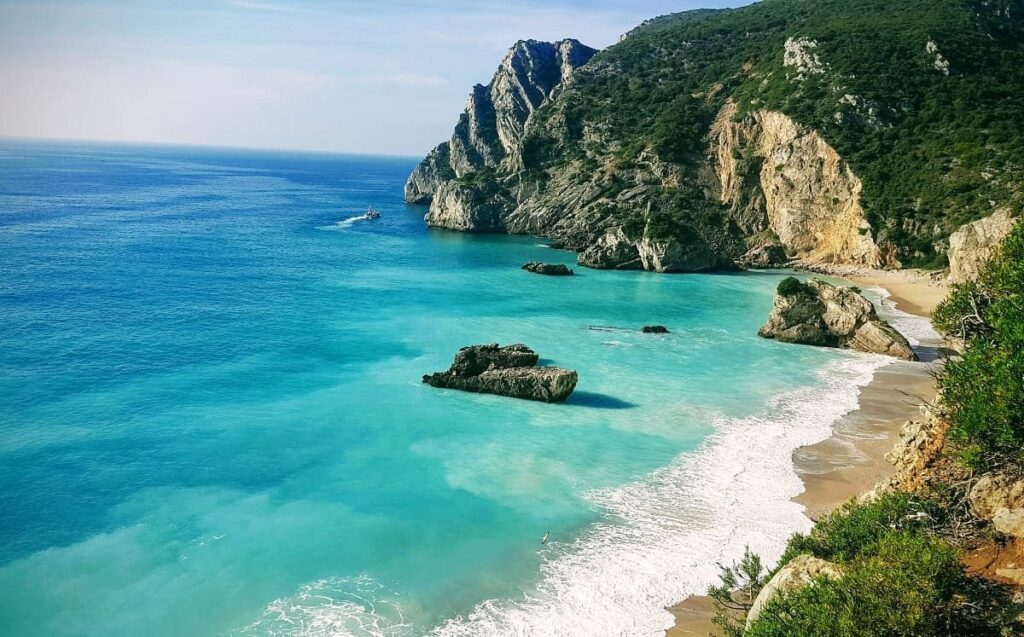
The formula for paradise looked fairly simple: respect for human rights, a civilized society, no armed conflicts, and beauty.
Before moving I had never been to Portugal and knew only that it had barely taken part in the world wars, that there had been no Holocaust here, that the Portuguese had ended Salazar’s dictatorship bloodlessly, with flowers, and had withdrawn from all their colonies, and that today Portugal hardly ever appears in the news: no terror attacks, no rabid antisemitism.
And while we were dodging Iranian ballistic missiles, my dearest friends called from Leiria and invited our family to visit: “Just come and exhale, and then see.” That is how we first ended up in Portugal: with no clear plans and the first work contract that came along. And that is when we understood what my friends meant by “exhale.”
It suddenly turned out that there is a life in which work-life balance tilts heavily toward life, where the news agenda is the weather forecast and the most heated arguments are about football. Where rich and poor are not isolated from one another but celebrate this life together. Where there are no grand ambitions and no cosmic standards. Where amanhã is not to be taken literally, where there is neither past nor future but one long continuous now, and right now one has to do what the Portuguese do better than anyone: celebrate and wait.
Why Portugal? Because here it is boring, slow, long, predictable: predictably impassable bureaucracy, a predictably cold ocean, landscapes that have not changed in centuries.
As I write this, I am cooking lunch at home. A repairman from Ukraine is up on the roof, fixing what did not survive the latest Portuguese rain. At some point he comes down to the kitchen to rest, has a coffee with us and stays for lunch. Then my son comes home from school with a friend from Lebanon. They drop their backpacks, sit down at the table and start eating too. Toward the end of lunch our elderly neighbor Isabel comes by to check on us, and the meal stretches on.
Outside the window the rain-soaked roof is drying, and I pour a third brew of tea. We are simply sitting at one table in the middle of a small Portuguese town, having lunch, clean of any historical context.
In half an hour the repairman will climb back onto the roof, the kids will run off, I will go back to work. Nothing special has happened. That, probably, is why Portugal.
Will we stay here for long? In 2026 I have no illusions left that my choice today determines my reality five years from now, but I can picture myself forty years from now, gazing into the steel-gray distance of the Atlantic, endlessly awaiting my residence permit, lost somewhere in the depths of time.