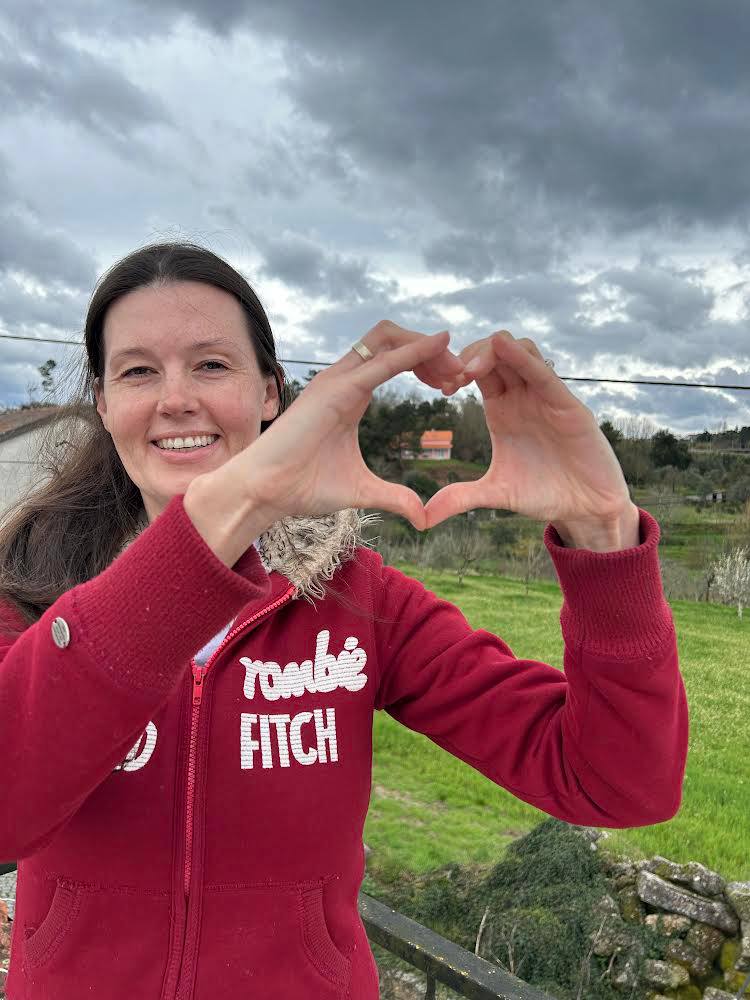
To most people, a house in the Portuguese backcountry looks like a risky gamble, but for Yana it turned out to be exactly right. She bought her home almost sight unseen and found in a Portuguese village not just a new place to live, but a completely different pace of life. She told Xpat.Land correspondent Anna Sadova how she now helps other expats find their way around the Portuguese property market and search for a home.
Yana is a former Moscow entrepreneur, now a licensed property consultant in Portugal and the author of a popular blog that has changed how hundreds of expats see life in the country. But just a few years ago, she and her family would have called this kind of life a fantasy.
“We left Russia a long time ago, back in 2013. Before that, we ran businesses in Moscow and had no time at all for living. Two and a half hours each way in traffic to get to work, wearing yourself out there, then the same back again. That left very little time at home: freshen up, sleep, and start all over again. At some point we realised we wanted peace and quiet, and simply to have time to live,” Yana recalls.
A Baltic breather
Their first escape was to Palanga in Lithuania: a resort town on the Baltic Sea, pine trees, an empty beach 500 metres from the house and complete independence. During the COVID lockdown, when city dwellers were suffocating indoors, the family spent hours walking their dog along the edge of the stormy sea. Their daughter was born there, and there the family obtained EU permanent residence.
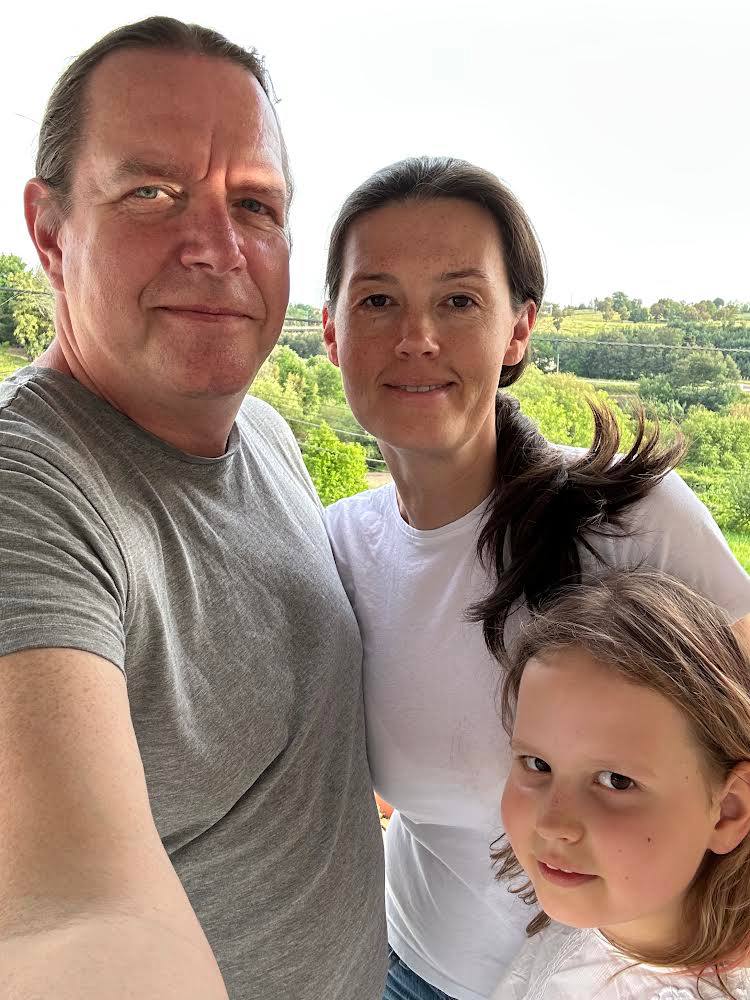
But over time they realised that permanent residence in Lithuania didn’t solve their main problem: children born there don’t get citizenship by birth, and after grey winters they longed for warmth.
They chose Portugal pragmatically: a pleasant climate, an EU passport within five years and affordable land.
But they ruled out the capital and the coast straight away.
“We didn’t even consider big cities: we’d had enough of that in Moscow, and Lisbon and Porto don’t appeal to me. We were deliberately looking for a village. We thought about living closer to the ocean and looked around Nazaré, but quickly realised that with the Atlantic nearby there’s constant fog, crazy humidity, a piercing wind, you can’t really swim, and the mould is something else! To live there comfortably, a house has to be brought up to perfect condition,” says Yana.
For four months, she methodically combed property listing sites, consulted experienced immigrants and mapped out possible areas to live. The real surprise was the terrain: many picturesque options were ruled out simply because both she and her child got carsick on the endless mountain roads.
A blind deal
The family was used to taking risks: in Lithuania, they rented their first cottage for a year based on blurry photos taken on an old Nokia. They bought the Portuguese house in much the same way, closing the deal remotely. That was just over three years ago.
“We didn’t even get a proper look at the veranda — it wasn’t in the listing. We paid €33,000, which is pocket change by today’s standards; we just got in at the right time. Lots of people tell horror stories about Portuguese houses: hidden mould, leaking roofs, rotten floors. But my husband is an engineer — before we moved, he built houses on water. That’s an extremely complex self-contained structure on a tiny footprint, in a humid environment, with loads of weight restrictions. If someone can solve problems like that on water, they’ll definitely cope with a house on land,” Yana explains. For the first three days, she says, they lived without electricity, charging their gadgets from a car inverter right there in the yard.
There are no unsolvable problems in property, Yana is convinced — only questions of budget and whether the effort is worth it. Ninety per cent of the time, a leaking roof turns out to be tiles shifted by the Atlantic wind.
And the notorious Portuguese mould grows just as happily in a thirty-thousand shed as in a three-million villa if the builders skimped on waterproofing and ventilation.
The soup conveyor belt
The real discovery for Yana wasn’t the walls, but the people. All her preparation for “southern chaos” and unreliability evaporated at once — there was no need for it. Estate agents demanded punctuality and rang off the hook if a viewing was running a minute late.
Their elderly neighbours instantly became close friends.
“They saw us hauling a sofa and immediately rushed to help — complete strangers. Ever since, they’ve had a spare set of our keys, they help out whenever the car breaks down, and they pick up our daughter if we need to go somewhere. Our daughter has a local grandma and grandpa here. For the first years, the neighbours brought us soup every day. Only by the fourth year were they convinced we’d settled in well enough, and the soup conveyor belt dried up,” says Yana.
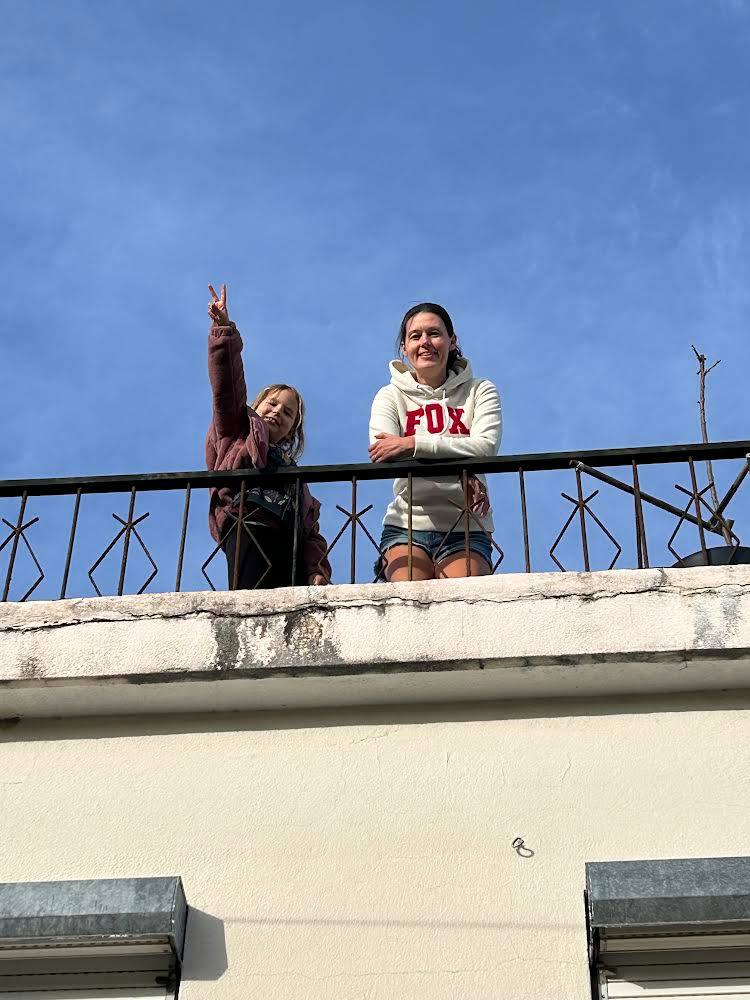
Their daughter picked up Portuguese, a language new to her, in record time: for the first three months she stayed silent, soaking up the sounds, and then suddenly started speaking as if it were her native language — Portuguese completely pushed out her Lithuanian. The state village school is a far cry from Moscow lyceums teaching calculus in the early grades, but that was never the point of the move.
“My mum worries: ‘But how will she get into Moscow State University, like you did?’ I laugh and say: ‘She’ll never want to go to Moscow State — the University of Coimbra is just an hour’s drive from here.’ Yes, here they only get to times tables in third grade, but in first grade they drilled them in handwriting. My daughter’s handwriting is stunning. She’s eight now, and she has a real, calm childhood in the fresh air, kind people around her and that Portuguese zen we came here for,” says Yana.
Portuguese randomness and the birth of a blog
The bureaucratic route to legal status — via EU permanent residence and registering as self-employed — spared the family years of drama in the queues of the AIMA immigration agency, though they didn’t escape the trademark “Portuguese randomness.” Her husband was lucky: his bank account was opened within a month. For Yana, the process dragged on — her account was opened only a year later, at a neighbouring branch.
At first, sadness crept in during her free hours. Working remotely on an international project with an office in Dubai, Yana started her Zoom calls at five in the morning and by noon was left alone with an empty house and thoughts about change. That’s how she started filming reels about local life and running an Instagram blog, which now has more than 120,000 followers.
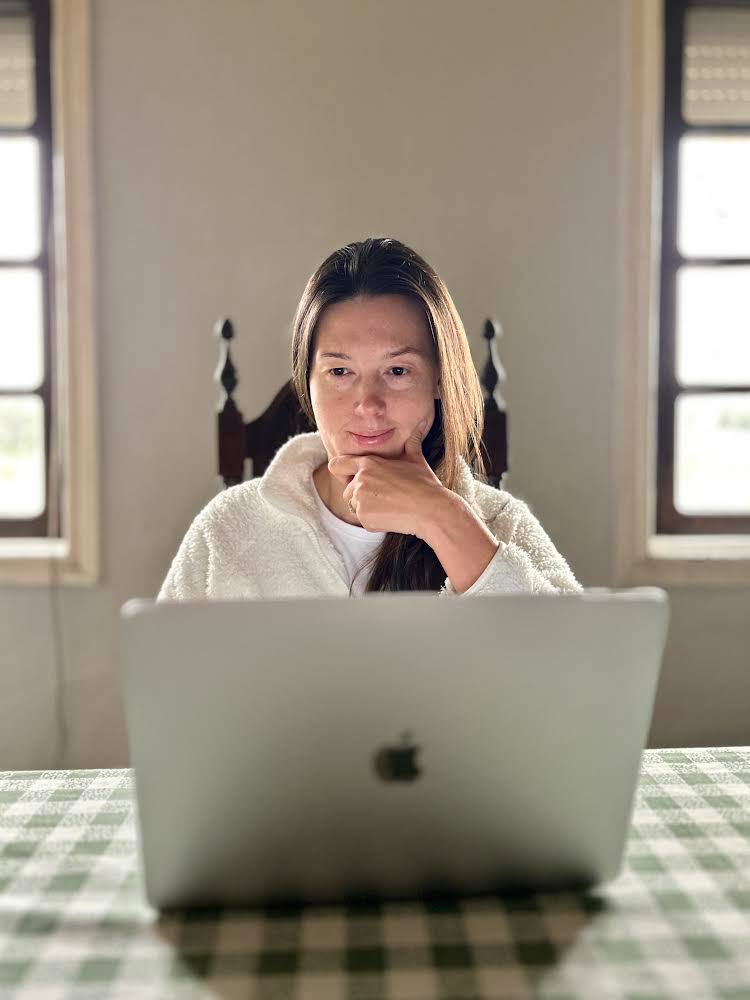
“One day I filmed a short video about how we bought our house for thirty-three thousand euros. And it just exploded. The mechanics of going viral are clear: the price is fantastically low, and the comments filled up with people asking: ‘Are there any more like that around there?’ And there were,” Yana recalls.
She was especially amazed when she saw followers, after watching her videos, get in their cars, drive halfway across Europe and turn up on the doorstep of what might become their future home.
Some, after one quick viewing, even snapped up the plot next to Yana’s.
Gradually, her spontaneous advice grew into a licensed private practice: she began offering paid consultations on finding a home in her area.
“I see potential in every house: one could become a pet hotel, another a guesthouse. But at my age I just want basic comfort. We didn’t buy our current house because life was good. We’ve now beaten the cold: we installed air conditioning and replaced the windows, and it’s warm and dry, although at first 14 degrees indoors felt like hell. But there are things in an old house you can’t change: the bedroom is so tiny that our dog (an Irish wolfhound — Xpat.Land) crawls under the bed and can’t get back out. It’s easier to move than to knock down load-bearing walls, but as soon as you think about going through the whole saga again — windows, floors, heating and cooling, dust — the enthusiasm fades,” Yana explains.
Anatomy of a housing crisis: heirs and an overheated market
Portugal’s property market is in turmoil today, but blaming it solely on an influx of expats means ignoring a systemic problem, Yana believes. The roots of the crisis — and of the tens of thousands of abandoned houses across the country — lie in the history of labour emigration in the last century.
“For decades, people left to work in France and other countries, abandoning their houses. Old people lived out their days in them. Then grandma and grandpa died, their children moved away, those children had children of their own — and no one claimed the inheritance in time, because it was easier to do nothing. As a result, four direct children today turn into a dozen heirs for one wretched property! They set the price not by the condition of the walls, but by the appetites of the relatives,” she explains.
On top of that comes the frenzy of recent years.
Yana says the house across the road, sold three years ago for 20,000, was resold for 40,000, then 65,000, and is now listed for 90,000 — without even cosmetic repairs.
Sellers often “pull numbers out of thin air.” That’s why her business model differs from traditional agencies: she represents the buyer, carries out a thorough engineering inspection and ruthlessly weeds out dubious properties.
“Karma is real: I show houses in my own area, and I’ll have to live side by side with these people afterwards, say hello at the supermarket and send our kids to the same school. If I see that a house is more than people can handle, I’ll talk them out of it,” says Yana.
Living for the sake of living
From the village where the family lives to Coimbra, with its Gothic cathedrals and one of the oldest universities in Europe, is forty minutes by train. The ocean is 80 kilometres away, less than an hour on a clear motorway. Yana wholeheartedly recommends this kind of move to anyone who wants to actually live their life rather than work it away.
“All of Portugal is about this. A local may not repaint the peeling façade of their house, but they’ll definitely go to a café, order an espresso and sit squinting in the sun. They always choose to enjoy the moment. For those who have decided to break out of the big-city rat race, a move like this is a chance to breathe out and savour every day. And in this story I’m simply a guide: when you land here as if on Mars, it’s very important to have someone on your side who’ll steer you through all the bureaucratic potholes and keep you from doing anything foolish,” Yana concludes.