Where to rent an apartment when you're arriving practically for the first time in the city you're going to live in — that's one of the first questions an expat faces. Choosing a place to live without any idea of what makes one neighborhood or another distinctive is quite hard. Especially for those who've just arrived or are planning to move to Lisbon, here's a rundown of the most popular neighborhoods to live in.
Parque das Nações. Comfort for well-off remote workers with a car.
Parque das Nações
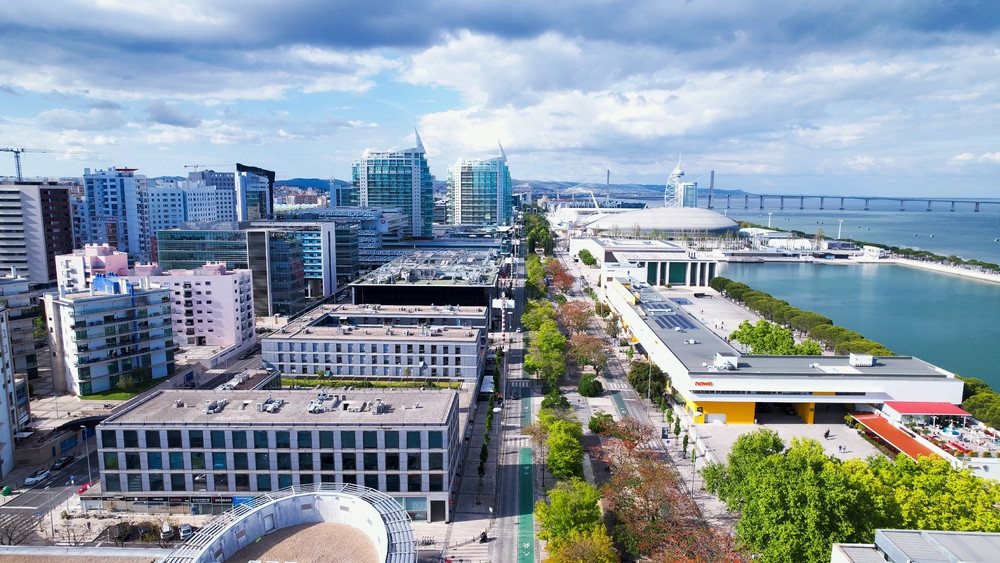
This is a modern neighborhood on the northeastern edge of the city, built for the Expo '98 exhibition, and it's considered one of the most comfortable and expensive in Lisbon. It attracts people for whom everyday conveniences matter more than history and architecture — there isn't much of the spirit of the real Lisbon here (though the calçada won't let you forget where you are). Instead, you'll find glass high-rises, trendy cafés, a wide promenade along the Tagus, bike lanes, and green parks. Many buildings here have air conditioning, heating, a 24/7 concierge, underground parking, and a rooftop pool. Things are good with children's infrastructure too: nurseries, schools, museums, an oceanarium.
Apartments here are priced accordingly. But if money isn't a problem, one single drawback remains — it's hard to get by without a car. There's a metro and an urban train, but distances within the neighborhood are considerable, and it's far to the center and the ocean.
Avenidas Novas. The perfect combination of infrastructure and transport access
Avenidas Novas
The most well-known spots in the neighborhood are Saldanha, Campo Pequeno, São Sebastião, and Praça de Espanha. It's not a tourist area, though the center is 10 minutes away by metro or half an hour on foot, which makes its location close to ideal. Within walking distance are exits to stations on every metro line and the urban train.
Formally it's Lisbon's business center: the central avenues are lined with high-rises housing the offices of international companies. But on the adjacent streets you'll find a full-fledged residential quarter with a quiet, calm atmosphere. Expats value this neighborhood for its developed infrastructure, an abundance of cafés, restaurants, and coworking spaces, and the absence of tourist crowds and loud parties. It's also an excellent place for life with kids — it's one of Lisbon's flat neighborhoods, which matters quite a lot for parents with strollers.
The drawback is the cost of renting and buying property. In other neighborhoods (except Parque das Nações) housing can be found significantly cheaper.
Campo de Ourique. A cozy "city within a city"
Campo de Ourique
A classic for families: the neighborhood is highly valued by those who want to live a "village" life inside the city — a market, cafés, shops nearby, schools, and a very lived-in, non-touristy atmosphere. Because of the neighborhood's small size, you get the feeling of a "city within a city," where everyone knows one another.
The drawback is that the metro doesn't reach the neighborhood. A new station is already being built, but its opening date has been pushed back more than once. Car owners here can find it hard to find parking: narrow streets, old buildings, and the absence of underground garages all take their toll.
Príncipe Real. A nightlife neighborhood for the child-free
Príncipe Real
A neighborhood at the junction of the tourist center and residential quarters, which makes it one of the few lively areas where not only tourists live. Nearby are plenty of bars, restaurants with rooftops, beautiful viewpoints, a botanical garden, and you can walk to Praça do Comércio, Praça do Marquês de Pombal, and any point in the city center.
Keep in mind, though, that it can be noisy here in the evenings. The place suits active expats more than families with children.
Belém–Ajuda–Alcântara. Its own atmosphere by the water
Belém–Ajuda–Alcântara
Formally these are three neighborhoods, but we'll combine them into one and talk about the whole western part of Lisbon, stretching along the Tagus from the 25 de Abril Bridge toward the ocean.
This is a fairly calm and safe part of the city, with its own devotees. Many love this place for the feeling of a cozy, close-knit community.
The main advantage is the long pedestrian promenade along the Tagus, popular with runners, cyclists, and lovers of leisurely walks by the river. Just up from the promenade are plenty of parks, the Ajuda National Palace, and historic landmarks. A separate plus: you can reach the ocean in 15–20 minutes.
The main drawback is transport. There's no metro here. There are urban train stations along the river, and buses run along the streets higher up. Still, to reach almost any point in Lisbon you'll most likely have to transfer. Without a car, this can become a significant inconvenience.
Alvalade. A comfortable residential area for families with kids
Alvalade
A very calm residential neighborhood in the northern part of the city. Many families with children choose to settle here because of the flat terrain and the abundance of schools, nurseries, playgrounds, and sports facilities. You can reach the center from here on the green metro line, and the bus network is well developed too. The cost of renting and buying property here is lower than in more prestigious neighborhoods.
The main drawback is that the airport is nearby, and planes come in to land practically right over the residents' heads. If you're sensitive to sound, this can become a problem, especially in summer, when the number of flights to Lisbon increases.
Costa da Caparica. A mecca for surfers
Costa da Caparica
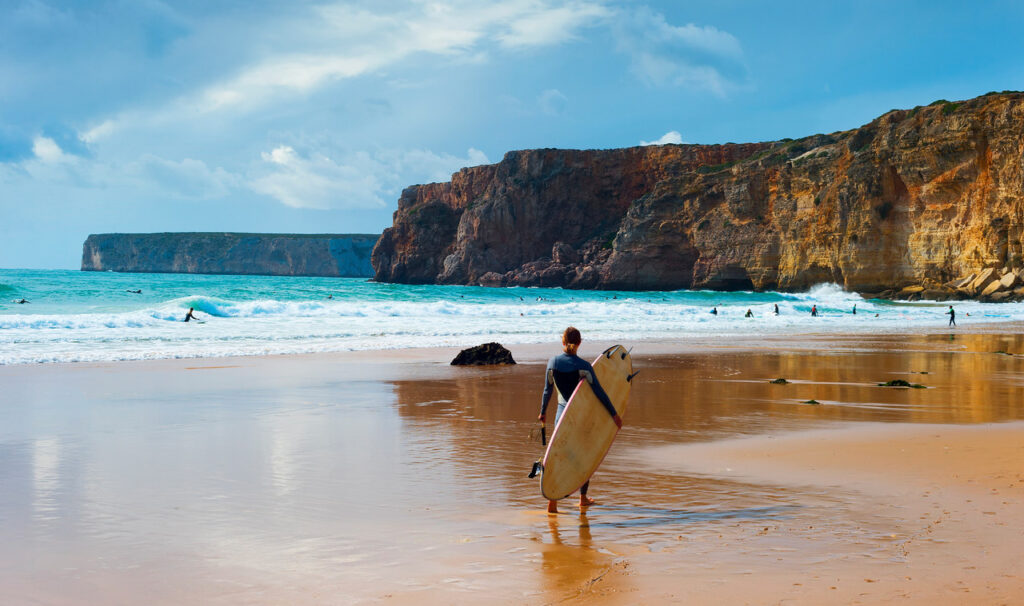
Formally this is already "Greater Lisbon" — a resort town with a many-kilometer sandy beach. This place draws lovers of a calm, measured life, surfers, and those who value being able to get to the beach quickly at any time. Prices here are significantly lower than in Lisbon.
The drawback is that it's very inconvenient to get here without a car. But even with one, you can reach the center in 20–30 minutes, or you can get stuck for a long time in traffic before the bridge.
Cascais. One of the most prestigious areas of Greater Lisbon
Cascais
Well-off expats, entrepreneurs, and families with children love to settle here: lots of greenery, the ocean, a well-kept promenade, good international schools, sports infrastructure, and restaurants. Despite its popularity with tourists, beyond the historic center the town remains quite calm and comfortable for everyday life.
The main drawback is that property costs here are among the highest in Portugal. Also, if you work in Lisbon and commute to the office regularly, the daily trip can take anywhere from 40 minutes to an hour each way, especially during rush hour.